
Plants
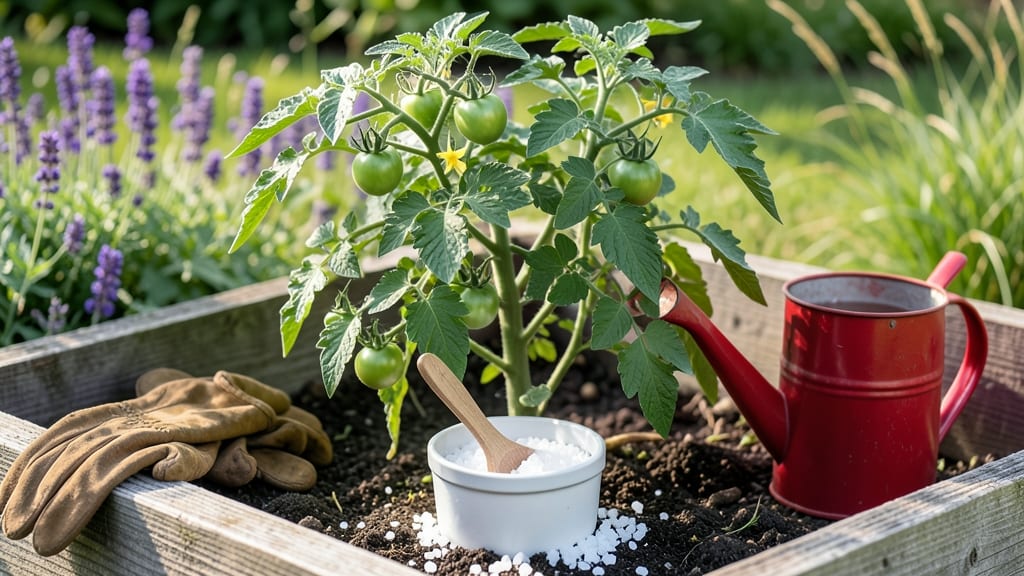
Epsom salt for garden plants enhances growth by delivering magnesium and sulfur directly to roots and leaves, resulting in deeper green foliage and stronger stems. Mix 1 tablespoon per gallon of water monthly, but avoid overapplying to prevent soil imbalances or root damage.
Magnesium is a key player in chlorophyll production—the green pigment that helps plants convert sunlight into energy. 💚 When plants lack magnesium, you’ll often see yellowing between leaf veins, a classic sign of deficiency.
Sulfur, on the other hand, supports enzyme function and protein synthesis, which are critical for overall plant vigor. Unlike some synthetic fertilizers, Epsom salt dissolves quickly, making its nutrients immediately available to plants.
While Epsom salt works wonders for many plants—especially heavy feeders like tomatoes, peppers, and roses—it’s not a magic cure-all. Overuse can actually harm your garden by disrupting soil pH or causing salt buildup.
Always test your soil first and stick to the recommended ratios. For organic gardeners, pairing Epsom salt with compost or worm castings creates a balanced nutrient profile without synthetic additives.
💡 In This Article
- How Epsom Salt Improves Plant Growth and Health
- Step-by-Step Guide to Applying Epsom Salt in Gardens
How Epsom salt improves plant growth and health
Epsom salt—chemically known as magnesium sulfate (MgSO₄)—works its magic primarily through two essential nutrients: magnesium and sulfur. Magnesium sits at the center of the chlorophyll molecule, which is why plants deficient in this mineral often show yellowing between leaf veins (a condition called interveinal chlorosis).
When you apply Epsom salt, the magnesium ions become immediately available to the plant's roots, helping to restore that vibrant green color. 🌿 For example, tomatoes frequently develop magnesium deficiencies, and a foliar spray of Epsom salt can turn dull leaves into lush, dark green canopies within weeks.
The sulfur component plays a equally vital role by supporting enzyme production and protein synthesis. Sulfur helps form amino acids like cysteine and methionine, which are the building blocks of plant proteins. Without adequate sulfur, plants struggle to develop strong cell structures, leading to stunted growth or weak stems.
Unlike many synthetic fertilizers that rely on slow-release formulas, Epsom salt dissolves rapidly in water, allowing plants to absorb magnesium and sulfur almost instantly—ideal for correcting deficiencies quickly. This solubility also makes it perfect for foliar sprays, where nutrients are absorbed directly through leaves.
You’ll notice the most dramatic improvements in plants that are heavy feeders or grow in magnesium-poor soils, such as sandy or acidic soils. Roses, for instance, often respond beautifully to Epsom salt treatments, producing larger blooms and thicker canes.
The key is to monitor your plants for deficiency symptoms: if you see yellowing leaves, especially on older foliage, or if new growth appears weak or pale, it’s a sign your plants could benefit from this mineral boost.
However, don’t confuse magnesium deficiency with other issues—like nitrogen deficiency, which causes overall yellowing rather than the distinct vein patterns.
One common misconception is that Epsom salt can replace all other fertilizers. While it’s excellent for addressing magnesium and sulfur deficiencies, it lacks other essential nutrients like nitrogen, phosphorus, or potassium. That’s why gardeners often pair it with a balanced fertilizer or compost.
For example, mixing Epsom salt into the soil at planting time (about 1 tablespoon per hole) can give seedlings a strong start, but you’ll still want to supplement with a complete fertilizer later in the growing season to support flowering and fruiting. 🌱
Soil type also influences how effective Epsom salt will be. In clay soils, which naturally hold more magnesium, you might see less dramatic results compared to sandy soils where nutrients leach away quickly.
To test your soil’s magnesium levels, look for a simple soil test kit or send a sample to your local cooperative extension service—they can tell you exactly what your plants are missing.
This targeted approach ensures you’re not overapplying Epsom salt, which can lead to salt buildup in the soil and harm beneficial microbes.
What most gardeners don’t realize is how Epsom salt interacts with other soil amendments. For instance, pairing it with compost or worm castings creates a synergistic effect: the organic matter improves soil structure, while the Epsom salt provides readily available magnesium.
This combination works particularly well for container gardens, where nutrients can be quickly depleted. Just remember to water thoroughly after application to help distribute the salt evenly and prevent localized salt concentrations that could damage roots. 💧