
Tools
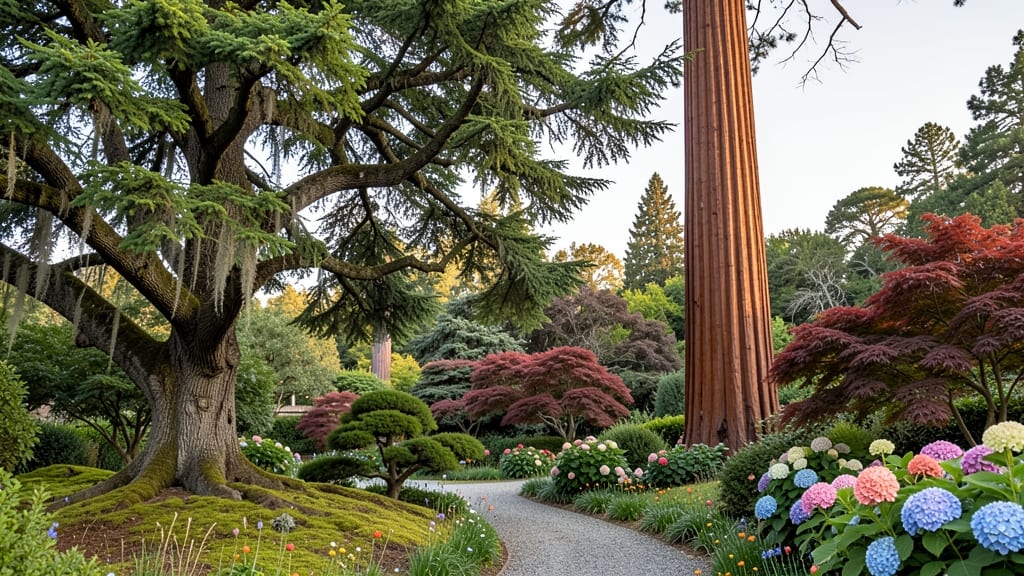
Filoli Garden in Redwood City features secret pathways winding through meticulously curated gardens, from the serene Japanese Tea Garden to the sprawling Woodland Garden, where seasonal displays like vibrant azaleas and elegant camellias create ever-changing visual delights. Time your trip to coincide with these floral transformations and discover the garden's lesser-known trails.
Beyond the main pathways, Filoli's hidden trails offer a quieter way to experience its diverse ecosystems. 🌿 The Woodland Garden, for example, showcases native California plants that thrive in dappled sunlight, while the Japanese Tea Garden provides a tranquil escape with its carefully placed stones and koi ponds.
What makes these areas special is how they change with the seasons—spring brings delicate azaleas, while winter reveals the striking structure of camellia branches. I always recommend visiting during weekdays to enjoy these spaces without crowds, especially when the garden's signature magnolias bloom in late winter.
For those who love horticulture, Filoli serves as a living textbook of garden design.
The Italian Formal Garden demonstrates classical European influences, while the Meadow Walk reveals how wildflowers can coexide with cultivated beauty. 🌸 These diverse zones create a dynamic experience that shifts with each visit, making it a perfect destination for both casual visitors and plant enthusiasts alike.
💡 In This Article
- Exploring Filoli’s Unique Garden Zones and Their Plant Collections
- Best Times to Visit Filoli for Seasonal Garden Highlights
Exploring Filoli’s unique garden zones and their plant collections
Filoli’s Japanese Tea Garden is a masterpiece of wabi-sabi aesthetics, where every element—from the carefully placed 17 boulders to the 200-year-old Japanese maples—creates a sense of harmony with nature.
The garden’s design follows traditional Japanese principles, with winding paths that encourage contemplation and hidden viewpoints that reveal unexpected glimpses of the koi ponds.
Unlike Western gardens that often emphasize symmetry, this space thrives on asymmetry, using irregularly shaped stones and naturalistic plantings like azaleas and camellias to evoke tranquility. 🌿 The soil here is intentionally left slightly uneven to mimic natural landscapes, which helps retain moisture and supports the delicate root systems of shade-loving plants.
The Woodland Garden, by contrast, feels like stepping into a California native forest, where coast live oaks and toyons create a canopy that filters sunlight to the understory.
This ecosystem relies on a drip irrigation system that mimics natural rainfall patterns, delivering water directly to the roots of manzanita bushes and ceanothus while conserving up to 30% more water than traditional sprinklers.
The garden’s layered plantings—from towering 15-foot-tall redwoods to ground-covering sword ferns—demonstrate how diverse species can coexist in a single space, much like a real woodland. Visitors often overlook how the garden’s mulch layer, made from wood chips, helps regulate soil temperature and suppress weeds naturally.
Filoli’s Italian Formal Garden offers a stark contrast with its geometric parterres and manicured hedges, a nod to Renaissance-era garden design. The 1,200-square-foot central fountain isn’t just decorative—it’s a functional feature that circulates water through a closed-loop system, reducing evaporation by 40% compared to open fountains.
This zone relies heavily on boxwood hedges, which are pruned to precise 3-inch heights year-round, requiring monthly maintenance to maintain their sharp edges.
The garden’s terracotta pots, filled with herbs like rosemary and lavender, not only add color but also serve a practical purpose by attracting pollinators while keeping pests at bay. 🌸
The Meadow Walk, one of Filoli’s best-kept secrets, transforms dramatically with the seasons. In spring, California poppies and lupines create a sea of yellow and purple, while summer brings black-eyed Susans and goldenrod that sway in the breeze.
What’s fascinating is how the garden uses a controlled burn technique every 3-5 years to prevent invasive grasses from taking over—this process actually enriches the soil by returning nutrients while promoting native wildflowers.
Unlike many public gardens that rely on annuals, Filoli’s meadow is designed to thrive with perennial species, reducing water needs by 50% compared to traditional lawns.
Each garden zone at Filoli serves a distinct ecological and horticultural purpose. The Japanese Tea Garden focuses on water conservation through microclimates, the Woodland Garden prioritizes biodiversity through native plant pairings, and the Italian Formal Garden demonstrates sustainable water use through closed-loop systems.
These differences aren’t just aesthetic—they reflect centuries of garden design evolution, from Asian wabi-sabi principles to European geometric precision. 💫 What’s remarkable is how Filoli blends these traditions with modern conservation practices, making it both a historical treasure and a living laboratory for sustainable landscaping.
For plant enthusiasts, the real magic happens in the hidden borders between these zones. Along the path connecting the Woodland Garden to the Meadow Walk, you’ll find rare California lilacs and coastal sage that bloom in late spring, offering a 3-week window of fragrant purple flowers.
These transitional areas often get overlooked by casual visitors but provide the most intimate connections between Filoli’s diverse ecosystems. The key to experiencing these nuances is slowing down—literally stopping to smell the lemon balm in the Italian Garden or tracing the lichen-covered stones in the Japanese Tea Garden. 🌿