
Tools
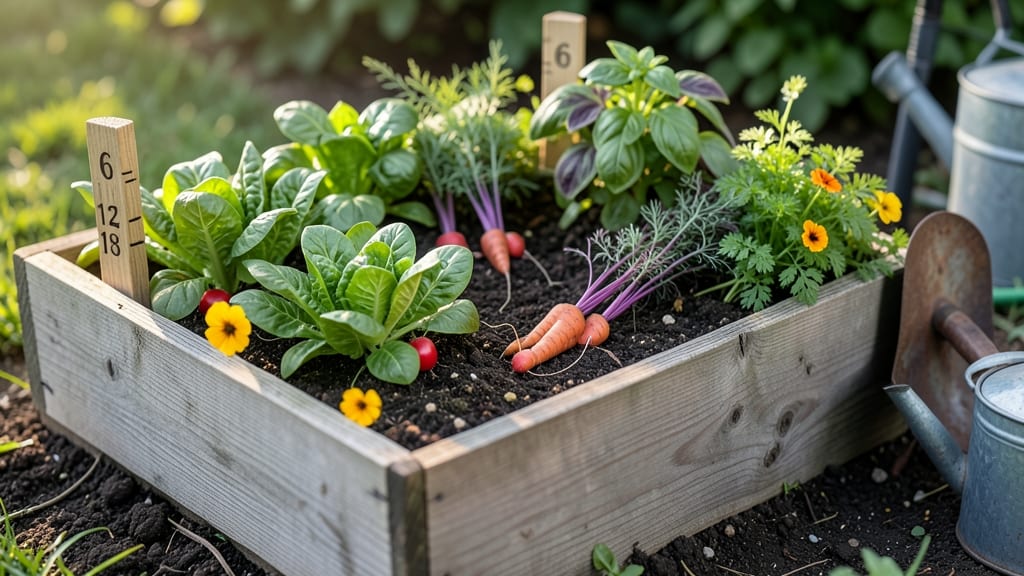
Determining garden bed height depends on your crops: most vegetables and herbs grow best in beds 6 to 12 inches deep, while root vegetables like carrots and potatoes need 12 to 18 inches to develop properly. Raised beds can go up to 24 inches for improved drainage and root space.
Getting the right garden bed height isn't just about aesthetics—it directly impacts how well your plants grow.
Shallower beds (6 inches) work great for leafy greens and herbs, while deeper beds (18+ inches) give root crops the space they need to spread out without competing for nutrients.
I've found that taller beds also warm up faster in spring and drain better after heavy rains, which can mean healthier plants overall. 🌱
The key is matching your bed height to what you're planting. For example, basil and lettuce thrive in 6-inch beds, but potatoes and sweet potatoes need at least 12 inches to prevent stunted growth.
If you're using raised beds, you can go even deeper—up to 24 inches—for better moisture control and fewer weeds.
💡 In This Article
- How Garden Bed Height Affects Plant Growth and Soil Health
- Optimal Garden Bed Height for Specific Crops: A Quick Guide
How garden bed height affects plant growth and soil health
The depth of your garden bed directly influences how plants access nutrients, water, and oxygen. Shallow beds (6 inches) work well for shallow-rooted plants like lettuce or basil because their roots rarely exceed 6-12 inches in depth.
However, deeper beds (12+ inches) become critical for root crops like carrots or potatoes, whose roots can extend 12-18 inches or more. The extra depth reduces soil compaction and allows roots to spread freely, which is essential for nutrient absorption and stability.
Soil temperature is another key factor tied to bed height. Deeper beds warm up more slowly in spring but retain heat longer in fall, creating a more stable growing environment. For example, a 12-inch bed might reach ideal planting temperatures (50-60°F) a week earlier than a 6-inch bed.
This delayed warming can be a disadvantage for cold-sensitive crops like tomatoes or peppers, which prefer warmer soil. Additionally, deeper beds improve drainage, preventing waterlogging that can suffocate roots and lead to rot.
Moisture retention is also height-dependent. Shallow beds dry out faster because they have less soil volume to hold water, requiring more frequent irrigation. In contrast, deeper beds act like a reservoir, supplying moisture to roots over extended periods.
This is especially valuable in hot climates or during droughts. For instance, a 18-inch raised bed can maintain consistent moisture levels for weeks longer than a 6-inch in-ground bed, reducing the need for manual watering.
Weed suppression is another benefit of taller beds. Deeper soil layers provide more space for roots to establish dominance over weeds, which typically have shallow root systems.
A 12-inch bed can block up to 70% more weed growth compared to a 6-inch bed because the dense plant roots outcompete weed seeds for sunlight and nutrients at the surface. This natural weed control reduces the need for herbicides and manual weeding.
Nutrient availability also shifts with bed depth. Deeper beds allow for a wider distribution of organic matter and compost, which decomposes more evenly over time.
For example, adding compost to a 18-inch bed ensures nutrients reach roots at all levels, whereas in a 6-inch bed, nutrients may concentrate near the surface, leading to uneven growth. This stratification is particularly important for heavy feeders like corn or squash, which require consistent nutrient access.
Consider your local climate when choosing bed height. In regions with heavy rainfall, deeper beds (18+ inches) improve drainage and prevent waterlogging, while in arid areas, shallower beds (6-12 inches) may suffice if paired with mulch to retain moisture.
The right height balances drainage, temperature, and nutrient access for your specific growing conditions. 🌿