
Tools
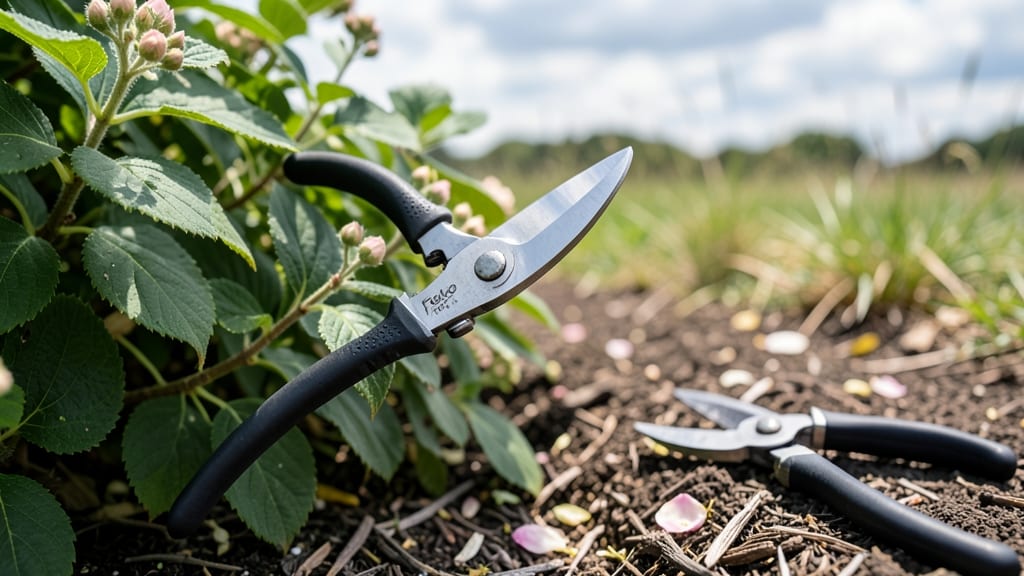
Garden scissors are called pruning shears, hedge shears, or bypass pruners, depending on their design and purpose—pruning shears for delicate trimming, hedge shears for thick branches, and bypass pruners for precision cuts without crushing stems.
These specialized cutting tools go by different names because each is engineered for a specific gardening task. 🌿 Pruning shears, also called hand pruners, are designed for clean cuts on small stems and flowers, while hedge shears handle larger, thicker branches with their longer blades.
Bypass pruners, often used by professionals, feature two sharp blades that slide past each other for minimal damage to plant tissue. The right tool makes all the difference in maintaining plant health and achieving professional-looking results.
For example, when shaping roses or deadheading flowers, pruning shears provide the precision needed to avoid tearing delicate petals. On the other hand, hedge shears with their wide blades are ideal for shaping shrubs or topiaries, where uniform cuts across broad surfaces matter most.
Understanding these distinctions helps you invest in tools that match your gardening needs, whether you're a weekend hobbyist or a dedicated landscaper.
💡 In This Article
- Types of Garden Scissors and Their Cutting Mechanisms
- Choosing the Best Garden Scissors for Your Plants
Types of garden scissors and their cutting mechanisms
The most critical difference between garden scissors lies in their blade mechanisms, which directly impact plant health and cutting efficiency. Bypass pruners feature two sharp blades that slide past each other like scissors, creating clean cuts that minimize damage to plant tissue.
This design is ideal for delicate plants like roses or hydrangeas, where you want to avoid crushing stems that can block nutrient flow. 🌹 The blades typically measure 5-7 inches in length, allowing for precise control over cuts up to ½-inch in diameter.
In contrast, anvil pruners have one sharp blade that cuts against a flat anvil surface. While these are better suited for thicker branches (up to 1-inch in diameter), they can crush stems during the cutting process.
This makes them less ideal for tender plants but perfect for woody stems like grapevines or small tree branches. The crushing action also helps seal the cut, reducing sap flow—a key advantage when pruning fruit trees.
However, this same mechanism can damage delicate foliage, making anvil pruners a poor choice for flowers or herb gardens.
Hedge shears represent a third category, designed specifically for shaping large surfaces with their long, curved blades (typically 8-12 inches). These tools use a bypass mechanism similar to pruners but are built for heavy-duty work, capable of handling branches up to 1.5 inches thick.
The wide blade surface allows for uniform cuts across broad areas, making them essential for topiaries, hedges, and formal gardens. Their ergonomic handles often include ratcheting mechanisms that multiply cutting force, reducing hand strain during prolonged use.
What most gardeners don't realize is how blade material affects performance. High-carbon stainless steel blades maintain their sharpness longer than standard steel, resisting rust and corrosion from sap and moisture.
For example, a Japanese-style bypass pruner with a 10° blade angle will glide through branches with minimal resistance, while a budget anvil pruner might require 20% more force to make the same cut.
This difference becomes especially noticeable when working with dense foliage like boxwood or holly, where sharpness directly impacts cutting speed and plant recovery.
The cutting mechanism also influences healing time for plants. Bypass pruners create clean cuts that heal faster because they don't damage the stem's vascular system. In contrast, anvil pruners can leave jagged edges that increase the risk of disease entry points.
This is why professional arborists often carry both types—bypass pruners for fine work and anvil pruners for heavy-duty cuts where sealing the wound is more important than precision.
For example, when pruning a 3-year-old apple tree, an arborist might use anvil pruners for main branches but switch to bypass pruners for smaller limbs to promote healthier regrowth.
Consider the angle of attack too: most professional-grade pruners feature 10-15° blade angles, which allow for smoother cuts through resistant materials like bamboo or overgrown ivy. The angle reduces friction against the plant's fibers, making it easier to cut through without tearing.
This becomes particularly important when working with thorny plants like blackberries, where a dull blade can snag and pull, causing unnecessary damage to both plant and gardener. 🌿
For maintenance enthusiasts, remember that even the best pruners require regular care. Bypass pruners should be cleaned after each use to remove sap, while anvil pruners benefit from occasional oiling to prevent rust.
The blade type you choose isn't just about the cut—it's about preserving your plants' long-term health and making your gardening tasks more efficient. Whether you're shaping a rose bush or trimming a hedge, selecting the right tool based on its mechanism can transform your gardening experience from frustrating to effortless.