
Tools
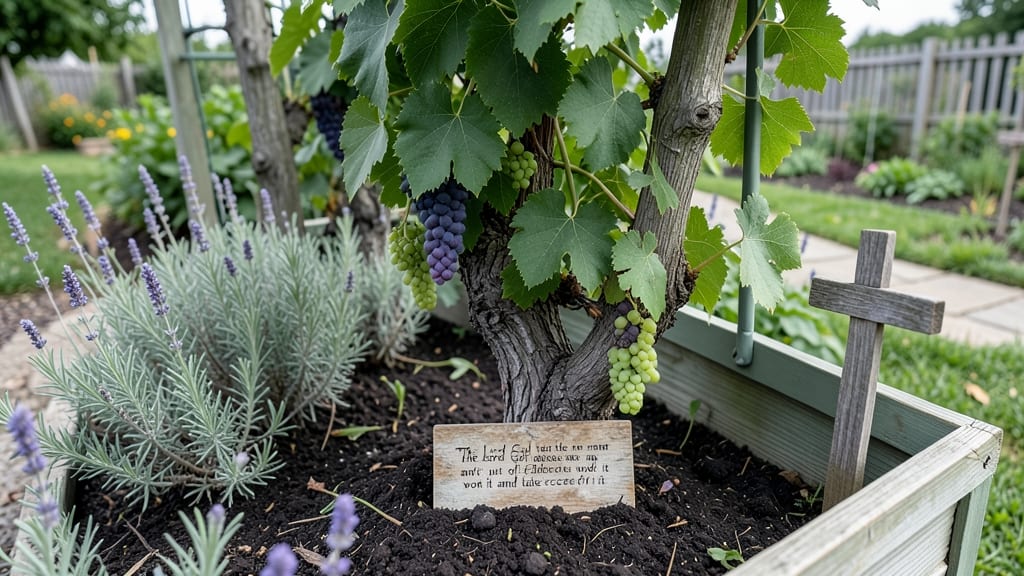
Garden verses in the Bible carry deep meaning about cultivation, divine care, and renewal, from Eden’s creation in Genesis 2:8 to Isaiah 55:12’s promise of abundant harvests as symbols of spiritual growth and stewardship.
The Bible’s garden imagery isn’t just poetic—it’s a blueprint for how we nurture life, both physically and spiritually. 🌱 Take Genesis 1:11, where God commands the earth to "bring forth" plants, reflecting how every gardener’s work mirrors divine creation.
These verses often tie planting to patience, trust, and even celebration: Psalm 80:8-12 compares Israel to a vineyard, urging God’s care, while John 15:5 reminds us we can do nothing without Christ—just as a garden needs sunlight and water.
Many gardeners today use these passages to mark planting seasons or journal their growth, blending faith with the rhythms of nature.
What’s fascinating is how these themes extend beyond the Bible. For example, Ezekiel 36:29 promises a "new heart" alongside fertile land—a metaphor for renewal that resonates with gardeners who replant after harvest. 🌿 The practical takeaway?
Whether you’re tending a vegetable patch or a prayer garden, these verses offer a framework for seeing your labor as part of something greater.
💡 In This Article
- Symbolism of Biblical Garden Verses in Gardening
- 10 Most Inspiring Bible Verses for Gardeners
Symbolism of biblical garden verses in gardening
The garden in Genesis 2:8 isn’t just a place—it’s a divine instruction manual for stewardship. When God commands the earth to "bring forth" plants in Genesis 1:11, He establishes a pattern: life emerges through intentional care, much like how gardeners coax seeds into growth with sunlight, water, and patience.
This verse mirrors the gardening process where 70-90% of a plant’s energy goes into root development before any visible growth appears, teaching us that unseen labor yields future abundance.
Consider the parable of the sower (Matthew 13:1-9), where seeds represent God’s word—but also the potential of every planted seed. The soil types (rocky, thorny, fertile) parallel gardening challenges: poor soil (like rocky ground) stifles growth just as nutrient-deficient earth would.
Meanwhile, Psalm 80:8-12 compares Israel to a vineyard, emphasizing that pruning (a gardening necessity) isn’t just maintenance—it’s preparation for fruitfulness. This aligns with modern practices where 20-30% of a plant’s branches are pruned to redirect energy to fruit production.
What’s striking is how these verses bridge spiritual and physical growth.
Ezekiel 36:29 promises a "new heart" alongside fertile land, suggesting that renewal begins within us—just as gardeners know that soil health depends on both external amendments (compost, fertilizer) and internal vitality (microorganisms, root systems). 🌱 The connection between tending a garden and nurturing faith becomes clear: both require time, sacrifice, and trust in unseen processes.
Even the vineyard imagery (John 15:5)—"I am the vine, you are the branches"—echoes grafting techniques where two plants merge to produce stronger growth. This mirrors how gardeners combine different species for resilience, proving that collaboration (whether with God or nature) enhances outcomes.
The symbolism extends to harvest rituals, where verses like Isaiah 55:12 ("you will go out in joy and be led forth in peace") reflect the celebration of a successful yield, much like a gardener’s pride in a bountiful crop.
The practical takeaway? Biblical gardens teach us that growth isn’t passive—it’s an active partnership between divine design and human effort. Whether you’re planting seeds or sowing intentions, these verses remind us that every action, from watering to weeding, participates in a larger story of renewal. 💫
For example, gardeners who journal their progress often use Genesis 2:15 ("to work it and keep it") as a mantra, framing their labor as sacred service. The parallel to modern permaculture—where ecosystems are designed to mimic natural cycles—shows how ancient wisdom still shapes sustainable practices today.