
Tools
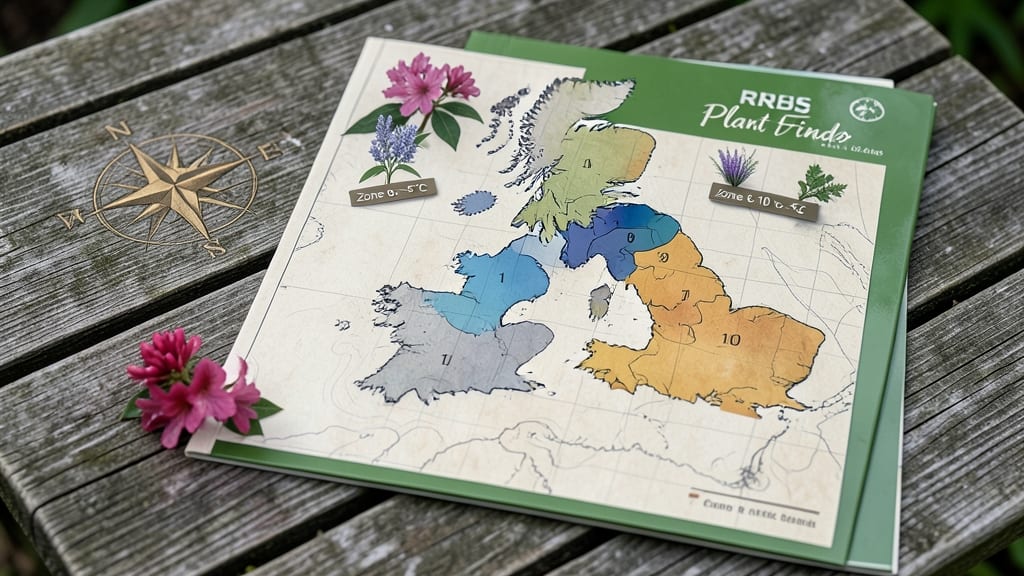
UK garden zones help you select plants that thrive in your area by mapping winter hardiness across the country. The system divides regions from Zone 1 (coldest) to Zone 10 (mildest), guiding which species will survive frost and extreme temperatures in your specific location.
Understanding these zones is crucial because even a small difference in winter temperatures can mean the difference between a thriving garden and lost plants. 🌱 For example, Zone 1 covers Scotland's coldest areas where only the hardiest perennials survive, while Zone 10 in Cornwall supports subtropical plants like bougainvillea.
The Royal Horticultural Society updates these zones every few years based on long-term climate data, so checking your postcode regularly ensures you're making the most informed choices for your garden's microclimate.
The system considers more than just average winter lows—it factors in frost duration and soil conditions. This means a Zone 7 garden in London might handle different plants than a Zone 7 garden in the Welsh valleys, where colder air pools in valleys.
I always recommend testing a plant's hardiness by starting with small batches in containers before committing to permanent planting, especially when transitioning between zones.
💡 In This Article
- How UK Garden Zones Are Calculated
- Choosing Plants Based on Your UK Garden Zone
How UK garden zones are calculated
The UK's garden zone system is based on the average minimum winter temperature recorded over a 30-year period, with each zone representing a 5°F (2.8°C) range.
Zone 1 covers areas where winter lows drop below -25°F (-32°C), typical of Scotland's highlands, while Zone 10 includes regions like Cornwall where winters rarely fall below 15°F (-9°C).
The Royal Horticultural Society (RHS) uses data from the Met Office to create these zones, analyzing not just temperature but also frost duration—how long plants endure sub-freezing conditions.
The calculation process involves complex climate modeling that accounts for microclimates—local variations where sheltered spots or urban heat islands can create pockets of warmth. For instance, a garden in Zone 6 might safely grow Hellebores (hardy to -20°F/-29°C), while an exposed spot in the same zone could struggle.
The RHS also considers soil frost depth, as shallow-rooted plants like Primulas may survive colder temperatures if the ground doesn't freeze deeply. This precision helps explain why two nearby gardens might require different plant selections despite being in the same zone.
What's fascinating is how the zones reflect the UK's latitudinal and altitudinal gradients. For example, the Cairngorms in Zone 1 experience harsher conditions than Edinburgh in Zone 8, even though they're geographically close.
The system even accounts for coastal moderation—areas like Dorset (Zone 9) rarely see hard frosts due to the Gulf Stream's influence, while inland areas at similar latitudes can be 2-3 zones colder.
This geographical nuance is why gardeners must verify their exact postcode rather than relying on broad regional assumptions.
Temperature thresholds aren't arbitrary—they're based on plant survival studies conducted by the RHS. For instance, Zone 5 plants (hardy to -15°F/-26°C) include Rhododendrons and Magnolias, while Zone 9's 15°F (-9°C) threshold allows for Oleanders and Citrus trees.
The system also accounts for secondary factors like wind exposure, as cold winds can make a plant feel 10-15°F colder than the air temperature alone. This is why windbreaks are crucial in exposed gardens, potentially allowing you to grow plants one zone harder than your official classification.
Here's how the zones break down in practice:
- Zones 1-3: Northern Scotland, Lake District—only subarctic perennials like Cotoneasters and Shrubby Cinquefoils thrive here
- Zones 4-6: Midlands, Yorkshire—classic English cottage garden plants like Delphiniums and Peonies excel
- Zones 7-9: London, Southeast—supports exotic Mediterranean plants such as Lavender and Rosemary
- Zone 10: Cornwall, Isles of Scilly—where subtropical plants like Banana trees and Orchids can overwinter outdoors
The RHS updates these zones every 5-10 years to reflect climate change, with recent shifts showing northern zones warming by 1-2 degrees over the past decade. This means plants that were once Zone 8 may now thrive in Zone 7 gardens. The key takeaway? Always check the most recent zone map for your postcode—your garden's potential is constantly evolving alongside the climate. 🌡️