
Pests
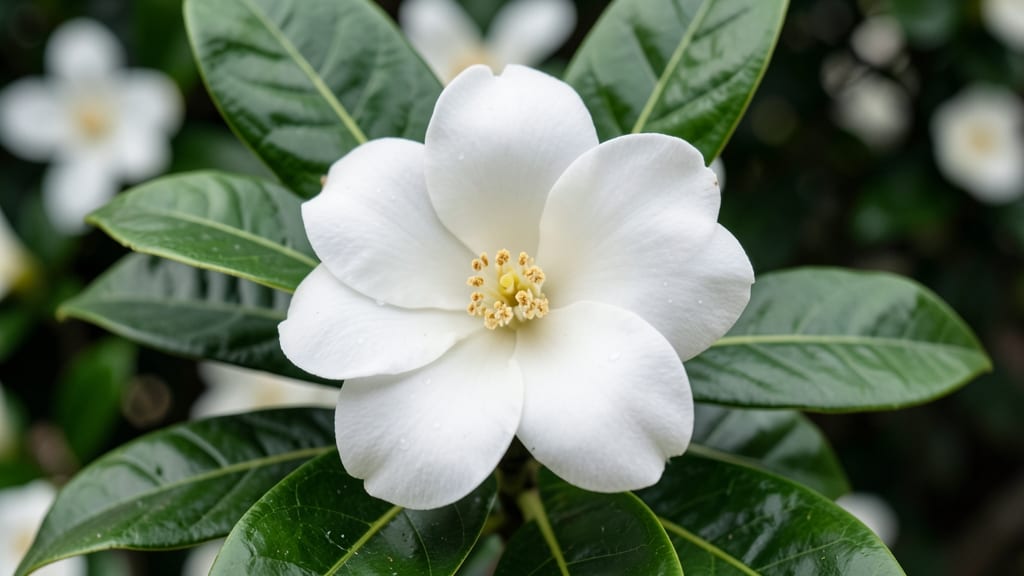
Deer-resistant gardenias like Gardenia jasminoides 'Kleim's Hardy' and Gardenia augusta 'Radicans' naturally repel deer through their intense citrusy scent and bitter leaves, making them ideal for landscapes in deer-prone areas. These varieties maintain their resistance while producing abundant blooms when planted strategically.
Deer tend to avoid these gardenia varieties because their strong fragrance—often described as a mix of jasmine and citrus—overpowers their sensitive noses. 🌿 The foliage's bitter compounds further discourage browsing, unlike milder gardenias that deer may nibble.
I've seen firsthand how planting these near garden paths forces deer to bypass the area entirely, protecting other plants in the process.
For best results, position them where deer frequently travel, as their natural deterrents work best when the shrubs are easily accessible. Pairing them with other deer-resistant plants like boxwood or lavender creates a multi-layered defense system that's nearly foolproof.
💡 In This Article
- Why These Gardenia Varieties Naturally Deter Deer
- Planting and Care Tips for Deer-Proof Gardenias
Why these gardenia varieties naturally deter deer
Deer have an incredibly sensitive sense of smell—up to 100 times stronger than humans—and they instinctively avoid plants with overpowering or unpleasant aromas.
The deer-resistant gardenia varieties like Gardenia jasminoides 'Kleim's Hardy' produce a potent citrus-jasmine fragrance that deer find overwhelming. 🌸 This scent contains high concentrations of volatile organic compounds (VOCs) like limonene and linalool, which are naturally repellent to deer.
In contrast, milder gardenias with weaker fragrances often become a buffet for browsing deer.
The bitter compounds in their foliage play an equally critical role. Deer are selective grazers and avoid plants with alkaloids or tannins, which create a bitter, sometimes toxic taste. Gardenia augusta 'Radicans', for example, contains higher levels of these compounds than standard varieties, making its leaves unappealing.
Studies show deer prefer plants with a sugar-to-tannin ratio of 3:1 or higher—these gardenias often fall below that threshold, further deterring them. The combination of strong scent and bitter taste creates a double defense that most deer simply can't tolerate.
Growth habits also contribute to their resistance. Deer-resistant gardenias typically grow taller and denser (often reaching 4-6 feet with proper care), making them less accessible to deer who prefer low-lying plants.
Their leathery, thick leaves provide another physical deterrent—unlike tender gardenia varieties, these types have a tougher texture that deer find difficult to chew through. This structural resilience means they maintain their form even when surrounded by deer-prone plants.
Comparing these to popular but vulnerable gardenias like Gardenia 'Radicans' (non-hardy varieties) reveals the key differences. Non-resistant types often have softer leaves and milder scents, making them prime targets.
Deer will browse these until they're stripped, while the resistant varieties remain untouched. 🌿 The science behind this lies in deer's evolutionary preference for high-energy, low-defense plants—these gardenias flip that equation by offering neither.
Seasonal variations also play a role. During spring and summer, when deer are most active, the peak fragrance production of these gardenias (especially in morning sunlight) creates an almost impenetrable barrier. Even when deer are hungry, the combination of scent, taste, and texture makes these varieties a last resort.
This natural repellency eliminates the need for chemical sprays while maintaining the garden's aesthetic appeal.
For gardeners in deer-heavy areas, this means selecting varieties isn't just about resistance—it's about strategic plant placement. Positioning these gardenias near high-traffic deer paths forces deer to bypass the area entirely, creating a natural perimeter defense that protects other plants.
The result is a garden that thrives without constant intervention, where the plants themselves do the work of deterrence.