
Aphids
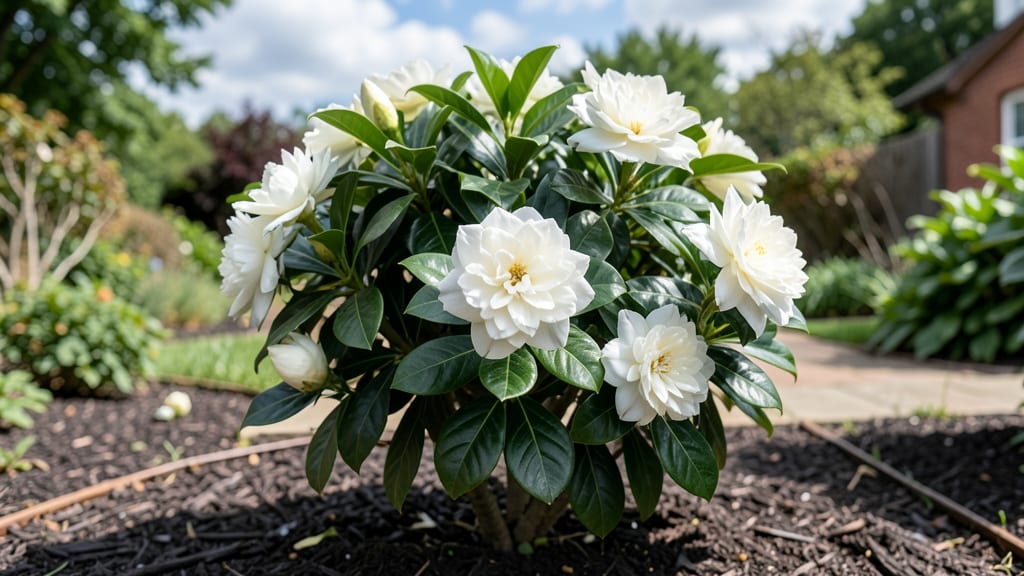
Understanding gardenia height and width is the key to keeping your fragrant shrubs 🌸 lush, blooming, and perfectly proportioned in your garden.
Struggling to keep your gardenia blooms within bounds while maximizing their intoxicating fragrance? The secret lies in understanding its natural growth patterns—and when (and how) to prune for perfect proportions.
Most gardenias mature between 3 and 6 feet tall, but varieties like 'Kleim’s Hardy' stay compact at just 2-3 feet. Tropical types, however, can stretch toward 6 feet if left unchecked, which is why spacing and pruning become critical.
Below, I’ll break down how to manage gardenia size for your space—whether you’re growing them in containers or garden beds—plus the pruning schedule that keeps them bushy and blooming year after year.

Natural gardenia height and width: varieties and expected growth patterns
If you’ve ever dreamed of a garden filled with the intoxicating fragrance of gardenias, you’ve likely wondered: How big will my gardenia really get? The answer depends on the variety, your climate zone, and how you care for it.
Gardenias naturally range from compact shrubs to towering specimens, with some varieties reaching heights of 6 feet or more—while others stay neatly contained at 2-3 feet. Understanding these differences helps you plan spacing, container sizes, and even pruning strategies to keep your gardenia thriving without overpowering your landscape.
Most gardenias belong to the Gardenia jasminoides species, but their mature sizes can vary dramatically based on genetics. For example, the ‘Kleim’s Hardy’ gardenia is a cold-hardy hybrid that typically matures between 3-5 feet tall and 3-4 feet wide, making it ideal for smaller gardens or containers.
In contrast, tropical varieties like ‘Radicans’ can stretch up to 6 feet tall and 5 feet wide if left unpruned. These differences aren’t just about aesthetics—they also influence how much sunlight, water, and pruning your gardenia will need to stay healthy.
| Variety | Mature Height | Mature Width | Growth Rate | Climate Notes |
|---|---|---|---|---|
| ‘Kleim’s Hardy’ | 3–5 ft | 3–4 ft | Moderate (1–2 ft/year) | Hardy to Zone 7; thrives in cooler climates |
| ‘Radicans’ | 4–6 ft | 4–5 ft | Fast (2–3 ft/year) | Tropical; needs Zone 9+ |
| ‘Veitchii’ | 2–3 ft | 2–3 ft | Slow (6–12 in/year) | Dwarf variety; great for containers |
| ‘Fortuniana’ | 5–7 ft | 5–6 ft | Fast (2–4 ft/year) | Tallest variety; needs pruning for compact shape |
| ‘Mystery’ | 3–4 ft | 3–4 ft | Moderate (1–2 ft/year) | Fragrant; ideal for small gardens |
Your climate zone plays a surprisingly big role in how tall your gardenia grows. In warmer climates (Zones 9–11), tropical varieties like ‘Radicans’ or ‘Fortuniana’ can grow 20–30% faster than their cooler-climate counterparts.
This is because gardenias are native to humid, subtropical regions and thrive with consistent warmth and high humidity. In contrast, hardy varieties like ‘Kleim’s Hardy’ grow more slowly in cooler zones (Zones 7–8) but are far more resilient to winter chills.
If you live in a transitional zone (Zone 8), expect your gardenia to grow at a moderate pace—typically 1–2 feet per year—unless you provide extra winter protection.
Seasonal growth cycles also affect how quickly your gardenia reaches its mature size. Most gardenias experience their fastest growth during spring and early summer, when temperatures are mild and daylight hours increase. During this time, you might see new growth sprouting within 4–6 weeks of pruning or fertilizing.
However, growth slows dramatically in late summer and fall as the plant prepares for flowering season. This is why many gardeners avoid heavy pruning after mid-summer—it can stunt next year’s blooms. Instead, focus on light shaping prunes in early spring to encourage compact, bushy growth.
For container gardening, size matters even more. Dwarf
Pruning for compact gardenias: step-by-step techniques to control height and spread
Pruning your gardenia isn't just about keeping it tidy—it's about encouraging healthier blooms and compact growth while preventing disease. The key is timing and technique, especially since gardenias bloom on old wood, meaning last year's growth produces this year's flowers.
If you prune at the wrong time, you risk sacrificing those fragrant blooms you love.
Most gardenia varieties, like the popular Gardenia jasminoides, naturally reach 4-6 feet tall and 3-5 feet wide at maturity. But with strategic pruning, you can maintain a 2-3 foot height and 2-3 foot spread—perfect for containers or small gardens.
The goal is to shape the plant without removing too many flowering stems.
Pruning gardenias after mid-summer removes next year's flower buds, which form on current season's growth. Always prune in early spring (just as new shoots appear) or right after blooming (late summer) to preserve flowers.
Start by gathering your tools: sharp bypass pruners for clean cuts, sterilized alcohol to wipe blades between cuts (to prevent disease), and gloves (gardenia leaves can irritate skin). For tropical gardenias, which grow faster, you may also need long-handled loppers to reach dense foliage.
Always sterilize tools to avoid spreading fungal infections like powdery mildew.
Begin by removing dead or diseased branches first—these are easy to spot as they’re brown, mushy, or devoid of leaves. Next, look for crossing branches or stems growing inward; these compete for sunlight and air circulation.
Cut these back to the nearest outward-facing bud or leaf node at a 45-degree angle to encourage water runoff and prevent rot.
For shaping, focus on the outer third of the plant. Trim back overly long branches by one-third of their length to encourage bushier growth. Avoid cutting into old wood (wood older than 2 years)—this rarely produces new growth.
Instead, target current season's growth to stimulate compact, flowering branches. For dwarf varieties like 'Radicans,' light pruning is enough, but standard types may need more aggressive shaping.
After pruning, give your gardenia a light fertilizer (like a balanced acid-loving formula) to support new growth. Water deeply to help the plant recover, and consider applying a 2-3 inch layer of mulch around the base to retain moisture and regulate soil temperature.
With consistent care, your gardenia will reward you with dense, fragrant blooms and a neat, manageable shape all season long.
Remember, gardenias respond best to gradual pruning. Never remove more than one-third of the plant's foliage in a single session, or you risk shocking the plant and reducing next year's blooms.
Patience and precision are key to maintaining a compact, healthy gardenia that thrives in your garden or patio container. 🌿✂️🌸