
Plants
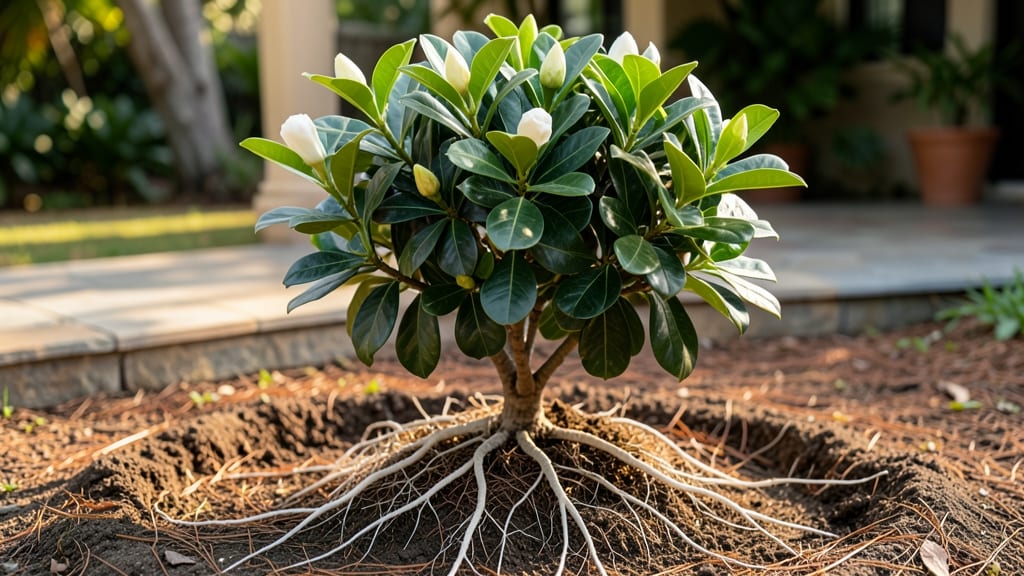
The gardenia root system spreads through fibrous, shallow roots that form a dense network, anchoring the plant while efficiently absorbing moisture and nutrients to fuel its fragrant blooms. These roots thrive in well-draining, slightly acidic soil and expand gradually over time.
Understanding how gardenia roots function helps explain why these plants produce such intoxicating fragrances. 🌸 Their shallow, fibrous structure creates a vast surface area for nutrient uptake, which directly supports the energy demands of heavy blooming.
Unlike deep taproots, gardenia roots spread horizontally just below the soil surface, making them sensitive to both overwatering and poor drainage. This delicate balance means gardeners must pay special attention to soil composition—aiming for a slightly acidic pH between 5.0 and 6.5 while ensuring excess water can escape quickly.
The root system's gradual expansion also explains why gardenias often take time to establish before producing their signature white blooms.
What's fascinating is how these roots interact with beneficial soil microbes. Gardenias often form mycorrhizal relationships that enhance nutrient absorption, particularly phosphorus and nitrogen—key elements for flower production. This symbiotic connection means healthy gardenia roots aren't just about water management; they're also about creating the right microbial environment.
For gardeners, this translates to avoiding chemical fertilizers that might disrupt these natural relationships while focusing instead on organic matter like composted leaves or pine bark.
💡 In This Article
- How Gardenia Roots Grow and Function
- Caring for Gardenia Roots for Healthy Blooms
How gardenia roots grow and function
Gardenia roots develop primarily as a fibrous network rather than a single taproot, creating a sprawling mat just 1-3 inches below the soil surface. This shallow structure maximizes surface area for water and nutrient absorption—critical for supporting the plant's high metabolic demands during blooming season.
The roots spread horizontally at a rate of about 6-12 inches per year, forming a dense web that stabilizes the plant while preventing deep soil compaction. This growth pattern explains why gardenias often struggle in heavy clay soils, where poor aeration can suffocate the delicate root tips.
The fibrous nature of gardenia roots enables them to form symbiotic relationships with mycorrhizal fungi, which extend the root system's reach by up to 30-50% through microscopic filaments.
These fungi specialize in capturing phosphorus and nitrogen from the soil, nutrients that gardenias need in abundance to produce their fragrant oils. 🌱 The roots also secrete organic acids that slightly acidify their immediate environment (pH 5.0-6.5), creating an ideal zone for these beneficial microbes.
Without this microbial partnership, gardenias would require significantly more fertilizer to achieve the same bloom production.
Water absorption works through a specialized layer of root hairs that increase the root's surface area by 10-20 times. These hairs absorb moisture through osmosis, while deeper root strands transport water upward via capillary action—a process that becomes particularly efficient in well-draining soils.
The shallow root system also explains why gardenias are sensitive to drought: their limited depth means they can't access water from lower soil layers during dry spells. This is why consistent moisture (but never soggy soil) is essential for maintaining the plant's vigor and fragrance production.
Root depth plays a crucial role in bloom production because deeper roots provide better anchorage for the heavy flower heads while accessing nutrients from a larger soil volume.
However, gardenias typically don't develop roots deeper than 12-18 inches, which is why they're often grown in containers or raised beds where soil conditions can be precisely controlled.
The trade-off is that this shallow system makes gardenias more susceptible to temperature fluctuations—roots can be damaged by frost or overheating in summer, which is why they thrive best in USDA zones 8-11.
What's often overlooked is how root health directly impacts fragrance production. The volatile compounds that create gardenia's signature scent are synthesized in the roots before being transported to the flowers. When roots are stressed (through poor drainage, compacted soil, or nutrient deficiencies), this scent production process slows down dramatically.
This is why gardeners often notice weaker fragrance in plants that appear healthy above ground but have compromised root systems below.
The root system's gradual expansion also explains why gardenias often take 2-3 years to establish before producing significant blooms. During this time, the plant focuses energy on building its fibrous network rather than flowering.
This patience pays off, however, as a mature gardenia with a well-developed root system can produce up to 50-100 blooms per season, each containing hundreds of scent-producing glands.