
Aphids
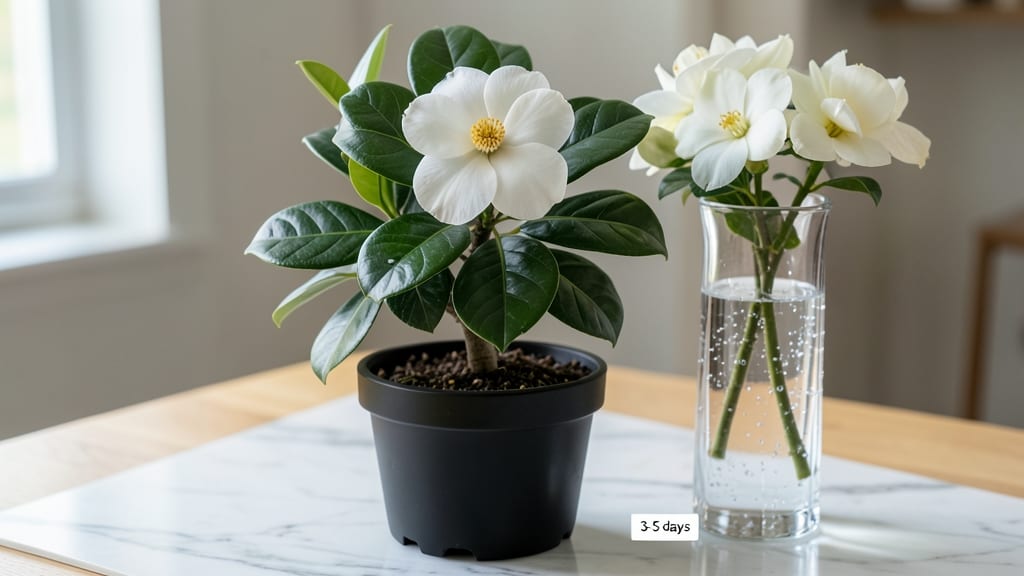
Gardenia flowers typically last 3 to 5 days in a vase when cut properly, but with proper care—cool water, regular trimming, and floral preservatives—their vase life can reach 7 to 10 days.
Gardenia vase life depends heavily on how you prepare and maintain them.
These delicate blooms are sensitive to ethylene gas, which speeds up wilting, so keeping them away from fruits and ripening vegetables is crucial. 🌸 The key to extending their freshness lies in consistent water changes and stem maintenance—blocked stems can't absorb water properly, causing rapid dehydration.
I've found that using a vase with a narrow neck helps reduce air exposure, which also slows moisture loss.
Another game-changer is the type of water you use. Distilled or room-temperature water works best, as tap water often contains chlorine or minerals that can damage the delicate petals.
Adding a few drops of lemon juice or a commercial floral preservative not only feeds the flowers but also creates a slightly acidic environment that mimics their natural growing conditions. This simple adjustment can add an extra 2-3 days of vibrant life to your gardenias.
💡 In This Article
- Science Behind Gardenia Flower Longevity
- Step-by-Step Guide to Maximizing Gardenia Vase Life
Science behind gardenia flower longevity
Gardenia petals wilt quickly because they're highly sensitive to ethylene gas—a natural plant hormone that accelerates aging. Even small amounts (like those released by ripening fruits or vegetables) can cause petals to yellow and droop within 24 hours.
The flowers also lose moisture rapidly due to their thin, waxy cuticle, which doesn't retain water like thicker blooms. This dehydration happens at a cellular level: when stems can't absorb enough water, the flower's vascular system collapses, causing wilting.
Temperature plays a critical role—gardenia blooms thrive at 65-70°F (18-21°C). Heat above 75°F (24°C) speeds up respiration, while cold below 60°F (15°C) slows water uptake. Humidity matters too: ideal levels (50-60%) prevent petals from drying out, but excess moisture (like in closed vases) promotes bacterial growth in stems.
Light exposure is another factor—direct sunlight causes petals to bleach and lose color faster than shaded arrangements.
The stem's ability to absorb water is the most critical factor. When stems block with bacteria (common within 12-24 hours), they can't hydrate the flower. This blockage happens because gardenias release natural sugars that feed bacteria.
Pruning stems at a 45° angle increases surface area for water absorption, while recutting every 2 days removes blocked sections. The science here is simple: more water uptake equals slower dehydration.
Another key mechanism is the flower's natural lifespan—gardenia blooms are genetically programmed to last 3-5 days even under perfect conditions. Their thick, waxy petals are designed for tropical climates where they're pollinated quickly, not for vase life.
This is why extending their longevity requires mimicking their natural environment: cool water, indirect light, and low-ethylene conditions. Even with perfect care, you'll notice petals start to yellow at the edges first—a telltale sign of cellular breakdown.
Consider this comparison: a gardenia in a narrow-neck vase with fresh water lasts 7 days, while one in a wide vase with tap water may wilt in 3 days.
The difference comes down to surface area (less air exposure = slower moisture loss) and water quality (chlorine-free = healthier stems). This is why floral preservatives work—they add nutrients (sugar) and antibacterial agents (bleach) to keep stems hydrated and bacteria-free.
What most people don't realize is that gardenias also release their own ethylene gas as they age. This creates a feedback loop: the more they wilt, the faster they produce gas, accelerating the process. Breaking this cycle by removing wilted blooms immediately can add 1-2 extra days of freshness.
The key takeaway? Gardenias are delicate but not fragile—with the right science-backed care, you can nearly double their natural vase life.