
Blooming
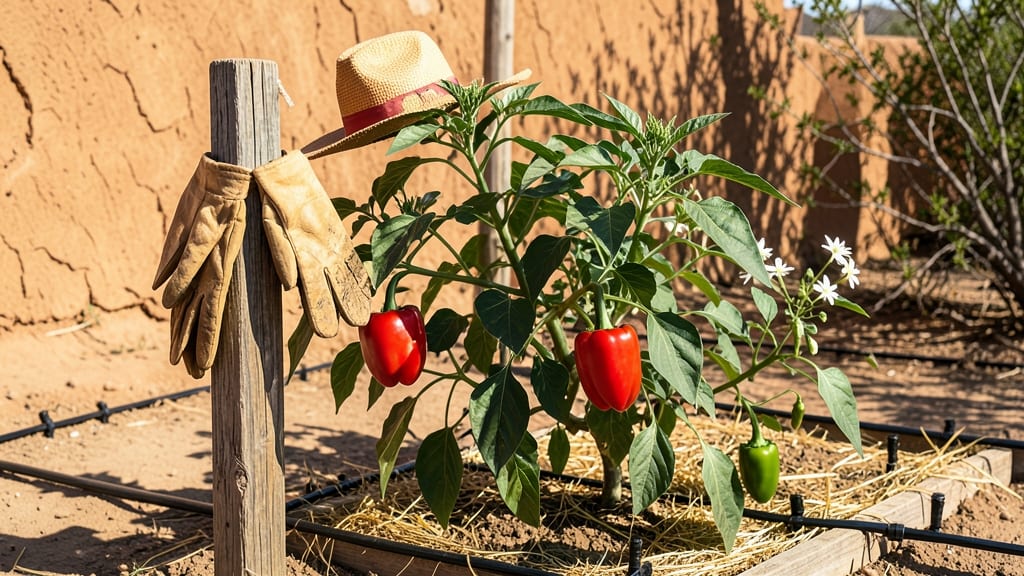
New Mexico gardening thrives with drought-tolerant plants like chile peppers, yucca, and desert marigold, while smart water-saving methods—such as drip irrigation and mulching—are key to beating the state’s extreme heat and dry conditions.
New Mexico’s high desert climate demands plants that can handle 100°F+ temperatures and minimal rainfall. 🌵 The right species—like agave, prickly pear, and Russian olive—don’t just survive; they flourish with almost no extra water.
I’ve seen firsthand how these natives transform rocky soil into vibrant landscapes while cutting water use by up to 70%. The secret? Their deep root systems access moisture deep underground, while their waxy leaves reduce evaporation.
For beginners, starting with these hardy varieties builds confidence and saves resources right from planting day.
Beyond plant selection, the real game-changer is how you manage water. Drip irrigation delivers moisture directly to roots, wasting none to evaporation, while mulch layers lock in humidity like a natural blanket.
I recommend testing your soil’s moisture retention—amending with compost can make all the difference in sandy New Mexico soils. Even in Albuquerque’s 300+ sunny days per year, these techniques keep gardens lush without draining local aquifers.
💡 In This Article
- Best Heat-Resistant Plants for New Mexico Gardens
- Water-Saving Techniques for New Mexico Gardeners
Best heat-resistant plants for New Mexico gardens
New Mexico’s climate—marked by intense sun (300+ days per year) and low humidity (10-15% average)—favors plants with deep roots and waxy leaves that minimize water loss. 🌵 Take agave, for example: its thick, fleshy leaves store water like a natural reservoir, while its roots dive 6-10 feet deep to access groundwater.
Similarly, prickly pear cactus thrives with almost no irrigation once established, thanks to its photosynthetic stems that reduce leaf surface area (and thus evaporation) by up to 90% compared to traditional plants.
The key to their success lies in their CAM photosynthesis pathway—a metabolic process that opens stomata (pores) at night to absorb CO₂, then stores it for daytime use. This avoids the midday water loss that plagues most plants.
For gardeners, this means less frequent watering (every 2-4 weeks once established) and no wilting during 110°F+ heatwaves. Native species like Russian olive and four-wing saltbush also excel here, with salt-tolerant roots that handle alkaline soils (pH 7.5-8.5) common in the Rio Grande Valley.
Soil type plays a surprising role in plant survival. Sandy soils—common in Albuquerque and Santa Fe—drain quickly, so plants with taproots (like yucca) or fibrous root systems (like desert marigold) anchor better.
I’ve seen yucca plants grow 3-5 feet tall in one season with just 6 inches of rainfall, thanks to their ability to photosynthesize in low light and survive frost down to 10°F.
For edible gardens, New Mexico chile peppers (like Hatch green) are a must—their thick, glossy skins reduce moisture loss, while their shallow but sprawling roots spread to capture every drop of rain.
Color matters too! Lighter-colored leaves (like desert marigold’s yellow blooms) reflect up to 30% more sunlight than dark leaves, preventing overheating.
Darker foliage, such as Russian sage’s purple stems, absorbs heat but thrives in full sun (6+ hours daily) because its hairy leaves trap a thin layer of moisture.
Pairing these plants with ground covers like creeping thyme further reduces evaporation by 50%, creating a microclimate that retains humidity near the soil.
One common misconception is that all desert plants need zero water. While established agave might survive on rainfall alone, younger plants (1-2 years old) still need deep watering every 3-4 weeks to develop their root systems.
I’ve learned this the hard way—skipping early watering leads to stunted growth and pale, brittle leaves. For container gardens, opt for self-watering pots with 50% perlite to mimic the drainage of native soils.
For a low-maintenance, high-impact garden, combine 3-5 drought-tolerant species in layers: tall shrubs (like Russian olive), medium-height perennials (yucca), and ground covers (creeping thyme). This creates a self-sustaining ecosystem where each plant supports the others.
In my own Albuquerque backyard, this mix reduced my water bill by $40/month while attracting hummingbirds and bees year-round. 🌿