
Tools
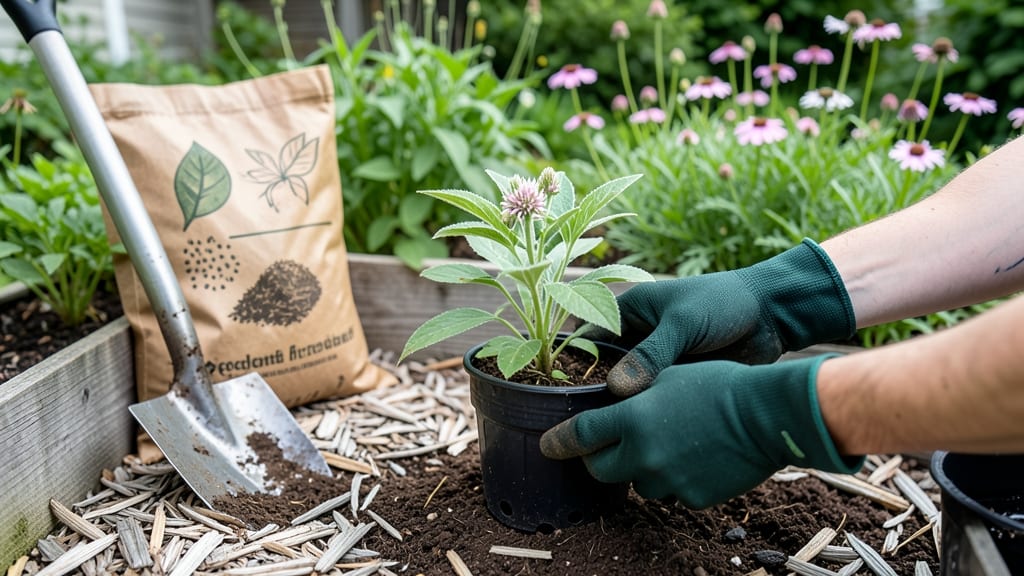
A rain garden soil mix requires a 3-part blend of 60% native topsoil, 30% organic compost, and 10% coarse sand or perlite to ensure proper drainage while retaining moisture for plant roots. This ratio supports water absorption while preventing compaction or erosion.
A rain garden soil mix isn't just about throwing dirt in a hole—it's about creating a living ecosystem that thrives with water flow. The native topsoil provides the structural foundation, while the organic compost feeds beneficial microbes that break down nutrients for plant roots.
The coarse sand or perlite acts like a sponge, allowing excess water to drain while keeping roots hydrated. 🌱 This blend isn't one-size-fits-all; local soil conditions often dictate adjustments, especially in clay-heavy areas where drainage becomes critical.
I've found that testing soil pH before mixing can prevent common pitfalls like nutrient lockout in acidic soils.
For those working with limited resources, leaf mold makes an excellent compost substitute—it mimics natural forest floor conditions while improving soil structure. If your budget allows, biochar can further enhance water retention and microbial activity.
The key is balancing these components to match your specific climate and plant needs, whether you're planting moisture-loving natives or drought-tolerant species.
💡 In This Article
- How to Balance Drainage and Nutrient Retention in Rain Garden Soil
- Best Organic Amendments for Rain Garden Soil Mix
How to balance drainage and nutrient retention in rain garden soil
The native topsoil in your rain garden mix serves as the structural backbone, providing essential minerals and a stable framework for plant roots. This layer typically contains 45-55% sand, 25-35% silt, and 5-10% clay, creating natural porosity that allows water to percolate while holding onto nutrients.
Unlike disturbed or compacted soils, native topsoil retains beneficial microbes that break down organic matter—a process called decomposition—which releases nutrients in forms plants can absorb. These microbes also produce glomalin, a sticky glycoprotein that binds soil particles together, improving water retention without suffocating roots. 🌱
The 30% organic compost component transforms the mix from merely functional to thriving. Compost introduces humus, which holds 10-20 times its weight in water while providing slow-release nitrogen, phosphorus, and potassium. Think of it as the "sponge" that retains moisture during dry spells while preventing waterlogging.
For example, a 2-inch layer of compost can improve soil water retention by 20-30% compared to unamended soil. The compost also buffers pH fluctuations, keeping the soil between 6.0 and 7.5, which is ideal for most rain garden plants like switchgrass or Joe-Pye weed.
The 10% coarse sand or perlite acts as the drainage regulator, preventing compaction while maintaining air pockets for root respiration. Sand particles (0.05-2mm diameter) create larger voids that allow water to flow downward, while perlite (2-5mm expanded granules) adds lightweight aeration.
In clay-heavy soils, this component can increase drainage rates by up to 40%—critical for preventing root rot in plants like blue flag iris. The key is using coarse sand (30-50 grit), as finer particles (20 grit or less) can clog pores over time.
Perlite also has the advantage of being sterile, which reduces competition between beneficial microbes and invasive pathogens. ✨
Particle size distribution is where the magic happens. The ideal mix creates a graded texture, where larger particles (sand/perlite) form the framework, smaller particles (silt) fill gaps, and organic matter coats surfaces to hold moisture.
This structure mimics natural forest soils, where water moves vertically through the profile rather than pooling. For instance, a 1:1:1 ratio of sand:silt:clay (loam texture) holds 50-60% of its volume in water at field capacity, while adding 10% perlite can increase this to 70% without waterlogging.
Testing your soil's texture before mixing helps determine if you need more sand (for clay soils) or more silt (for sandy soils).
Microbial activity is the unsung hero of rain garden soil. A healthy mix supports 10,000-100,000 microbes per gram of soil, including bacteria, fungi, and protozoa that decompose organic matter and cycle nutrients. These microbes thrive in the pH range of 6.0-7.5 and require 10-20% air-filled porosity for oxygen.
Adding compost introduces actinobacteria, which break down complex organics, and mycorrhizal fungi, which form symbiotic relationships with plant roots, extending their reach for water and nutrients. For example, white clover planted in rain garden soil can increase microbial biomass by 30% through its nitrogen-fixing roots. 🔥
Regional adjustments are essential. In clay-heavy Midwest soils, you might increase the sand/perlite to 15-20% to prevent compaction, while in sandy Southeast soils, reducing it to 5% preserves moisture. Always test your soil's permeability rate (how fast water drains) before finalizing the mix.
A simple percolation test—digging a hole, filling it with water, and measuring drainage time—reveals whether your blend needs more coarse material. For instance, soils draining faster than 1 inch per hour may need 5-10% more compost to retain moisture for drought-tolerant plants.
Finally, the native soil's existing microbial community should guide your amendments. Introducing too much compost at once can disrupt this balance, leading to nutrient imbalances or even anaerobic pockets where roots suffocate.
Start with 20-30% compost and monitor plant health—yellowing leaves may signal excess nitrogen, while stunted growth could mean insufficient organic matter. The goal is harmony: a mix that drains like a sponge, feeds like a garden, and breathes like a forest floor. 💫