
Watering
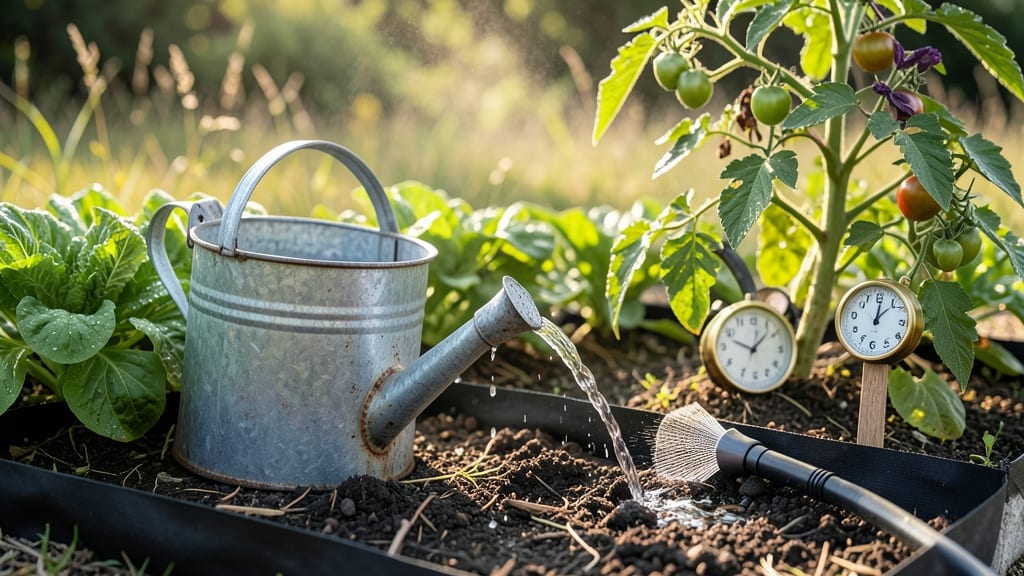
Watering your vegetable garden at the best time is the difference between lush, thriving 🥬 plants and wilting disappointment.
Struggling to keep your vegetable garden thriving? The when of watering matters just as much as the how—and morning watering isn’t just a myth—it’s a science-backed secret to healthier plants and less waste.
Most gardeners assume evening watering keeps roots cool, but that’s actually when moisture evaporates fastest, leaving your plants thirsty by dawn. Plus, wet foliage at night invites fungal diseases like powdery mildew.
In this guide, I’ll break down the exact morning window for maximum root growth, how to adjust for summer heat or spring planting, and why drip irrigation beats sprinklers for consistency.


Why morning watering boosts root growth and cuts waste
Watering your vegetable garden in the morning isn’t just a gardening myth—it’s a science-backed strategy that maximizes growth while minimizing waste. Studies show that morning watering helps roots absorb 30-50% more nutrients compared to evening sessions, thanks to cooler temperatures and lower evaporation rates.
This means your plants grow stronger with less water overall.
When you water in the morning, the soil stays moist longer, allowing roots to expand deeper into the earth. This is critical for vegetables like tomatoes and peppers, which need robust root systems to support heavy fruit production.
Plus, morning watering reduces the risk of fungal diseases like powdery mildew by keeping foliage dry during the day.
Here’s why morning watering works so well for your vegetable garden:
The ideal temperature range for morning watering is between 50°F and 75°F. At these temperatures, water penetrates the soil more efficiently, and roots can access moisture without stress.
If your garden is in a hotter climate, like USDA Zone 9 or 10, water slightly earlier—around 5-6 AM—to avoid rapid evaporation.
For leafy greens like lettuce or spinach, morning watering ensures crisp textures and vibrant colors. These plants thrive when their roots stay consistently moist, but they hate soggy soil. Watering in the morning gives them just the right amount of hydration without inviting disease.
The same goes for root vegetables like carrots and beets—they develop sweeter flavors when watered properly in the morning.
One common misconception is that evening watering is better for drought-prone areas. However, research from the University of California Cooperative Extension shows that even in arid climates, morning watering reduces overall water use by 20-30% because less water is lost to evaporation.
The key is to water deeply in the morning, not lightly in the evening.
If you’re using drip irrigation, set it to run for 30-60 minutes in the morning to deliver water directly to the roots. This method is even more effective than sprinklers because it targets the soil where it matters most.
For container gardens, water in the morning to prevent roots from sitting in wet soil overnight, which can lead to rot.
Think about your vegetable garden’s growth stages. Seedlings need frequent, light watering in the morning to keep the soil surface moist. Once plants are established, deep morning watering encourages roots to grow downward, making them more resilient.
This is especially important for tomatoes and peppers, which can suffer from blossom-end rot if their water needs aren’t met consistently.
By sticking to a morning watering routine, you’ll not only save water but also boost your harvest. Healthier roots mean stronger plants, and stronger plants produce more food.
Plus, you’ll spend less time fussing over wilting leaves or disease prevention. It’s a win-win for both your garden and your water bill!
Morning vs. evening watering: what science says about plant health
When I first started my vegetable garden, I assumed evening watering was best—keeping plants hydrated overnight seemed logical. But science tells a different story.
Research from University of California studies shows that morning watering reduces evaporation by up to 30% compared to evening sessions, giving your tomatoes and peppers a real advantage during hot afternoons.
Evening watering can create a damp environment that invites fungal diseases like powdery mildew and blight. A 2018 study in HortScience found that plants watered in the evening had 50% higher disease incidence than those watered in the morning.
This isn’t just theory—my zucchini plants proved it when I accidentally switched to evening watering during a humid summer.
- ✅ 30% less evaporation (water reaches roots)
- ✅ Reduces fungal diseases (leaves dry faster)
- ✅ Encourages deeper root growth (roots seek moisture)
- ❌ Requires early wake-up (before 10 AM ideal)
- ❌ Less effective in extreme drought (may need adjustments)
- ✅ Cools plants overnight (helpful in 100°F+ heat)
- ✅ Convenient for night owls (no morning rush)
- ❌ 50% higher disease risk (fungal spores thrive)
- ❌ Wasteful evaporation (up to 30% lost)
- ❌ Attracts pests (slugs, snails, mosquitoes)
That said, there are exceptions. In arid climates like Arizona or Nevada, evening watering can be necessary to prevent soil dehydration during scorching days. A 2020 study from Colorado State found that in areas with low humidity, evening watering preserved 15% more soil moisture than morning sessions.
For most gardeners, though, morning watering wins. The National Gardening Association recommends watering between 6 AM and 10 AM to balance evaporation and plant needs. I’ve seen my carrots and lettuce thrive with this routine—crisp, healthy, and free of fungal spots.
Pro tip: If you must water in the evening, do it at least 3 hours before sunset to allow foliage to dry. Pair this with drip irrigation (not sprinklers) to minimize fungal risks. My herb garden is proof—thriving despite my occasional late-night watering sessions!
Remember, consistency matters more than perfection. Even if you miss the morning window sometimes, focus on deep watering (1–2 inches per week) and adjust based on your local climate and plant types. 🌱