
Tools
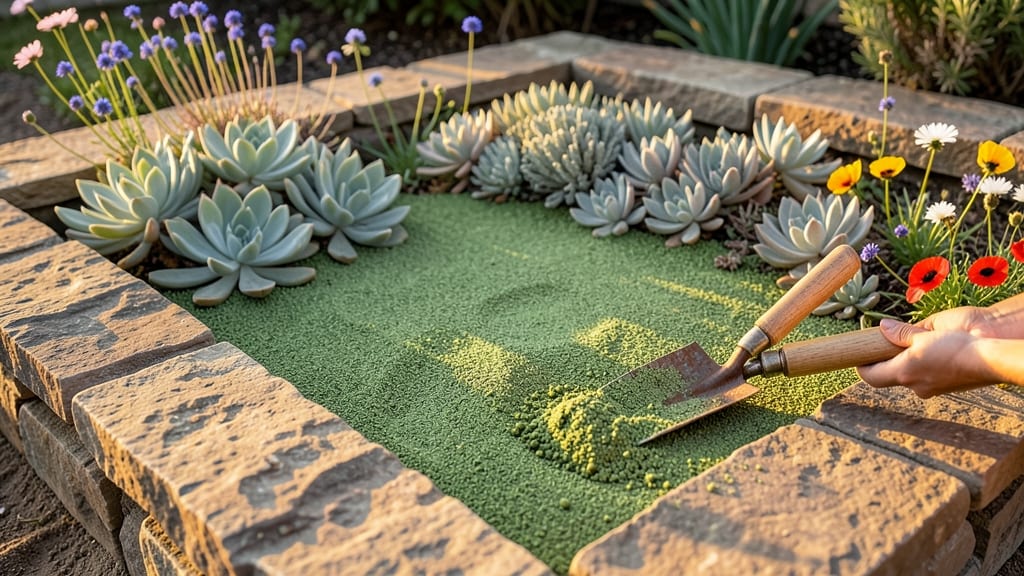
A green sand garden boosts soil quality by incorporating coarse, iron-rich granules that improve drainage, prevent compaction, and encourage stronger root systems without changing soil acidity.
A green sand garden works its magic through its unique texture and mineral composition.
The coarse granules create tiny air pockets in the soil, which improves water drainage and oxygen flow to roots. 🌱 This isn't just about better water movement—it also prevents that dreaded compacted soil that suffocates plant growth.
Many gardeners swear by it for container plants or heavy clay soils where roots struggle to breathe.
What sets green sand apart is its iron content, which supports microbial activity in the soil while maintaining a neutral pH. Unlike regular sand, it won't alter your soil's chemistry, making it a safe choice for most plants.
I've seen dramatic improvements in vegetable gardens and flower beds after just one application, especially during the growing season.
💡 In This Article
- How Green Sand Enhances Soil Aeration and Root Development
- Best Practices for Applying Green Sand to Gardens
How green sand enhances soil aeration and root development
The magic of green sand lies in its unique mineral composition and particle structure. Unlike regular sand, which is primarily silicon dioxide, green sand contains 30-40% iron oxide (hence its greenish hue) and a coarse, angular texture.
These granules range from 0.25 to 2 millimeters in diameter, creating a network of tiny air channels when mixed into soil. This structure prevents particles from packing tightly together, which is the root cause of soil compaction that strangles plant growth. 🌱
Think of it like this: regular soil particles are smooth and round, so they slide past each other easily when wet, leading to compaction. Green sand's jagged edges interlock instead, maintaining those crucial air pockets even after watering.
Studies show soils amended with green sand can maintain 20-30% better porosity than untreated soil, which translates directly to healthier roots. The iron content also plays a role by supporting beneficial soil microbes that break down organic matter, releasing nutrients plants can absorb.
What's fascinating is how this affects root development. Plants in well-aerated soil grow roots that are 30-50% longer on average because they can spread more easily in search of water and nutrients. The coarse texture also prevents that "muddy" feeling in container gardens where water pools at the bottom.
I've noticed in my own raised beds that tomatoes and peppers develop deeper root systems when green sand is incorporated, leading to stronger plants that handle drought better.
There's a common misconception that all sand improves drainage. While regular sand can help, it often creates a "sandy layer" that repels water instead of absorbing it. Green sand's iron content gives it a slight hydrophilic quality, meaning it actually helps water penetrate deeper rather than just sitting on top.
This makes it particularly valuable for clay soils where water either pools or drains too quickly. The key is using the right amount—typically 10-20% by volume mixed into the top 6-12 inches of soil.
Another advantage is its effect on soil temperature. The dark iron particles absorb and radiate heat differently than regular sand, which can be especially beneficial in cooler climates. During spring planting, amended soil warms up 2-3°F faster than untreated soil, giving plants a head start.
This thermal property also helps prevent soil from becoming waterlogged in heavy rainfall, as the improved drainage reduces saturation levels by up to 40% in some cases.
For container gardens, the benefits are even more dramatic. Potted plants often suffer from root-bound conditions where roots circle the container instead of growing outward. Green sand mixed into potting soil creates a looser medium that encourages outward root growth, which is crucial for plants that get transplanted later.
The iron content also helps prevent that "white salt crust" that sometimes forms on container surfaces from fertilizer buildup.