
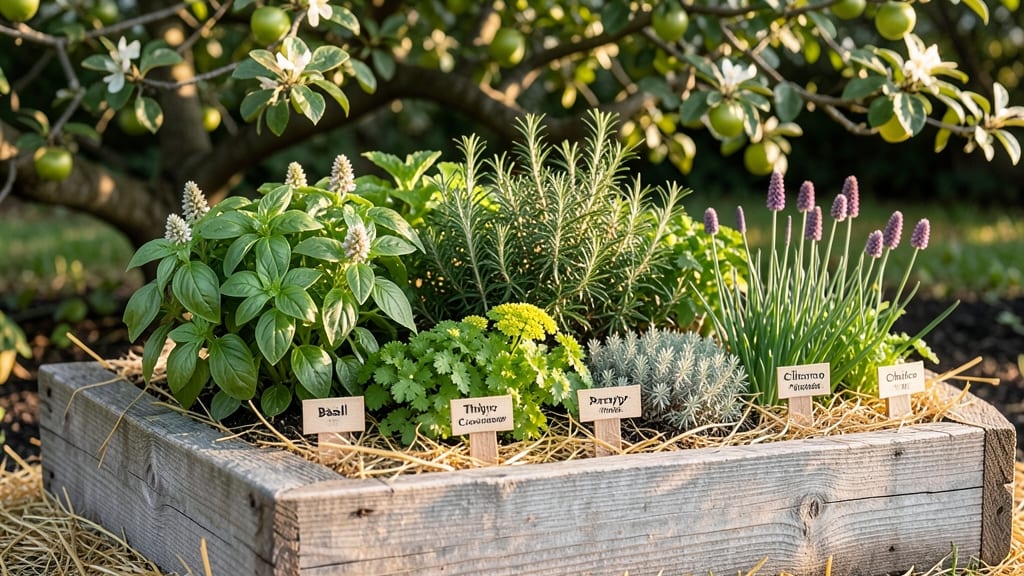
Herbs to Plant in the Garden: Year-Round Harvest Guide for Culinary & Medicinal Use

Planting

Herbs to Plant in the Garden: Year-Round Harvest Guide for Culinary & Medicinal Use

Planting herbs in the garden can turn your backyard into a fragrant, flavorful hub that saves money and boosts wellness—whether you’re dreaming of fresh basil for pesto or calming chamomile for tea.

Here’s the secret: the right herbs thrive with minimal fuss, fitting into containers, sunny patches, or even shady corners. No green thumb required—just a little soil, some sunlight, and a pinch of patience.

From fast-growing annuals like cilantro to hardy perennials like rosemary, I’ll walk you through the easiest herbs to grow, their care needs, and how to pair them for maximum flavor and pollinator power.

By the end, you’ll know exactly which herbs to plant for year-round harvests, whether you’re cooking, healing, or just enjoying the garden’s natural beauty.

Best Time to Plant
Spring
Plant when soil is warm and workable
🌱 spring Planting Recommended

Top 12 easy-to-grow herbs for year-round harvesting in any climate

Growing your own herbs is one of the most rewarding ways to elevate your cooking, boost wellness, and attract pollinators to your garden. The best part? Many thrive with minimal effort, even in small spaces or containers.

Whether you're a beginner or seasoned gardener, these 12 easy-to-grow herbs deliver year-round harvests and adapt to various climates—from hot summers to cold winters.

I’ve categorized these herbs by their growth habits—annuals (like basil and cilantro) that need replanting yearly versus perennials (like oregano and thyme) that return every season.

Each also includes sunlight needs, culinary uses, and medicinal benefits to help you choose the perfect fit for your garden and lifestyle.

How to plan your herb garden for maximum flavor and pollinator benefits

A well-planned herb garden isn't just about fresh flavors—it's a pollinator paradise that deters pests naturally. Start by mapping your space to ensure 6-8 hours of sunlight for most herbs, while shade-tolerant varieties like mint and cilantro can thrive in partial shade.

Group herbs with similar water needs together to simplify maintenance and prevent over- or under-watering.

Soil quality makes all the difference—amend your garden beds with compost to improve drainage and nutrient retention. Herbs like rosemary and thyme prefer well-draining, slightly alkaline soil, while basil and parsley do best in neutral to slightly acidic conditions.

Test your soil pH before planting to avoid stunted growth or disease.

1 Sun-Loving Powerhouses:
  • Rosemary & Oregano: 6+ hours sun, drought-resistant, pair with tomatoes
  • Thyme & Sage: 5-6 hours sun, thrives in rocky soil, deters cabbage moths
  • Basil: 4-6 hours sun, plant near peppers to boost flavor
2 Shade-Tolerant Picks:
  • Mint: Partial shade, invasive—grow in containers, pairs with cabbage
  • Cilantro: 3-4 hours sun, bolts in heat—succession plant, deters aphids
  • Chives: 4-5 hours sun, perennial, repels pests from carrots
3 Pollinator Magnets:
  • Lavender: Full sun, attracts bees, pairs with roses
  • Dill: 5-6 hours sun, draws hoverflies, plant near cucumbers
  • Borage: Full sun, self-seeds, boosts tomato growth

Spacing is critical for airflow and pest control. Dwarf varieties like thyme need only 12 inches apart, while tall herbs like dill or fennel should have 2-3 feet of space. In containers, use 5-7 gallon pots for most herbs, ensuring drainage holes to prevent root rot.

Group fast-spreading herbs like mint and chives in their own pots to avoid crowding out slower growers.

Companion planting maximizes flavor and reduces pests. Pair basil with tomatoes to improve fruit sweetness and deter whiteflies, while rosemary near sage creates a pest-repelling duo that works well in Mediterranean-style gardens.

For low-water gardens, focus on drought-resistant herbs like oregano, thyme, and lavender, which thrive with once-weekly watering once established.

Mulch with straw or wood chips to retain moisture and suppress weeds, then label your plants to track growth habits. Rotate crops annually to prevent soil depletion, and harvest regularly to encourage bushier growth.

With this strategic layout, your herb garden will yield bold flavors, support local pollinators, and become the green heart of your outdoor space. 🌿

★★★★★5.0(14 reviews)
Categories Planting
Herb Type Sunlight Water Needs Harvest Time Key Benefits
Basil Annual Full Sun (6+ hrs) Moderate 60-75 days Pesto, pestos, antioxidant-rich
Mint Perennial Partial Sun (4-6 hrs) High Year-round Tea, digestion, cooling
Oregano Perennial Full Sun (6+ hrs) Low 90+ days Italian dishes, antimicrobial
Thyme Perennial Full Sun (6+ hrs) Low Year-round Soups, cough relief, drought-tolerant
Cilantro Annual Partial Sun (4-6 hrs) Moderate 50-60 days Salsas, detoxifying
Rosemary Perennial Full Sun (6+ hrs) Low Year-round Meat rubs, memory support
Chives Perennial Full Sun (6+ hrs) Moderate Year-round Onion flavor, vitamin C
Parsley Biennial Partial Sun (4-6 hrs) Moderate 70-80 days Garnish, iron-rich
Lavender Perennial Full Sun (6+ hrs) Low Year-round Relaxation, insect repellent
Dill Annual Full Sun (6+ hrs) Moderate 60-70 days Pickles, digestive aid
Sage Perennial Full Sun (6+ hrs) Low