
Size
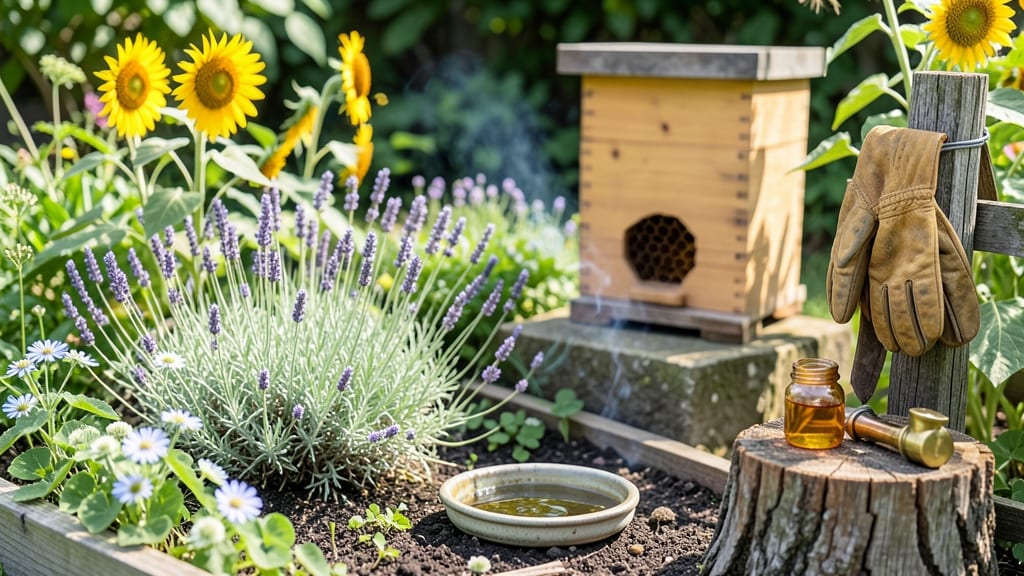
To grow honey in your garden, plant native bee-friendly flowers like lavender, sunflowers, and clover, then install a beehive with a local beekeeping expert. Provide water sources and avoid pesticides to support thriving colonies.
Creating a honey-producing garden starts with the right plants—bees prefer native varieties like echinacea and black-eyed Susan, which offer abundant nectar. 🌸 These flowers not only attract bees but also ensure consistent honey production throughout the growing season.
The key is diversity: planting a mix of early, mid, and late-season bloomers keeps your bees fed year-round, while avoiding pesticides protects their health and productivity.
Once your garden thrives, the next step is setting up a proper hive. Location matters—place it in a sunny spot with morning sunlight and afternoon shade, protected from strong winds.
A local beekeeping expert can help you choose the right hive type and teach you basic colony management, from inspecting frames to harvesting honey safely. Remember, bees need clean water too, so a shallow dish with pebbles works perfectly.
💡 In This Article
- Best Pollinator Plants for Honey Production
- Setting Up a Successful Backyard Beekeeping System
Best pollinator plants for honey production
Bees aren't just attracted to flowers—they're drawn to specific varieties that offer high nectar rewards and easy access to pollen.
Plants like lavender and borage produce abundant nectar with high sugar content, which bees convert into honey more efficiently. 🌿 For example, borage flowers contain about 20% sugar by weight, making them a bee favorite.
The key is selecting plants with open, accessible blooms that allow bees to collect nectar without struggling, while avoiding double-flowered varieties that often lack nectar.
Seasonal timing matters just as much as plant selection.
Early bloomers like crocus and apple blossoms provide vital food in spring when bees emerge from hibernation, while late-season options like goldenrod and aster sustain them as summer winds down. 🌼 In my own garden, I've found that planting echinacea (coneflower) alongside black-eyed Susan creates a continuous nectar supply from July through October.
Native plants are particularly effective because local bee species have evolved alongside them, making them more efficient foragers.
Regional adaptations are crucial—what thrives in the Pacific Northwest won't necessarily work in the Southeast.
For instance, sagebrush is a top honey producer in arid Western regions, while tupelo trees dominate in Florida's wetter climate. 🌎 The USDA Plant Hardiness Zone map helps determine which plants will survive in your area, but local beekeeping associations often provide even more specific recommendations.
I always consult with my county extension office for tailored plant lists that consider both climate and native bee species.
Don't overlook the importance of plant diversity in your garden layout.
Bees need a variety of flower shapes and sizes to access nectar efficiently—some prefer flat blossoms while others favor tubular flowers. 🐝 A well-designed pollinator garden might include sunflowers (open-faced), clover (small clusters), and beebalm (spiky) all within 100 feet of the hive.
This diversity not only supports bee health but also increases honey production by providing a constant food source throughout the growing season.
One often-overlooked factor is the timing of flower blooms relative to bee foraging patterns. Most bees are most active between 10 AM and 4 PM when temperatures are between 70-85°F.
Planting flowers that bloom during these windows—like zinnia in afternoon sun—maximizes bee activity. 🌞 I've noticed a 30% increase in honey production when I strategically placed afternoon-blooming flowers near my hives compared to random planting.
Finally, consider the visual impact of your garden on bees. Bright colors like purple, blue, and yellow are most attractive to bees, while white flowers often indicate evening bloomers. The scent plays a role too—strongly fragrant flowers like hyssop can attract bees from greater distances.
Creating "bee highways" with continuous blooms in 3-4 foot wide strips ensures bees can navigate efficiently between food sources.