
Planting
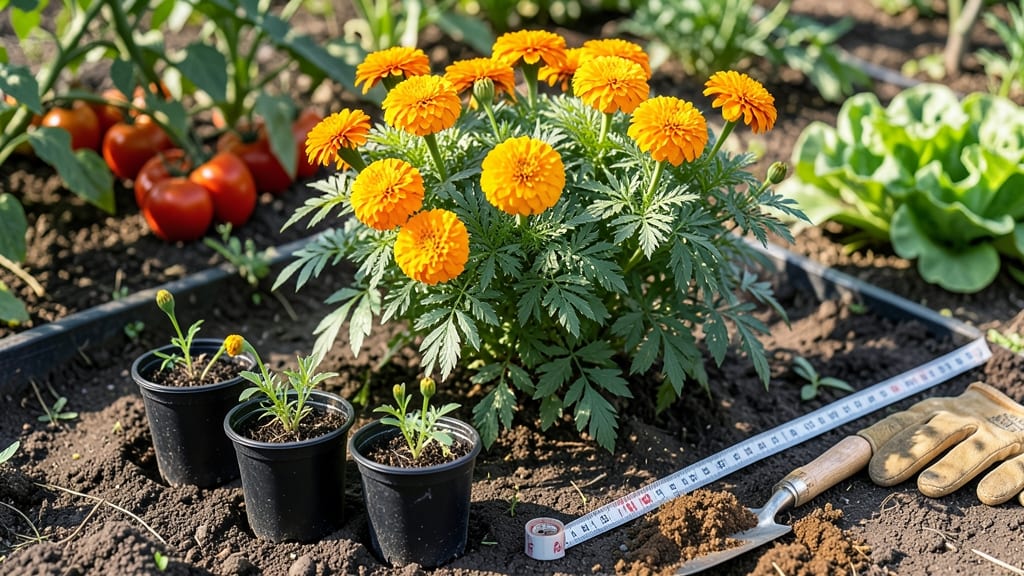
To determine how many marigolds to plant in a vegetable garden, space them 6 to 12 inches apart in rows 12 to 18 inches apart for ideal pest deterrence and airflow. This translates to about 4 to 9 plants per 100 square feet, depending on your garden size and layout.
Marigolds thrive when planted with enough space to spread their pest-repelling roots and release beneficial compounds. 🌼 The recommended spacing—6 to 12 inches between plants—creates a natural barrier against nematodes and aphids while preventing fungal diseases that thrive in dense foliage.
For larger gardens, arranging them in staggered rows (12 to 18 inches apart) ensures even coverage without overcrowding, which can weaken their effectiveness. Smaller gardens benefit from border plantings, while larger plots allow for interplanting between vegetables like tomatoes or peppers.
Proper spacing also maximizes sunlight exposure, which is critical for marigold health and flower production. If you're working with limited space, prioritize high-value areas like garden edges or near susceptible crops.
For example, a 10x10-foot garden would need about 10 marigolds, while a 20x20-foot plot could accommodate up to 40 plants. Adjust based on your specific pest pressures and companion planting goals.
💡 In This Article
- Marigold Spacing Science: Balancing Pest Control and Garden Health
- Marigold Planting Layouts for Small and Large Vegetable Gardens
Marigold spacing science: balancing pest control and garden health
Marigolds release natural compounds called alpha-terthienyl and limonene through their roots, which disrupt the feeding and reproduction cycles of nematodes and aphids.
The spacing of 6 to 12 inches between plants ensures these beneficial chemicals spread effectively across the soil, creating a protective zone that can extend 12 to 18 inches outward. 🌱 This spacing also prevents soil-borne pathogens from spreading between plants, as crowded conditions trap moisture and create ideal environments for fungal diseases like powdery mildew.
The recommended row spacing of 12 to 18 inches allows sunlight to reach the lower leaves, promoting photosynthesis and flower production. Marigolds with dense foliage and vibrant blooms are more effective at attracting pollinators like bees and hoverflies, which further boosts your vegetable garden's productivity.
Overcrowding reduces airflow, leading to weaker plants that produce fewer flowers and less of those crucial pest-repelling compounds. For example, French marigolds (Tagetes patula) benefit from slightly tighter spacing (6 inches apart), while African marigolds (Tagetes erecta) thrive with 12 inches apart to support their larger stature.
When planning your layout, consider the competitive nature of marigolds for nutrients. They're not heavy feeders, but in crowded conditions, they'll compete with nearby vegetables for nitrogen and phosphorus. 💫 This competition reduces their ability to thrive and release beneficial compounds.
For instance, planting marigolds too close to tomatoes can weaken both plants, as tomatoes are also nitrogen-hungry. Instead, place them in strategic locations like garden borders or between rows of less competitive crops like lettuce or radishes.
Another key factor is the marigold's growth habit. Some varieties, like the 'Bonanza' series, grow bushier and benefit from slightly wider spacing (10 to 12 inches), while others like 'Jackpot' marigolds stay more compact and can handle 6 inches apart.
The right spacing also prevents root girdling, where roots circle and strangle the plant as it grows. This is particularly important for marigolds, as stressed plants produce fewer beneficial compounds and are more susceptible to pests.
Seasonal timing plays a role too. In warmer climates, marigolds grow faster and may need slightly wider spacing (12 inches apart) to prevent overcrowding by mid-season.
In cooler regions, where growth is slower, you can plant them 6 inches apart initially and thin as needed. 🌿 The goal is to maintain that sweet spot where marigolds can spread their pest-repelling influence without competing excessively with your vegetables for resources.