
Light Requirements
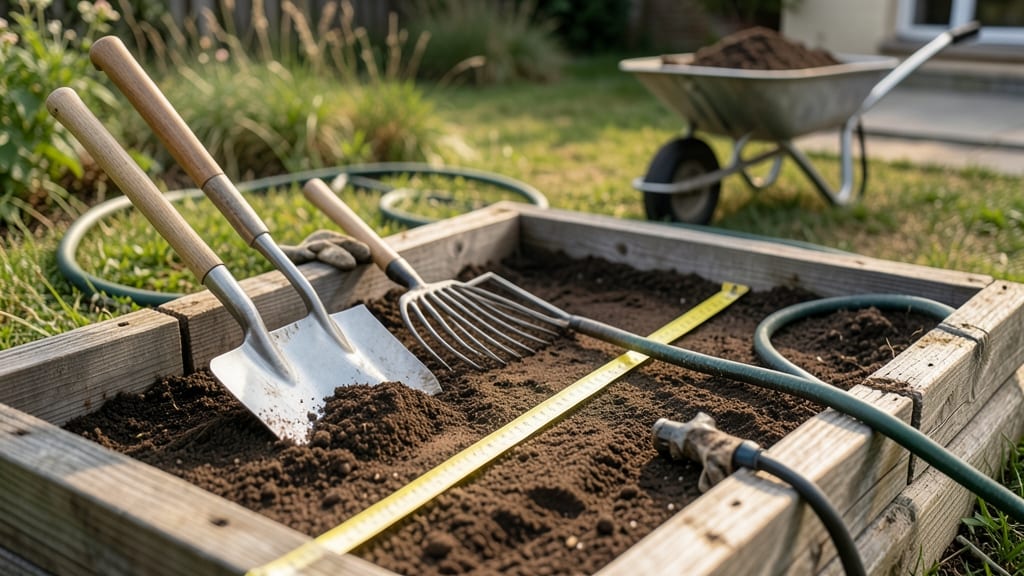
Calculating how much soil for a garden bed requires multiplying its length, width, and depth (e.g., a 4’ x 8’ bed at 12” depth needs 2.67 cubic feet per inch of depth). For a standard 6” bed, you’ll need about 1 cubic foot of soil per square foot of area.
Figuring out soil volume isn’t just about guessing—it’s about making sure your plants have the right foundation.
A 4-foot by 8-foot bed with a 6-inch depth requires about 16 cubic feet of soil, but this changes if you’re adding compost or adjusting for compaction. Looser soils like compost may need 10-20% more volume, while clay-heavy mixes settle less.
I always round up to avoid running short mid-project, especially when working with heavier materials. 💫
Beyond the math, soil type matters just as much as quantity. For vegetable gardens, a mix of topsoil and compost (about 60/40 ratio) ensures good drainage while retaining moisture.
Raised beds often need 12-18 inches of depth to accommodate root crops like carrots or potatoes, which means recalculating your soil needs entirely. Don’t forget to account for any existing soil in your yard—sometimes you can blend it with amendments instead of starting from scratch.
💡 In This Article
- Calculating Soil Volume for Garden Beds
- Choosing the Right Soil Type for Your Garden Bed
Calculating soil volume for garden beds
Soil volume calculations start with simple geometry: multiply your garden bed's length, width, and depth to find the cubic footage. For example, a 4-foot by 8-foot bed with 6 inches of depth (0.5 feet) requires 16 cubic feet of soil.
This works because volume equals length × width × height, but garden soil behaves differently than water—it compacts and settles over time, especially when wet. 🌱
Converting to cubic yards (common for bulk purchases) is straightforward: divide cubic feet by 27. Using our example, 16 cubic feet ÷ 27 ≈ 0.59 cubic yards. However, most gardeners order 0.75 cubic yards to account for compaction—soil settles about 20-30% after watering.
For deeper beds (like 12 inches), you’ll need 32 cubic feet or 1.18 cubic yards, but always round up when buying bulk materials.
Compost and amendments change the equation. A 60/40 mix of topsoil and compost increases volume by 10-20% because compost is fluffier and retains more air. For a 4x8 bed at 6 inches, this means ordering 19-20 cubic feet instead of 16.
The key is measuring loose materials before they settle—spread them out in the bed and pat down lightly to visualize the final volume. 📏
Existing soil in your yard can reduce your needs. If your garden sits on native soil, you might only need to add 4-6 inches of new mix, cutting your volume by half. Test this by digging a 12-inch hole—if the soil is loose and crumbly, it’s likely usable.
For clay-heavy soils, however, you’ll need to add 2-3 inches of sand or perlite to improve drainage, which adds back to your material list.
Professionals often use a 3-sided formula for raised beds: multiply length × width × height, then subtract 10% for wood frame space. A 4x8x12-inch raised bed becomes 3.68 cubic feet after accounting for the frame.
This precision matters when ordering materials—overestimating wastes money, while underestimating leaves you scrambling at the nursery. 💡
For large projects, break the bed into sections. A 10x20-foot area at 8 inches deep needs 133.33 cubic feet (or 4.94 cubic yards). Ordering in 1-cubic-yard increments simplifies logistics, and renting a wheelbarrow for 2-3 cubic feet per trip makes transport manageable.
Always verify depth with a level or string line—uneven beds lead to poor drainage and root stress.