
Watering
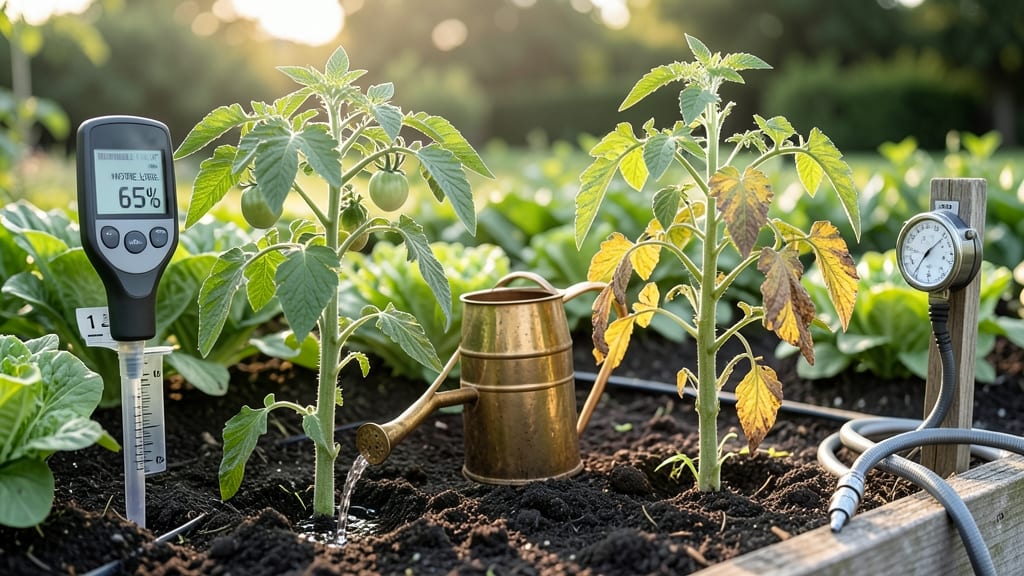
A garden needs how much water does a garden need per day to thrive—typically 1 to 3 inches per week—but guessing that amount can mean the difference between a lush harvest and wilted plants.
Overwatering or underwatering your garden can kill plants faster than pests—yet most gardeners guess their watering needs instead of calculating them precisely. Discover the science-backed formula to water your garden exactly what it needs, down to the millimeter, based on plant type and climate.
Soil type, plant species, and even the time of day you water all play a role in how much your garden truly needs. In this guide, you’ll learn how to read your soil, adjust for your local climate, and avoid common mistakes that waste water—and money.
Whether you’re a beginner or a seasoned gardener, these precision watering tips will help you keep your plants happy without a drop to spare.


Daily water requirements by plant type: the science-backed formula
Understanding your garden's daily water needs starts with recognizing that not all plants drink the same. A thirsty tomato plant requires 1-2 inches of water weekly, while a drought-tolerant lavender might survive on just half an inch.
The key is matching water volume to root depth, soil type, and plant maturity—not just guessing.
My science-backed formula simplifies this by accounting for three critical factors: evaporation rates (hotter = faster loss), soil drainage (clay holds more water than sand), and plant category (veggies need more than succulents).
For example, a 1-foot-tall basil plant in sandy soil might need 0.5 gallons daily in summer, while a 6-foot tomato stake in clay soil could demand 2 gallons.
Here’s the breakdown: Vegetables (like cucumbers and peppers) typically need 1-2 inches per week, flowers (such as roses) thrive on 0.75-1.5 inches, and shrubs/trees often require deep, infrequent watering (1-3 inches every 7-14 days).
The summary-table below shows exact ranges by plant type, adjusted for root zone depth.
To apply this formula, start by measuring your soil’s moisture with a trowel: dig 2 inches deep—if the soil is dry, it’s time to water. For sandy soil, water more frequently but less deeply, while clay soil holds moisture longer, requiring deeper, less frequent watering.
Use a rain gauge or tuna can (buried rim-down) to track rainfall and adjust accordingly.
Pro tip: Morning watering (before 10 AM) reduces evaporation and fungal diseases like powdery mildew. Avoid evening watering, which leaves foliage damp overnight—a fungus magnet. For containers, check soil moisture daily: small pots dry out fastest, while large containers may need watering every 5–7 days.
Adjust your watering based on seasonal shifts. In summer, increase frequency by 30–50% due to higher evaporation, while winter often requires 70% less water. Mulching with 2–4 inches of organic matter (straw, wood chips) locks in moisture and cuts water needs by up to 40%.
My go-to mulch is shredded leaves for perennials—they break down slowly and improve soil over time.
Signs of overwatering include yellowing leaves, mold at the soil line, or plants leaning (root rot). Underwatering shows as crispy edges, wilting despite moist soil, or stunted growth.
If you spot these, adjust immediately: overwatered plants need less frequent, deeper water; underwatered plants require a slow soak until water runs out the
How climate zones affect watering: adjusting for heat, humidity, and rainfall
Your USDA climate zone dictates how often and how much you should water your garden. In Zone 1, where winters are harsh, plants need less frequent watering during cold months but may struggle with drought in summer.
Meanwhile, Zone 11 gardeners face year-round heat, requiring daily adjustments to prevent root stress. The key is understanding how heat, humidity, and rainfall interact with your soil and plants.
For example, a 1-inch weekly watering rule works in Zone 5 but fails in Zone 9, where evaporation rates can double during peak summer. Humidity also plays a role—wet climates like Zone 8 may need less watering, while arid Zone 7 gardens demand deeper, less frequent soaks.
Let’s break down how to adjust your watering schedule by zone.
In dry climates (Zones 7-11), I recommend deep watering 2-3 times per week instead of light daily doses. This encourages roots to grow deeper, making plants more drought-resistant. For instance, succulents and cacti in Zone 10 thrive on weekly 1-inch soaks—any more risks rot.
Use a moisture meter to check soil depth; aim for 60% moisture at 6 inches down.
Humid zones like Zone 8 require caution—overwatering leads to fungal diseases like powdery mildew. Here, I space waterings to every 3-4 days and water at soil level (not overhead) to prevent leaf wetness.
A rain gauge helps track natural rainfall; if you get 1 inch in a week, skip manual watering entirely for most plants.
For rainfall-dependent gardens, measure precipitation with a simple tipping bucket rain gauge. If your area gets 2 inches of rain in 24 hours, hold off watering for 3-5 days unless your soil is sandy (which drains quickly).
In Zone 5, I’ve seen spring rains provide enough moisture for cool-season crops like lettuce, reducing my watering by 40%.
Pro tip: Mulching is your best friend across all zones. A 3-inch layer of organic mulch (like straw or wood chips) retains 30% more moisture and regulates soil temperature.
In Zone 11, I use gravel mulch to reflect heat away from roots. Pair this with drip irrigation for 90% water savings compared to sprinklers.
Adjust your watering like a pro by monitoring soil, not schedules. Stick your finger 2 inches deep—if it’s dry, water; if damp, wait. This zone-specific approach saves water, prevents waste, and keeps your garden thriving year-round. 🌱💧☀️