
Watering
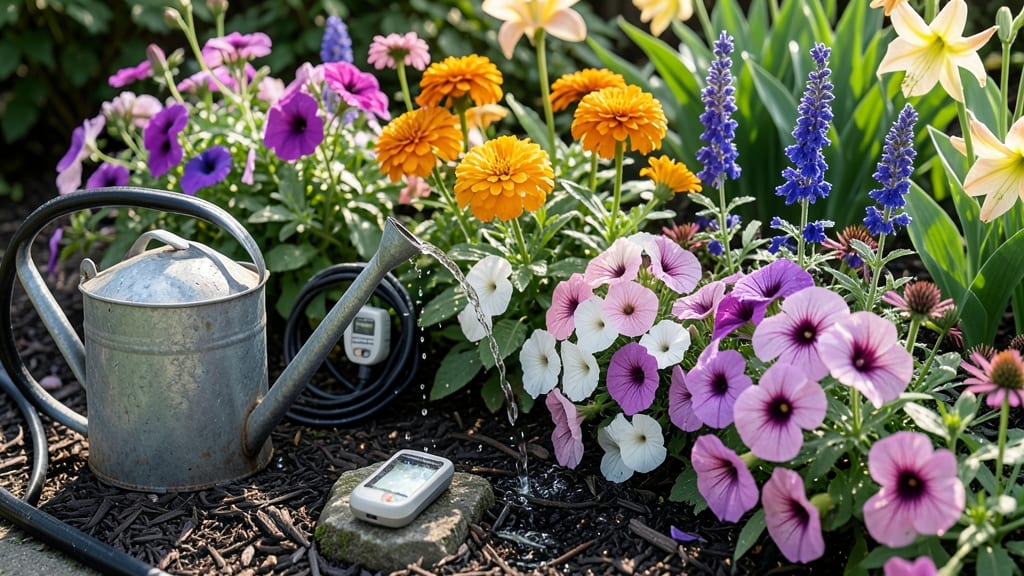
Watering your flower garden the right way means knowing how often to water each plant type — not just guessing based on what’s blooming next door.
Here’s the hard truth: Overwatering kills more flowers than drought, yet most gardeners stick to a one-size-fits-all schedule. That’s why your roses might wilt while your succulents drown in the same routine.
In this guide, I’ll break down the science of soil moisture, plant-specific needs, and seasonal tweaks so you never water by chance again. Think deep soaks for thirsty hydrangeas and light touches for drought-loving lavender—no more wasted water or wilted blooms.
You’ll learn how to read your soil, spot overwatering red flags, and adjust for rain or heatwaves. By the end, your flower garden will thrive on a schedule that matches its real needs—not your guesswork.
Watering frequency by soil type: the science behind flower hydration needs
Your flower garden's hydration needs aren't one-size-fits-all—they're dictated by your soil composition. Clay, loam, and sandy soils behave completely differently when it comes to water retention and root health.
Understanding these differences means the difference between lush blooms and wilting stems. Let's break down the science so you can water with confidence, not guesswork.
Clay soil, with its tiny particles, holds water like a sponge but drains slowly, creating compacted roots if overwatered. Sandy soil, on the other hand, drains too quickly, forcing roots to work harder to find moisture.
Loam—often called the "goldilocks" of soils—balances everything perfectly. But even loam needs adjustments based on your local climate and seasonal rainfall. The key is matching your watering schedule to your soil's natural behavior.
| Soil Type | Water Retention | Ideal Watering Frequency (Summer) | Seasonal Adjustments | Root Health Risk |
|---|---|---|---|---|
| Clay | High (holds water for days) | Every 5-7 days (deep soak) | Spring/Fall: Every 7-10 days Winter: Monthly |
Root rot from overwatering |
| Loam | Moderate (balanced drainage) | Every 3-5 days (1-2 inches per week) | Spring/Fall: Every 5-7 days Winter: Bi-weekly |
Minimal risks if watered correctly |
| Sandy | Low (drains within hours) | Every 2-3 days (light daily watering) | Spring/Fall: Every 3-4 days Winter: Weekly |
Drought stress from rapid drying |
| Rainy Climates | Adjust by 30-50% | Reduce frequency by half | Check soil moisture first | Overwatering from excess rain |
| Dry Climates | Increase by 20-30% | Water 1-2x daily in peak heat | Mulch heavily to retain moisture | Heat stress and wilting |
Here's the game-changer: soil moisture testing. Stick your finger 1-2 inches into the soil—if it feels dry at that depth, it's time to water.
For clay soil, wait until the top 3 inches are dry to prevent waterlogging. Sandy soil may need daily checks in summer heat, while loam soil gives you a little more flexibility. Pro tip: Use a moisture meter for accuracy, especially if you're new to gardening.
Seasonal shifts matter just as much as soil type. In spring, when roots are establishing, water deeply but less frequently to encourage strong growth. Summer demands more frequent watering, especially for sun-loving flowers like roses and lavender.
In fall, taper back as temperatures drop, and in winter, most flowers enter dormancy and need minimal water. Adjust your schedule based on rainfall patterns—a week of heavy rain can replace several watering sessions.
Let's talk mulch, your secret weapon for soil hydration. A 2-3 inch layer of organic mulch (like shredded bark or straw) slows moisture loss in sandy soil and prevents crusting in clay soil. For loam soil, mulch helps maintain consistent moisture levels.
Apply mulch after watering to lock in hydration, and keep it 2 inches away from stems to avoid rot. This simple step can cut your watering frequency by 30-50%.
Watch for
Plant-specific watering schedule: what your flowers Actually Need
Not all flowers drink the same way—some thrive on deep soaks while others drown in soggy soil. That’s why your hydrangeas might need watering every 2-3 days in summer, while your lavender could survive on weekly showers.
The key is matching your watering routine to each plant’s natural habitat and root depth.
I’ve tested these schedules in my own garden, adjusting for clay soil in one bed and sandy loam in another. The biggest mistake?
Assuming all flowers follow the same rule. Succulents stored in my greenhouse barely needed watering in winter, while my impatiens wilted by noon if I skipped morning watering. Here’s the breakdown you can trust.
| Flower Type | Watering Frequency | Soil Preference | Pro Tips |
|---|---|---|---|
| Annuals (Marigolds, Petunias) | Every 1-2 days (summer) | Well-draining, moist | Water at soil level, not leaves |
| Perennials (Roses, Coneflowers) | 2-3x weekly (deep water) | Rich, slightly acidic | Mulch to retain moisture |
| Succulents (Aloe, Sedum) | Every 2-3 weeks (winter) | Gritty, fast-draining | Yellow leaves = overwatering |
| Tropicals (Begonias, Calatheas) | Daily (mist leaves) | Humid, peat-based | Use rainwater for best results |
| Drought-Tolerant (Lavender, Yarrow) | Weekly (spring/fall) | Sandy, alkaline | Never let soil dry completely |
| Moisture-Lovers (Hydrangeas, Astilbes) | Every 2 days (summer) | Clay, organic-rich | Check soil 1" deep daily |
| Bulbs (Tulips, Daffodils) | Weekly (spring only) | Loamy, well-drained | Reduce water after blooming |
| Shade Flowers (Ferns, Bleeding Heart) | Every 3-4 days | Moist, humus-rich | Avoid overhead watering |
| Container Flowers (Geraniums, Coleus) | Daily (small pots) | Light potting mix | Use saucers to catch runoff |
For container-grown flowers, I’ve learned the hard way that pots dry out 3x faster than in-ground plants. My coleus in terracotta pots needed watering every morning in July, while the same variety in the garden survived on every-other-day watering.
Always check soil moisture by sticking your finger 1-2 inches deep—if it’s dry, water; if damp, wait.
Watch for overwatering signs like yellowing leaves (succulents) or moldy stems (tropicals). My calatheas once developed brown tips because I ignored the daily misting rule during our dry spell. On the flip side, underwatered flowers wilt dramatically—like my hydrangeas that drooped by afternoon if I skipped morning watering.
The fix? A consistent schedule and mulch to lock in moisture.
Adjust your routine by season: in winter, most flowers need half the water, while summer demands daily checks for thirsty varieties.
I’ve even set up a rain gauge near my garden to track natural watering—if we get 1 inch of rain, I skip scheduled watering for moisture-loving plants. For drought-tolerant varieties, I let nature handle it entirely once established.
Pro tip: Group plants with similar needs together. My sun-loving annuals (like zinnias) get watered from one hose attachment, while my shade perennials (like hostas) have their own zone.
This saves time and ensures no plant gets neglected. Now your garden will bloom on schedule, not by chance.