
Planting
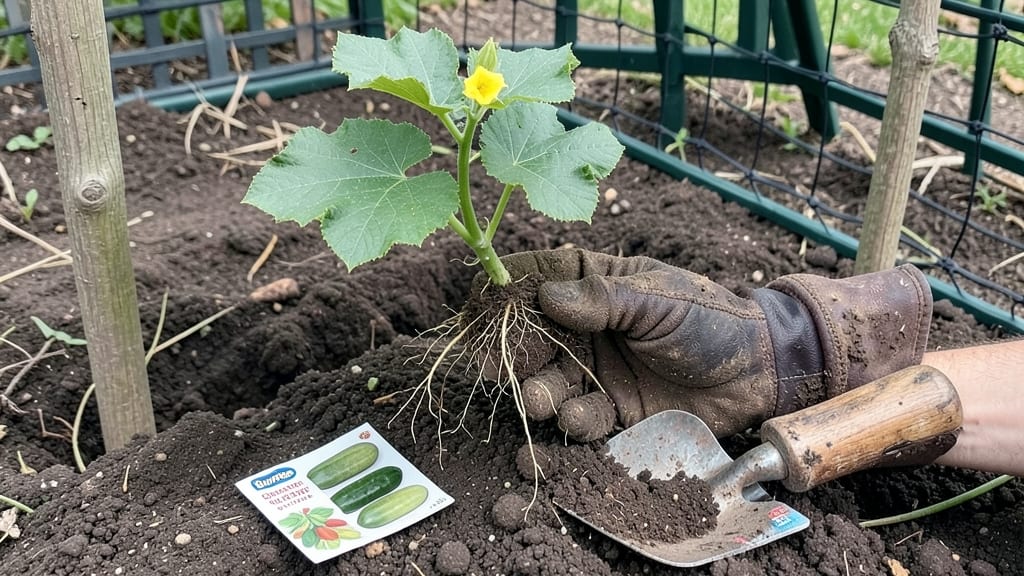
To plant cucumbers in a garden 🥒, start by waiting until the soil warms to at least 60°F—usually after your last frost date in April or May for Zone 6a.
Imagine biting into a crisp, homegrown cucumber straight from your garden—juicy, vine-ripened, and bursting with flavor. The secret to this bounty starts with proper planting techniques, and cucumbers are one of the easiest (yet most rewarding) vegetables to grow if you follow the right steps.
You’ll need loose, well-draining soil rich in organic matter—think compost or aged manure—to give those sprawling vines room to stretch and roots to thrive. Without the right prep, even the hardiest seeds struggle to break through compacted earth, leaving you with leggy, underperforming plants.
In this guide, I’ll walk you through every step—from choosing the perfect spot and spacing seeds just right to avoiding the three biggest mistakes that kill cucumber yields before they even start.
By the end, you’ll know exactly how to set your garden up for a bountiful harvest from June through September.

Perfect cucumber planting conditions: soil, sunlight, and temperature requirements
Cucumbers thrive when planted in the right conditions, and getting these three elements—soil, sunlight, and temperature—just right is the foundation of a bountiful harvest.
I’ve learned that even the hardiest cucumber varieties can struggle if the soil is too dense, the sun is blocked, or the temperature swings too wildly. Let’s break down exactly what your cucumbers need to grow strong and productive.
First, let’s talk soil composition. Cucumbers prefer loose, well-draining soil rich in organic matter. A pH between 6.0 and 6.8 is ideal because it allows roots to absorb nutrients efficiently.
If your soil is heavy clay or sandy, amending it with compost or aged manure will improve its structure and fertility. I always test my soil before planting—it’s a small investment that pays off in bigger yields.
Now, let’s address sunlight requirements. Cucumbers are sun-worshippers and need at least 6 to 8 hours of direct sunlight daily. Partial shade can lead to weak vines and poor fruit production.
In my garden, I’ve noticed that cucumbers planted in south-facing beds or near a trellis in full sun produce the most cucumbers. If you’re in a hot climate, some afternoon shade can actually help prevent sunscald on the fruit.
Temperature plays a critical role in cucumber success. Seeds won’t germinate well below 60°F (15°C), and vines struggle in extreme heat above 90°F (32°C). I wait until the soil warms up after the last frost—usually mid-to-late spring in most regions—and use row covers if nights are still chilly.
This protects young plants and extends the growing season.
Here’s a quick reference for the perfect conditions your cucumbers crave:
| Condition | Ideal Specification | Troubleshooting Tip |
|---|---|---|
| Soil Type | Loamy, well-draining | Add compost if soil is clay-heavy |
| Soil pH | 6.0–6.8 | Test with a soil kit; amend with lime or sulfur if needed |
| Sunlight | 6–8+ hours daily | Use a sun calculator to map your garden’s light exposure |
| Temperature (Germination) | 60–90°F (15–32°C) | Use row covers for cooler nights |
| Temperature (Growth) | 70–85°F (21–29°C) | Provide afternoon shade in extreme heat |
| Soil Nutrients | High in nitrogen, phosphorus, potassium | Side-dress with compost every 4–6 weeks |
One common issue I’ve seen is compacted soil, which restricts root growth and leads to stunted plants. To fix this, I loosen the soil to a depth of 12 inches before planting and mix in organic matter like compost or leaf mold.
If your soil drains poorly, consider building a raised bed—it gives cucumbers the loose, airy environment they crave.
For temperature-sensitive varieties, like Armenian cucumbers, I’ve found that starting seeds indoors and transplanting after the last frost gives them a head start. If you’re in a hot climate, opt for heat-tolerant varieties like Lemon cucumbers or Suyo Long, which handle higher temperatures better.
Always check the seed packet for specific recommendations.
Finally, don’t overlook the importance of consistent moisture in the soil. Cucumbers need 1–2 inches of water per week, but their roots are shallow, so mulching with straw or shredded leaves helps retain moisture and keeps roots cool.
I’ve noticed that plants wilt quickly in dry soil, so I water deeply in the morning to avoid fungal issues from evening moisture.
By nailing these three conditions—soil, sunlight, and temperature—you’ll set your cucumbers up for success. Once they’re planted in the right spot, the next step is proper spacing and care, which we’ll cover in the next section. Happy growing! 🌱
Step-by-step cucumber planting guide: spacing, depth, and companion planting tips
Cucumbers thrive with the right planting approach, and getting the spacing, depth, and companion plants right makes all the difference. Whether you're starting with seeds or transplants, these steps will set your vines up for success.
I’ve grown cucumbers for years, and I can tell you—proper spacing alone can double your yield!
First, decide between seeds or transplants. Seeds are cheaper and more rewarding, but transplants give you a head start. For seeds, soak them overnight to speed up germination.
If using transplants, choose healthy ones with dark green leaves and no signs of yellowing. Both methods require the same spacing and depth, so don’t worry about switching mid-planting!
How to Plant Cucumbers in 5 Simple Steps
- 1 Prepare the soil: Loosen soil to 12 inches deep and mix in 2 inches of compost. Cucumbers love rich, well-draining soil with a pH of 6.0-6.8. Avoid fresh manure—it can burn tender roots!
-
2
Choose your method:
- For seeds: Plant 3 seeds per hill, 1 inch deep, and 3-4 feet apart in rows 5-6 feet apart.
- For transplants: Dig holes twice as wide as the root ball and 1 inch deeper than the container. Gently place the plant and fill with soil.
- 3 Space for success: Cucumbers are sprawling vines, so give them room! Use the hill method (mound soil) for bush varieties or flat planting with trellising for vining types. Bush varieties need 2-3 feet apart, while vining types need 3-4 feet apart.
- 4 Add companion plants: Plant basil nearby to repel pests and improve flavor. Marigolds deter beetles, and nasturtiums act as a trap crop. Avoid planting near potatoes, sage, or aromatic herbs like dill—they can stunt growth.
- 5 Trellis for vertical growth: Install a trellis or cage at planting time to save space and improve airflow. Train vines upward by gently tying them with soft twine. This also reduces disease risk and makes harvesting easier!
After planting, water deeply to settle the soil and encourage root growth. Mulch with straw or shredded leaves to retain moisture and suppress weeds. Cucumbers are heavy drinkers, so keep the soil consistently moist but not soggy.
I’ve seen firsthand how proper spacing and trellising can turn a chaotic garden corner into a neat, high-yielding cucumber patch!
Pro tip: If you’re short on space, try container growing. Use a large pot (at least 12 inches deep) with drainage holes and plant one bush variety per container. Just ensure the container gets full sun and water daily, as pots dry out faster than garden beds.
With these steps, you’ll be well on your way to a bountiful cucumber harvest. Remember, cucumbers love warmth and space—give them what they need, and they’ll reward you with crisp, flavorful fruits all season long! 🥒