
Tools
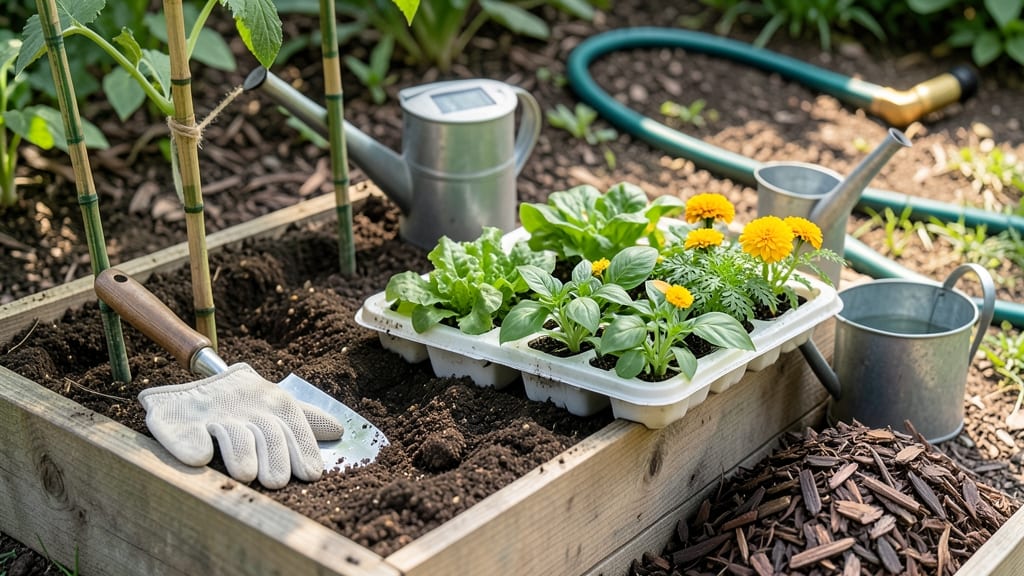
To start a garden from scratch, begin by selecting a sunny spot, testing your soil's nutrients, picking beginner-friendly plants like basil or radishes, and sketching a simple layout. Use raised beds or containers, enrich the soil with compost, and maintain a regular watering schedule.
Starting a garden from scratch is all about breaking it down into manageable steps that build confidence. 🌱 The right location is your foundation—most vegetables and herbs need at least 6-8 hours of sunlight daily, so check your yard's sun patterns before committing.
I recommend starting small with 4-6 square feet of space to avoid overwhelm, especially if you're new to gardening. This approach lets you focus on mastering basic techniques like proper soil prep and consistent watering without spreading yourself too thin.
One of the biggest mistakes beginners make is skipping the soil test. Many assume their yard soil is garden-ready, but hidden issues like poor drainage or acidic pH can stifle plant growth.
A simple $20 soil test kit from your local garden center reveals what amendments you need—whether it's lime to raise pH or compost to improve texture. I've found that amending soil with 2-3 inches of compost before planting makes a dramatic difference in plant health and yield.
The key to long-term success lies in consistency. Watering deeply 2-3 times per week (rather than light daily sprinkles) encourages roots to grow downward, making plants more resilient.
I keep a small notebook by my garden to track when I water and fertilize—this helps me spot patterns, like when my lettuce bolts in hot weather. Remember, gardening is a learning process, and even experienced growers have trial-and-error seasons.
The plants you choose should match your climate and lifestyle—herbs like thyme and rosemary thrive with neglect, while lettuce grows best with frequent harvesting.
💡 In This Article
- Essential Steps for Planning a Beginner-Friendly Garden Layout
- Best First Plants and Tools for a New Gardener’s Starter Kit
Essential steps for planning a beginner-friendly garden layout
Designing your garden layout starts with sunlight mapping—most vegetables need 6-8 hours of direct sun daily, while herbs like parsley tolerate 4-6 hours. Use a simple method: mark your yard with stakes every 5 feet and observe sunlight patterns for a week.
I’ve found that south-facing areas (in the Northern Hemisphere) get the most consistent light, making them ideal for tomatoes or peppers.
Shade-loving plants like spinach or Swiss chard belong in north-facing spots or under taller plants. 🌞 This spatial planning prevents overcrowding and ensures each plant gets its ideal growing conditions.
Container gardening is perfect for beginners with limited space or poor soil. A 5-gallon pot holds enough soil for one tomato plant, while herbs like basil thrive in 6-inch pots. The key is drainage—containers without holes cause root rot.
I recommend using lightweight potting mix (not garden soil) since it holds moisture without compacting. For in-ground beds, keep paths 2-3 feet wide to allow easy access without trampling plants.
Raised beds with 12-inch-high sides warm up faster in spring and improve drainage, which is why they’re popular for cool climates.
Plant spacing is often overlooked but critical for airflow and disease prevention. Follow seed packet guidelines—crowding leads to competition for nutrients and increases humidity, which attracts pests. For example, lettuce needs 8-12 inches between plants, while carrots can grow 3 inches apart in rows.
Group plants with similar water needs together (like basil and tomatoes) to simplify irrigation. I’ve seen beginners struggle with overcrowded beds where weeds take over—starting with a 3x6-foot bed gives you room to experiment without chaos. 🌱
Consider your garden’s "zones" based on maintenance needs. Place high-maintenance plants (like frequent-harvested lettuce) near your kitchen for convenience, while low-maintenance perennials (like asparagus) can go farther back. Windbreaks like cornstalks or a trellis protect delicate plants from harsh winds.
I’ve noticed that even a 3-foot-tall fence or bamboo screen can double your growing space by creating a microclimate for shade-loving plants. This zoning approach turns your garden into a functional ecosystem rather than a decorative space.
Seasonal rotation is another pro tip for beginners. Heavy feeders like tomatoes deplete soil nutrients, so follow them with nitrogen-fixers like beans or peas next year. I keep a simple sketch of my layout, noting which plants thrived (or failed) each season.
This helps me adjust spacing and placement year after year. For example, radishes grow quickly and can be planted between slower-growing carrots—this "interplanting" maximizes space and keeps your garden productive. 💫