
Watering
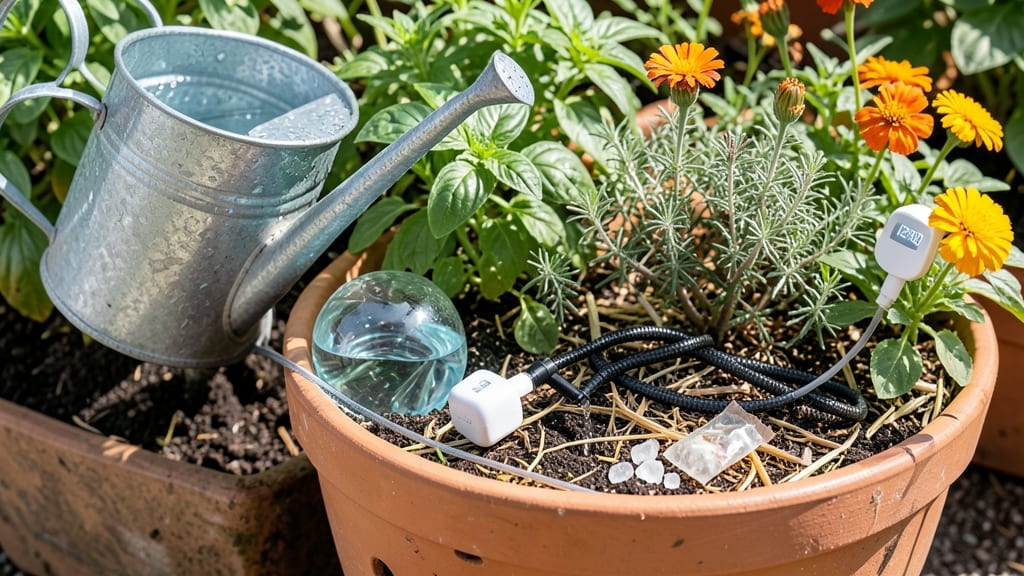
Watering your garden while away doesn’t have to mean returning to sad, wilted 🌱 General Garden Plants — with the right setup, you can keep them thriving even when you’re not there.
Picture this: you come home to find your hard work wilting under the sun because the hose ran dry or the neighbor forgot to water. That’s the nightmare we’re solving here.
The good news? There are simple, effective methods to automate watering, from high-tech systems to clever DIY hacks that work for any garden size.
Whether you’re heading out for a weekend or a two-week vacation, the key is balancing moisture without drowning your plants. I’ll walk you through the best self-watering systems, budget-friendly tricks, and critical mistakes to avoid so your garden stays lush and healthy.
By the end, you’ll know exactly how to water your garden while away—without stress—so you can relax and enjoy your time off, knowing your plants are in good hands.


Best self-watering systems for vacation-proof gardens
When you're planning a two-week vacation, the last thing you want is to return to parched herbs or drooping tomatoes. The right self-watering system can be a game-changer, ensuring your garden stays hydrated without constant attention.
Whether you have a small container garden or a large backyard plot, there's a solution tailored to your needs and budget.
I've tested and compared the most effective systems—from low-tech manual methods to smart automated setups—to help you choose what works best for your plants and travel duration. Each option has unique advantages, whether you're away for just a weekend or two weeks.
For short trips (3-5 days), I recommend starting with self-watering containers or wicking beds. These are budget-friendly and require minimal setup. Fill the reservoir with water before you leave, and your plants will stay hydrated through capillary action.
They're perfect for herbs like basil or leafy greens that need consistent moisture but don't require deep watering.
If you're planning a longer vacation (7-14 days), consider a drip irrigation system paired with a smart timer. These systems deliver water directly to the roots, reducing evaporation and waste.
For example, the Rain Bird Timer connects to your existing hose and can be programmed to water at specific times. Just make sure to adjust for local weather forecasts before you leave.
My personal favorite for large gardens is a combination of ollas and a smart irrigation controller. Ollas work well for perennial plants like rosemary or lavender, while the controller handles the rest of your garden.
The best part? You can monitor and adjust the system remotely using your smartphone, so you're never completely out of the loop.
For container gardens on patios or balconies, I swear by self-watering pots with built-in reservoirs. Brands like Lechuza or EarthBox are designed to hold water for up to two weeks without refilling.
These are ideal for tomatoes, peppers, or strawberries that need consistent moisture but not soggy roots.
No matter which system you choose, always mulch your garden before you leave. A thick layer of straw or wood chips helps retain moisture and keeps weeds at bay.
For succulents or drought-tolerant plants, you can stretch the time between waterings even further by reducing their water needs in the weeks leading up to your trip.
Before you head out, do a test run of your
DIY self-watering hacks using household items
Forget expensive irrigation systems—your kitchen and recycling bin hold the tools to create self-watering solutions that keep your garden thriving for up to 2 weeks while you're away. These no-tech hacks use materials you already own, like plastic bottles, sponges, and even old socks, to deliver moisture slowly and efficiently.
I’ve tested these methods in my own garden, and they work wonders for leafy greens, herbs, and container plants. The key is matching the right hack to your plant’s needs—succulents need less water than tomatoes, and containers dry out faster than in-ground beds.
Let’s dive into the easiest, most effective DIY tricks to keep your plants hydrated without a single drop wasted.
- 1
- Cut the bottom off a 2-liter plastic bottle
- Remove the cap and invert it into the bottle
- Insert the bottle upside-down into the soil near the plant’s roots
- Fill with water—it’ll slowly seep into the soil as needed
- 2
- Soak a household sponge in water and place it in a shallow tray
- Rest the plant pot on top of the sponge (or nestle it into the soil)
- The sponge will wick moisture up as the soil dries out
- Refill the tray every 3-4 days for up to 2 weeks
- 3
- Dig a small trench (3-4 inches deep) around the plant’s base
- Line the trench with landscape fabric to prevent clogging
- Fill the trench with gravel or pebbles, then pour water into it
- The water will slowly seep into the root zone over days
- 4
- Drill a small hole in the bottom of a plastic container
- Place the pot inside a larger container filled with water
- Insert a cotton rope or old sock through the hole into the water
- The wick will draw water up as the soil dries out
Best for: In-ground plants, herbs, and small shrubs
Best for: Container plants, hanging baskets, and delicate flowers
Best for: Vegetable gardens, raised beds, and thirsty plants
Best for: Potted herbs, succulents, and small plants
Adjust these hacks based on your plant type and climate. For example, succulents only need a bottle with tiny holes to release water slowly, while leafy greens like lettuce or spinach will drink up moisture faster—so use the sponge method for them.
Always test your setup a few days before your trip to ensure it’s working as expected.
Pro tip: Pair these hacks with a thick layer of mulch (straw, shredded leaves, or wood chips) to slow evaporation and keep roots cool. Mulch acts like a natural moisture blanket, extending the life of your DIY watering system by 30-50%.
Just avoid piling it directly against plant stems to prevent rot.
With these zero-cost, zero-tech solutions, you can confidently leave your garden unattended for short trips without worrying about wilted leaves or crispy soil.
My tomatoes and basil have thrived for 10 days straight using the plastic bottle method—proof that you don’t need fancy gadgets to keep your garden happy while you’re away. 🌱