
Vegetables
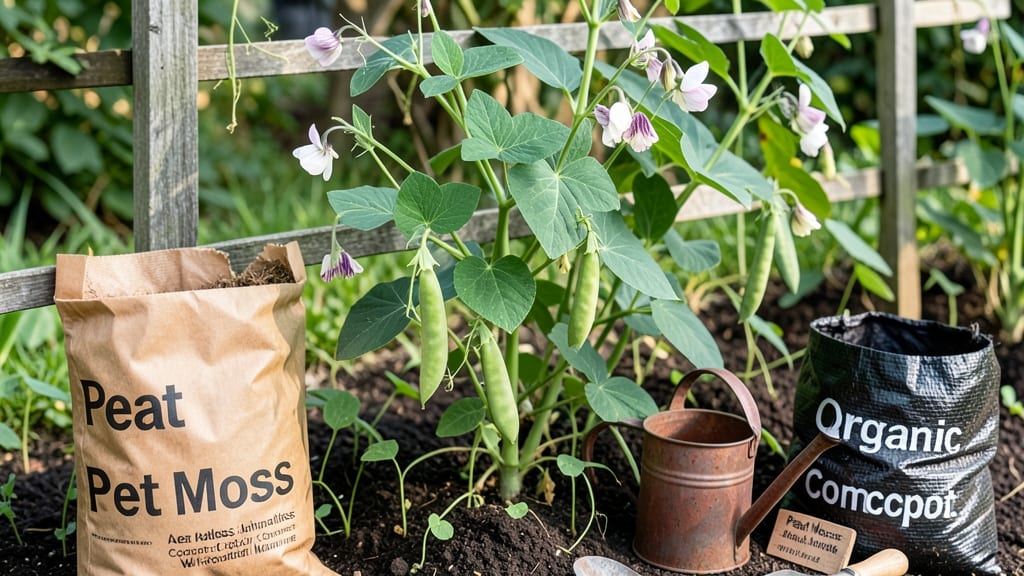
Peat moss is bad for vegetable gardens because it depletes carbon-rich wetlands, harms ecosystems, and releases stored CO₂ when harvested. Sustainable alternatives like coconut coir or compost improve soil health without environmental harm.
Peat moss may seem like a gardener's best friend, but its environmental cost is too high to ignore. 🌱 Harvesting it destroys vital carbon sinks—peatlands store twice as much carbon as all the world's forests combined—and releases massive amounts of CO₂ when drained.
What's worse, these ecosystems take centuries to recover, if ever. For vegetable gardens, the trade-off isn't worth it when better alternatives exist that nourish your soil without harming the planet.
Instead of peat moss, I recommend coconut coir for its excellent moisture retention and neutral pH, or well-aged compost to boost nutrient levels naturally. Both options support long-term soil fertility while protecting fragile ecosystems. The shift might take some adjustment, but your garden—and the planet—will thank you.
💡 In This Article
- Environmental Damage Caused by Peat Moss Harvesting
- Best Peat-Free Soil Amendments for Vegetable Gardens
Environmental damage caused by peat moss harvesting
Peat moss forms over thousands of years in peatlands—wetlands that act as the world's largest carbon reservoirs. These ecosystems store 2.4 trillion tons of carbon, roughly 30% of all soil carbon globally. When harvested, peatlands lose their protective water layers, exposing the peat to oxygen.
This triggers rapid decomposition, releasing 4.3 billion tons of CO₂ annually—equivalent to 10% of global emissions from fossil fuels. 🌍 The process is irreversible; once drained, peatlands often become barren wastelands, unable to recover their original biodiversity or carbon-storing capacity.
The biodiversity loss is equally devastating. Peatlands support unique species like carnivorous plants (such as pitcher plants) and endangered birds like the great snipe, which rely on these wetlands for nesting and feeding. Harvesting peat moss disrupts these habitats, pushing species toward extinction.
In Finland alone, 90% of peatlands have been degraded due to harvesting, leading to a 70% decline in breeding bird populations since the 1970s. The water cycle also collapses—peatlands regulate water flow, preventing floods and droughts, but their destruction turns them into dry, eroded landscapes.
What makes this especially troubling for gardeners is that peat moss's benefits—like moisture retention and acidity—are temporary. Once dried and added to soil, it breaks down quickly, losing its structure within 1-3 years. This forces gardeners into a cycle of reapplication, perpetuating the environmental harm.
The irony? Synthetic alternatives like coconut coir or compost mimic peat moss's properties without the ecological cost. 🌱 For example, coconut coir retains 7-10 times its weight in water and has a neutral pH, making it ideal for vegetable gardens while being fully renewable.
Climate scientists warn that peatland destruction could push global temperatures up by 0.5°C by 2100—a critical threshold for avoiding catastrophic climate effects. Even small-scale peat moss use contributes to this crisis. The good news? Switching to peat-free amendments doesn’t sacrifice garden performance.
Compost, for instance, improves soil structure 10 times faster than peat moss and adds essential nutrients like nitrogen and phosphorus, which vegetables crave. The choice is clear: protect the planet while growing healthier plants.
Consider this: every ton of peat moss harvested releases 4.2 tons of CO₂, the same as driving a car 10,000 miles. For a typical vegetable garden requiring 5-10 pounds of peat moss per year, that’s like adding 200-400 miles of car emissions annually to your carbon footprint.
The environmental math doesn’t add up—especially when better options exist. 💫