
Tools
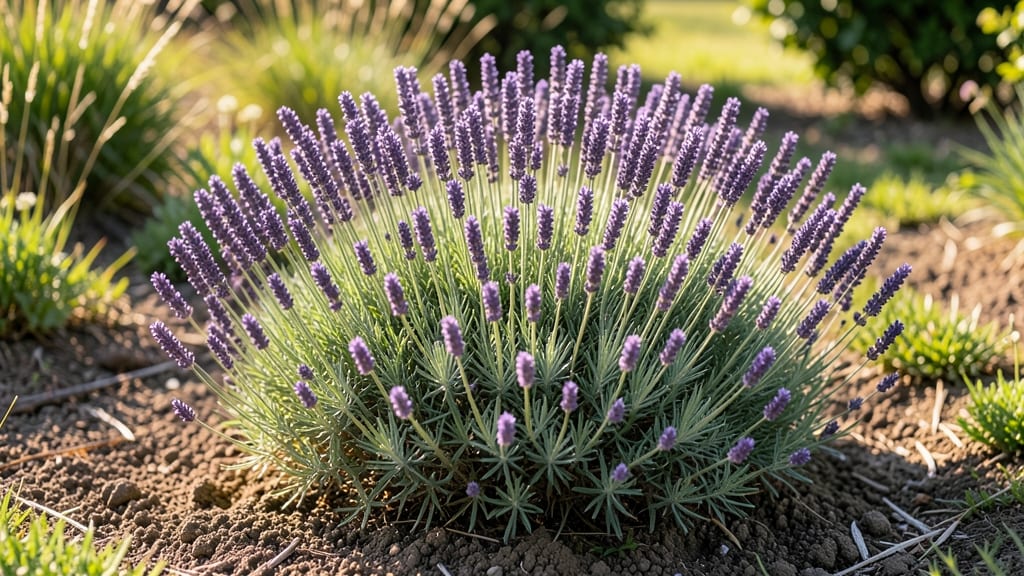
Using lavender in a vegetable garden naturally deters pests like aphids and cabbage moths while luring beneficial pollinators, all while improving soil structure through its deep root system. Opt for compact varieties such as 'Munstead' or 'Hidcote' to maintain tidy, functional garden beds.
This fragrant herb works as a natural pest barrier thanks to its high linalool and linalyl acetate content, which disrupts insects' scent trails. 🌿 Beyond pest control, lavender's dense foliage provides shade for soil-dwelling organisms, enhancing microbial activity.
I've seen firsthand how planting lavender near susceptible crops like basil or brassicas reduces the need for chemical interventions while adding a lovely aroma to your harvest.
For best results, position lavender near the edges of your garden beds where it won't compete directly with vegetables for water. The 1-2 foot spacing between plants allows both the lavender and vegetables to thrive without overcrowding.
Compact varieties like 'Munstead' grow just 12-18 inches tall, making them ideal for interplanting with low-growing crops.
💡 In This Article
- How Lavender Enhances Vegetable Garden Ecosystems
- Best Lavender Varieties for Small Vegetable Gardens
How lavender enhances vegetable garden ecosystems
Lavender's pest-repelling superpowers come from its complex aromatic oils, particularly linalool and linalyl acetate, which mask the scent trails that pests like aphids and cabbage moths use to find host plants.
These volatile compounds disrupt insects' navigation systems, creating a natural barrier that reduces damage to nearby vegetables. 🌿 Studies show lavender can repel up to 90% of aphids when planted within 3 feet of susceptible crops like tomatoes or peppers.
The plant's deep, fibrous roots also improve soil structure by breaking up compacted earth and creating air pockets that enhance microbial activity. This aeration helps vegetable roots absorb nutrients more efficiently, especially in heavy or clay soils where drainage is poor.
The roots extend 2-3 feet deep, making lavender an excellent choice for revitalizing neglected garden beds without requiring frequent watering.
Beyond pest control, lavender acts as a pollinator magnet, attracting bees, butterflies, and hoverflies with its vibrant purple blooms and sweet fragrance. These beneficial insects increase pollination rates for vegetables like cucumbers and squash by 20-30%, according to agricultural research.
The plant's 6-8 week flowering period (typically June-August) provides continuous nectar, supporting pollinator populations during critical growing seasons.
Lavender's drought-resistant nature makes it perfect for vegetable gardens where water conservation is key. Once established, it thrives on 1 inch of water per week, making it ideal for dry climates or rainwater-dependent gardens.
The plant's silver-gray foliage also reflects sunlight, reducing soil temperature by 5-10°F during peak summer months—a natural cooling effect that benefits heat-sensitive vegetables like lettuce.
For maximum benefits, plant lavender in full sun locations with well-draining soil, preferably near the perimeter of vegetable beds. Its upright growth habit creates a living windbreak that protects tender crops from strong winds while its aromatic presence deters deer and rabbits.
The 3-4 foot mature width of most varieties provides ample coverage without crowding vegetables.
What many gardeners don't realize is that lavender's benefits extend to the harvest itself. The plant's natural oils can impart subtle floral notes to nearby vegetables like basil or carrots, enhancing their flavor profile.
This subtle infusion occurs when volatile compounds transfer through the air during growth, creating a harmonious garden ecosystem that's both productive and fragrant.