
Tools
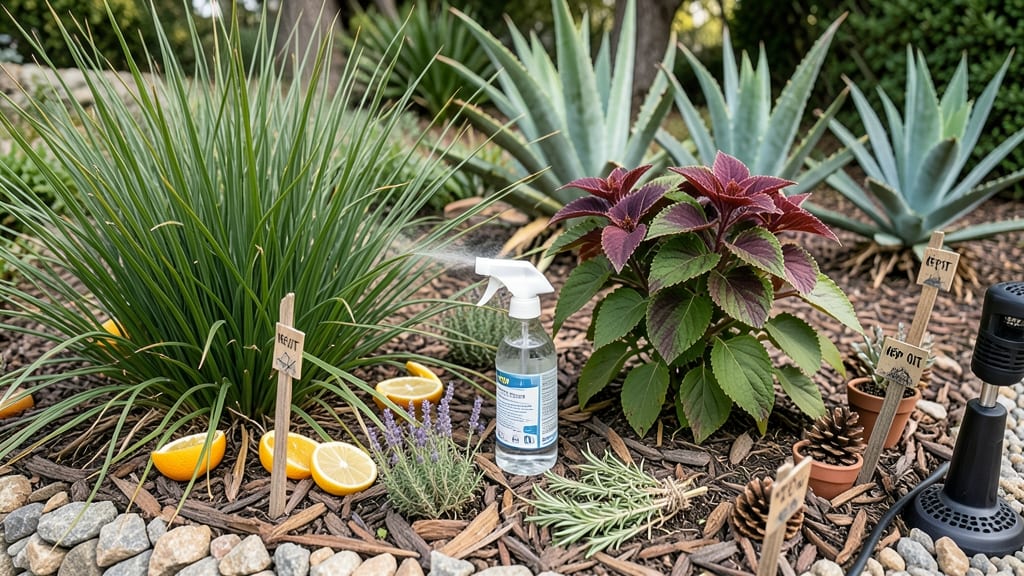
Creating a natural cat deterrent for gardens involves strategic plant placement like coleus canina, rue, and lavender, which cats avoid due to their strong scents or prickly textures. Citrus peels and rosemary also form effective, non-toxic barriers that discourage digging and marking.
Cats have sensitive noses and dislike the pungent aromas of certain plants, making them excellent natural barriers. 🌿 For instance, rue contains coumarin—a compound cats find unpleasant—while lavender's scent disrupts their territorial marking instincts.
I've seen rosemary and citrus peels work wonders in my own garden, especially when combined with physical barriers like raised beds. The key is placement: surround vulnerable areas with these plants, and cats will instinctively avoid them.
Beyond just repelling cats, these plants also benefit your garden's health. Many, like lavender and rosemary, attract pollinators while keeping pests at bay. The trick is maintaining their potency—regular pruning and fresh citrus applications keep the deterrent effect strong season after season.
💡 In This Article
- Why Cats Avoid These Plants: Science Behind Feline Aversion
- How to Plant and Maintain Cat-Repellent Gardens
Why cats avoid these plants: science behind feline aversion
Cats possess an extraordinary sense of smell—up to 14 times more sensitive than humans—making them highly attuned to chemical compounds in plants. Rue, for example, contains coumarin, a bitter alkaloid that cats find intensely unpleasant.
When crushed, rue leaves release this compound, creating a scent that triggers their avoidance instincts. Similarly, citral in citrus peels disrupts their scent-marking behaviors, as cats rely on pheromones to communicate territory.
The texture of certain plants also plays a role. Coleus canina, with its prickly, hairy leaves, creates an uncomfortable tactile experience for cats. This physical deterrent works alongside scent-based repellents to discourage digging.
Lavender's high linalool content (up to 30-45% of its essential oil) creates a scent profile that cats find overwhelming, while rosemary's camphor-like aroma mimics the scent of some predator urine, triggering instinctive avoidance.
What makes these plants particularly effective is their dual-action mechanism. The volatile organic compounds (VOCs) in their essential oils don't just repel—they actually create a psychological barrier. Studies show cats will avoid areas where these scents persist, even if the plants themselves aren't present.
This explains why sprinkling dried citrus peels or using rosemary-based sprays can work as deterrents even when the plants aren't actively growing.
Temperature and plant health also affect potency. During peak summer months, when plants are most active, their essential oil production reaches its highest (up to 50% more than in cooler seasons).
This means your deterrent garden will be most effective between June and August. However, even in winter, dried leaves or concentrated essential oil extracts can maintain repellent properties when applied strategically.
Interestingly, cats' aversion extends beyond just scent. The bitter taste of many deterrent plants (like rue) creates a negative reinforcement loop. When cats investigate these plants and experience unpleasant tastes, they associate the area with discomfort.
This behavioral conditioning makes the deterrents more effective over time, as cats learn to avoid entire garden sections rather than just specific plants.
For maximum effectiveness, combine 3-5 different deterrent plants in your garden. This creates a multi-sensory barrier that's harder for cats to navigate. For instance, pairing lavender (scent) with coleus canina (texture) and rosemary (taste) creates a comprehensive repellent system that addresses all of a cat's sensory triggers.
Remember that cats are also territorial animals. When they encounter these deterrents, they'll often mark their territory elsewhere—which is why it's important to create a continuous barrier around your garden's perimeter. This prevents them from finding gaps where they can access vulnerable areas.