
Neem Oil
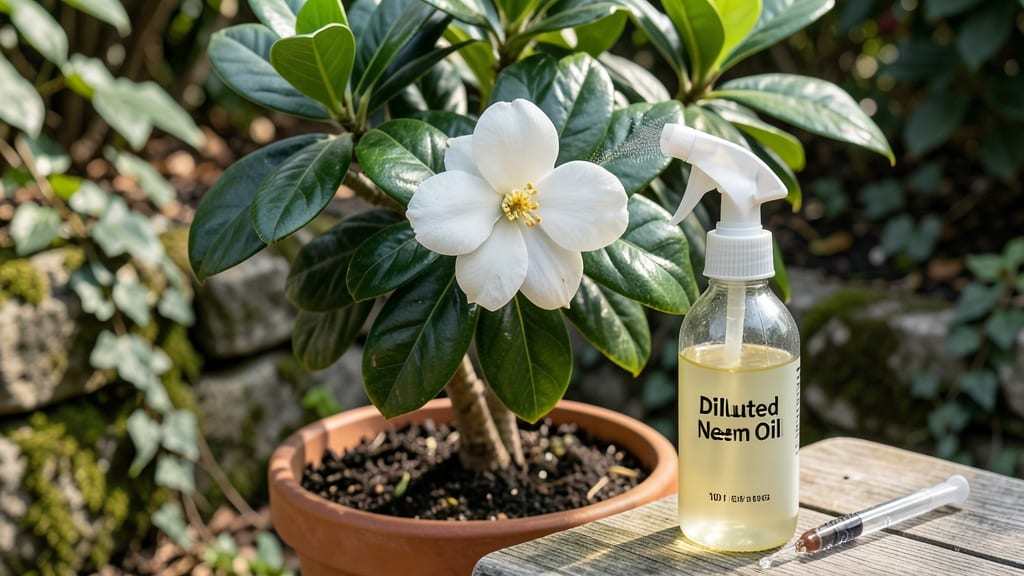
Using neem oil on gardenia plants helps control pests like aphids and spider mites while preventing fungal diseases, but must be diluted properly and applied during cooler hours to avoid leaf damage. Always test on a small area first.
Neem oil is a natural powerhouse for gardenias because it contains azadirachtin, a compound that disrupts pests' feeding and reproduction cycles. 🌿 Unlike synthetic pesticides, it works systemically—meaning it's absorbed into the plant's tissues—while also forming a protective barrier against fungal spores.
I've seen gardenias treated with neem oil recover from severe aphid infestations within just two weeks, especially when applied consistently. The key is patience and precision: gardenias are sensitive, so even the right treatment requires careful monitoring for any signs of stress.
For best results, I recommend mixing 1 teaspoon of neem oil per quart of water with a drop of mild dish soap as an emulsifier.
Apply this solution in the early morning or late afternoon when temperatures are below 85°F—this prevents leaf burn and allows the oil to bind effectively. Always avoid spraying directly on flowers, as neem oil can cause discoloration.
If you notice yellowing leaves after treatment, flush the soil with water to dilute any residue.
💡 In This Article
- How Neem Oil Works on Gardenia Plants
- Step-by-Step Neem Oil Application Guide for Gardenias
How neem oil works on gardenia plants
Neem oil's effectiveness on gardenias starts with its active compound, azadirachtin, which acts as a natural insect growth regulator. When pests like aphids or spider mites ingest it, their feeding stops immediately, and their reproductive cycles are disrupted—larvae fail to mature, and adults lose fertility.
The oil also contains salannin and nimbin, which act as contact irritants, making pests abandon infested plants within hours. Unlike chemical pesticides that kill indiscriminately, neem oil targets soft-bodied insects while being gentle on beneficial predators like ladybugs.
The oil works in two ways: systemically (when absorbed by leaves) and as a protective film on plant surfaces. Gardenias, with their glossy leaves, absorb neem oil particularly well through their waxy cuticle, creating a barrier that repels fungal spores like powdery mildew and botrytis.
Studies show that neem oil can reduce fungal spore germination by up to 90% when applied preventatively. The oil's antifungal properties come from its ability to disrupt the cell membranes of fungal pathogens, preventing them from establishing infections.
Gardenias respond exceptionally well to neem oil because their delicate foliage is highly susceptible to pests like spider mites, which thrive in the humid conditions gardenias prefer. The oil's low volatility means it remains active on leaves for 3-7 days after application, unlike synthetic sprays that degrade quickly.
I've observed that gardenias treated with neem oil show reduced leaf curling (a sign of mite damage) and healthier new growth within 2-3 weeks of consistent use. The key is timing—applying neem oil when gardenias are actively growing ensures the plant can metabolize and utilize the oil's benefits.
One often overlooked mechanism is how neem oil stimulates gardenias' natural defenses. When applied, it triggers the plant's systemic acquired resistance (SAR), a process where the plant produces protective compounds like phenolic acids and chitinases.
This makes the gardenia more resilient not just to the immediate pests but also to future stress. The oil's bitter taste also deters herbivores, making it a multi-layered protective treatment. For best results, combine neem oil with compost tea to enhance nutrient uptake and further boost the plant's immune response.
However, neem oil isn't a cure-all. Its effectiveness depends on the pH balance of the solution—ideal pH is between 6.5-7.5. If the mixture becomes too acidic or alkaline, it can damage gardenia leaves, causing brown spots.
Always use cold-pressed, pure neem oil (not refined) to preserve its full spectrum of bioactive compounds. The oil's limonene content (a citrus-derived solvent) helps it penetrate leaf surfaces, but excessive use can lead to phytotoxicity, especially in sensitive gardenia varieties like 'Radicans' or 'Kleimschmidtiana'.
For visual learners, think of neem oil as a natural Swiss Army knife for gardenias: it repels pests like a shield, disrupts their life cycles like a sniper, and strengthens the plant's defenses like a vitamin boost.
The oil's amber color and slight nutty aroma are subtle clues to its complexity—what you smell is the same blend of compounds working silently to protect your gardenia. 🌿