
Pests and Diseases
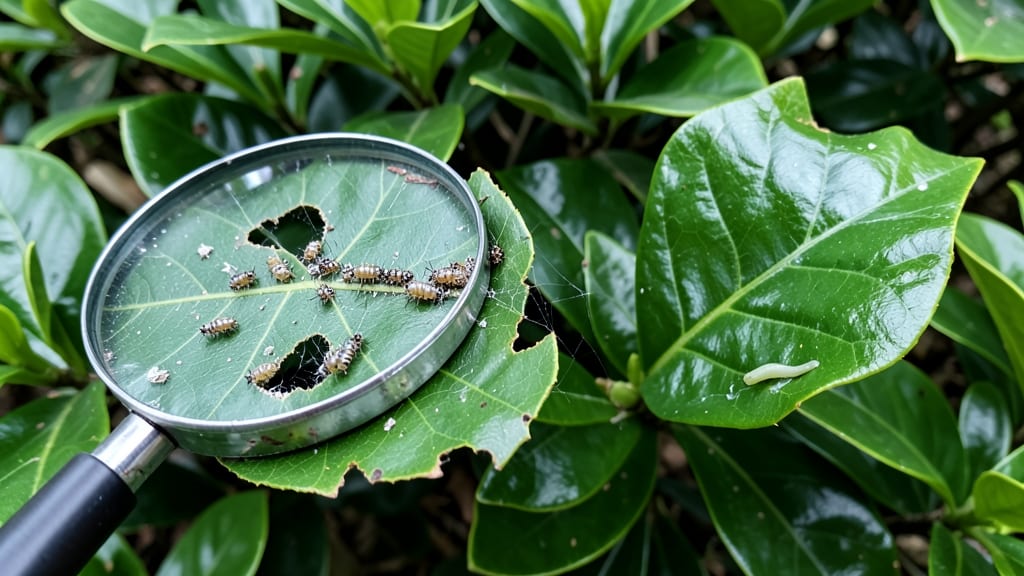
When your gardenia leaves are being eaten, the most likely culprits are spider mites, aphids, scale insects, or caterpillars like the gardenia looper, which create ragged edges or sap trails. Fungal leaf spot or environmental stress can cause similar damage, so check for webbing, tiny eggs, or sticky residue before treating with neem oil or insecticidal soap.
Your gardenia’s leaves might look like a buffet to hungry pests, and the damage often starts subtly. 🌿 Spider mites and aphids leave behind tiny webs or clusters of insects, while caterpillars create larger holes with chewed edges.
Scale insects, on the other hand, attach themselves to stems and leaves, sucking sap and causing yellowing. Fungal infections usually appear as dark spots with yellow halos, often spreading faster in humid conditions.
The key is to inspect both leaf undersides and stems—look for webbing, frass (insect droppings), or sticky residue that hints at the real problem.
Once you’ve identified the culprit, act fast. Neem oil works well for mites and aphids, while insecticidal soap targets soft-bodied pests. For caterpillars, handpicking or using Bacillus thuringiensis (a natural bacteria) can save your plant.
And remember: overwatering or poor drainage stresses gardenias, making them more vulnerable to both pests and disease. A little prevention—like regular pruning and proper spacing—goes a long way in keeping your gardenia thriving.
💡 In This Article
- Identifying Gardenia Leaf Damage: Pests vs. Disease
- Organic Pest Control for Gardenia Leaves: Step-by-Step Guide
Identifying gardenia leaf damage: pests vs. disease
Spider mites are the sneakiest culprits, often leaving behind fine webbing on leaf undersides that looks like dusty threads.
These microscopic pests thrive in dry conditions and create stippled yellow or brown spots as they pierce cells to suck sap. 🕷️ Aphids, on the other hand, cluster in colonies along leaf veins and stems, excreting sticky honeydew that attracts sooty mold.
Their damage appears as curled, distorted leaves with tiny holes where they feed.
Scale insects attach themselves to stems and leaves like armored shields, creating waxy bumps that resemble small brown or gray scales. These pests drain plant fluids, causing leaves to yellow and drop prematurely.
Caterpillars like the gardenia looper leave behind ragged, irregular holes with chewed edges and frass (insect droppings) scattered nearby. Look for green or brown caterpillars hiding under leaves during the day.
Fungal leaf spot presents differently—dark brown or black spots with yellow halos that spread rapidly in humid weather. Unlike insect damage, fungal infections often appear on both leaf surfaces and may have a greasy texture.
The key distinction is that pests leave physical damage (holes, webbing, frass) while diseases create discoloration patterns without visible chewing marks.
Environmental stress mimics pest damage but lacks physical evidence. Overwatering causes yellowing leaves with brown edges, while underwatering leads to crispy edges and wilting. Both conditions weaken the plant, making it more susceptible to actual pests.
Check soil moisture and drainage first—healthy gardenias should have consistently moist but not soggy soil.
For accurate diagnosis, examine leaves under a magnifying glass or use a flashlight to spot webbing in shaded areas. Pests often hide on leaf undersides or along stems, while fungal spores may appear as fuzzy growths.
Early identification means faster treatment—neem oil for mites, insecticidal soap for aphids, and pruning for fungal spots.
Remember: gardenias are tropical plants that prefer humidity but hate soggy roots. Adjust your care routine based on what you find—reduce watering if roots are rotting, or increase airflow if fungal spots appear. The right diagnosis leads to the right solution, saving both your plant and your patience! 🌱