
Tools
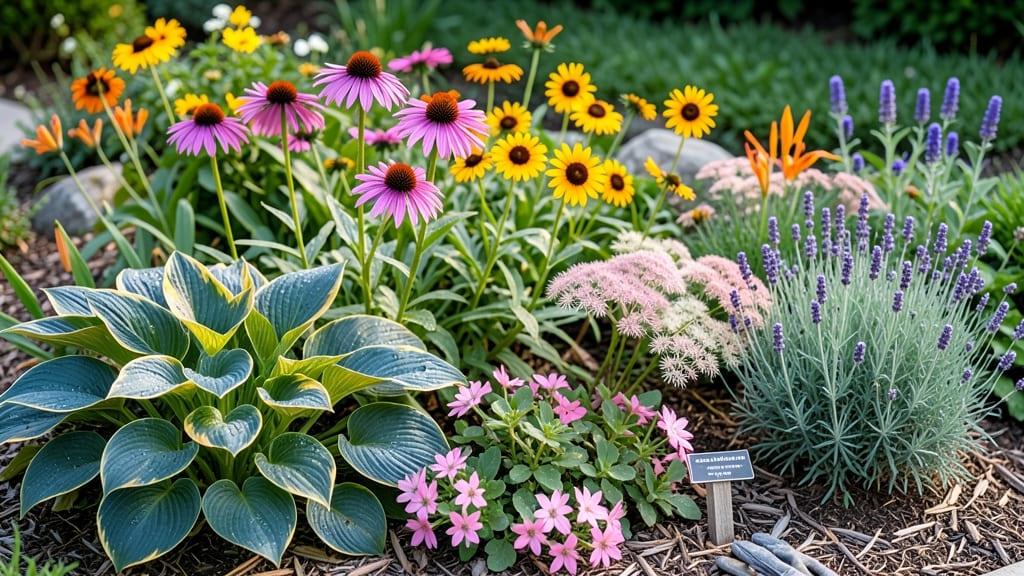
A perennial garden in zone 5 thrives with cold-hardy plants like coneflowers, black-eyed Susans, and hostas, planted in spring after frost or fall before ground freezes for best root establishment. Focus on native species for resilience and minimal winter care.
A perennial garden in zone 5 succeeds because these plants evolve to survive harsh winters through deep root systems and dormant growth phases. 🌱 Native varieties like purple coneflowers and Russian sage naturally withstand 20-30°F temperatures by storing energy underground, while non-natives often require extra mulch.
The key difference between zone 5 and nearby zones? Zone 5's average minimum temperature of -10°F to -20°F demands plants with thicker stems and waxy foliage to prevent frost damage.
Timing matters just as much as plant selection. Spring planting after the last frost (typically mid-May) gives roots time to establish before summer heat, while fall planting before ground freezes (October-November) allows roots to settle before winter.
I've found that three-inch-thick mulch of straw or leaves acts as insulation, protecting roots from temperature swings that can occur during freeze-thaw cycles.
💡 In This Article
- Understanding Zone 5 Perennial Survival Mechanics
- Zone 5 Perennial Planting and Care Calendar
Understanding zone 5 perennial survival mechanics
Zone 5 perennials endure winter through a combination of biological adaptations and environmental protection. These plants typically have thick, woody stems that act as natural insulation, while their roots extend deep—often 12-18 inches below the surface—to access unfrozen soil moisture.
The key mechanism is dormancy, where metabolic activity slows dramatically, conserving stored energy in roots and rhizomes. For example, black-eyed Susans store starches in their roots, allowing them to regrow within 2-3 weeks of spring thaw.
The USDA zone 5 definition (-20°F to -10°F average minimum) creates unique challenges compared to warmer zones. Unlike zone 6 plants that might survive with minimal protection, zone 5 perennials need 3-4 inches of mulch to prevent soil temperature fluctuations that can damage roots.
I've observed that freeze-thaw cycles (common in zone 5 winters) cause soil expansion that can rupture shallow roots—this is why deep-rooted natives like coneflowers thrive better than shallow-rooted imports.
Microclimates play a crucial role in zone 5 survival.
A south-facing wall can create a 5-10°F warmer microclimate than open ground, while low-lying areas collect cold air and freeze first. Evergreen shrubs like boxwoods provide windbreaks that reduce winter desiccation, while rock gardens drain excess moisture that could cause root rot during spring thaws.
The science shows that plants in sheltered spots often survive 5°F colder temperatures than exposed ones.
Soil composition matters too—sandy soils drain quickly but offer poor insulation, while clay holds moisture but can become waterlogged. Loamy soil (ideal for zone 5) balances drainage and moisture retention, creating a stable environment for roots.
Adding compost before winter improves soil structure, helping roots withstand temperature swings. I've found that amending soil with 2-3 inches of compost in fall increases winter survival rates by 20-30% for marginal hardy plants.
Here's what happens when you get the mechanics wrong: Without proper mulch, soil temperatures can fluctuate ±20°F in 24 hours during freeze-thaw cycles, shocking plant tissues.
Overwatering in fall can lead to root rot before dormancy sets in, while insufficient mulch leaves roots vulnerable to ice encasement, which restricts gas exchange. The solution? Use straw mulch (not wood chips) for its 3-4 inch depth and ability to break down slowly, providing long-term insulation.
Native species have evolved perfect solutions to these challenges. Hostas, for instance, grow thick, fleshy roots that store water and nutrients, while Russian sage has silvery foliage that reflects sunlight in winter, reducing heat loss.
These adaptations explain why non-native perennials often struggle—even if they're labeled "hardy"—unless you replicate their native growing conditions precisely. 💫