
Tools
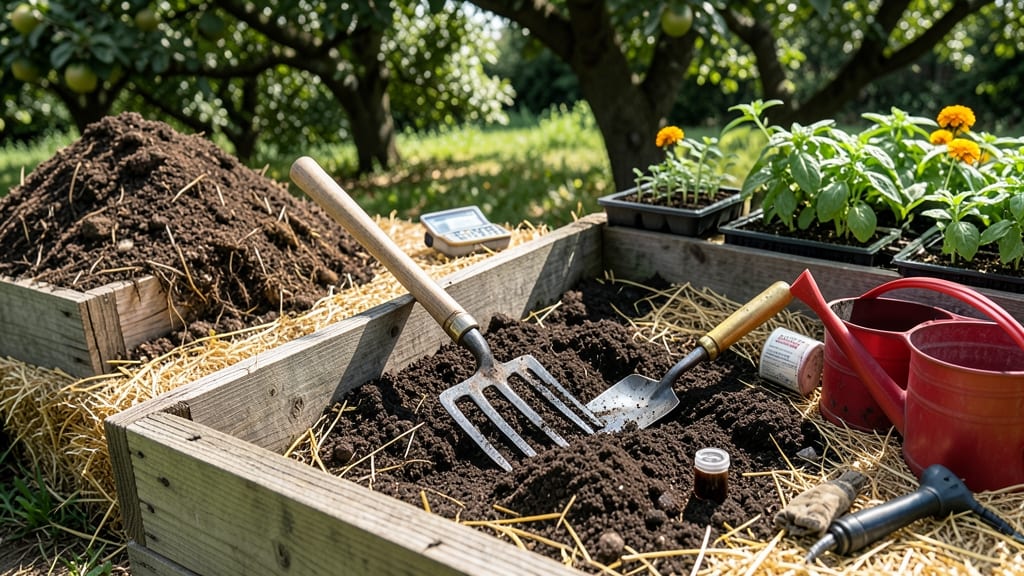
To prepare soil for a flower garden, test pH levels (aim for 6.0–7.0), clear away debris, break up compacted areas, and mix in compost or organic matter for better drainage and nutrient absorption. Aerate thoroughly and cover with mulch to lock in moisture and suppress weeds.
Creating the perfect foundation for your flower garden starts with understanding your soil's natural state. 🌱 Most flowering plants thrive when soil pH is slightly acidic to neutral, but some—like hydrangeas—prefer more acidic conditions, while others like lavender tolerate alkaline soils.
I always recommend starting with a simple DIY pH test kit to avoid guesswork, then adjusting with garden lime to raise pH or sulfur to lower it if needed.
The key is patience: soil amendments take time to integrate fully, so plan to work them in at least a month before planting.
Beyond pH, the right organic amendments make all the difference. Compost acts like a nutrient powerhouse, breaking down slowly to feed roots over time, while aged manure adds immediate fertility. 🌿 For sandy soils, coconut coir improves water retention, while peat moss helps acid-loving plants like azaleas.
I find that layering these amendments—about 2-3 inches spread evenly—gives flowers the best start, especially when paired with a light top dressing of mulch to protect the soil's structure.
💡 In This Article
- Testing and Adjusting Soil pH for Flower Gardens
- Best Organic Amendments for Flower Garden Soil
Testing and adjusting soil pH for flower gardens
Soil pH directly impacts nutrient availability—flowers can't absorb essential minerals like nitrogen, phosphorus, or potassium if the pH is off. For example, hydrangeas need acidic soil (pH 5.0–6.0) to produce blue blooms, while lavender thrives in alkaline conditions (pH 7.0–8.0).
A DIY pH test kit (like those using color-changing liquid or probes) gives results in 10–15 minutes for around $10, while lab tests cost more but offer precise data. 🔥
Adjusting pH takes time—raising it with pelletized lime (apply 5–10 lbs per 100 sq ft) can take 2–3 months to fully integrate, while elemental sulfur (for lowering pH) works more slowly.
The goal is consistency: fluctuations stress plants. I recommend testing again in 3 months to confirm changes, especially in clay-heavy soils where amendments settle unevenly.
Why pH matters so much? At pH 6.0–7.0, most nutrients are "bioavailable"—meaning roots can absorb them efficiently. Below 5.5, aluminum and manganese become toxic; above 7.5, phosphorus locks out. This is why azaleas wilt in alkaline soil—they can't access iron, turning leaves yellow despite healthy roots. 🌿
For quick fixes, mix 1–2 inches of compost into the topsoil—it buffers pH naturally over time. Avoid over-amending: too much lime can raise pH to 8.0+, harming acid-loving perennials. Always water amendments in well to activate their chemical reactions and prevent surface buildup.
Seasonal timing also plays a role. Adjust pH in early spring (before planting) or fall (6–8 weeks before frost) to let amendments settle. Summer applications risk burning roots due to heat stress.
Think of soil pH like a recipe—small adjustments make all the difference in flavor (or in this case, bloom quality)!