
Tools
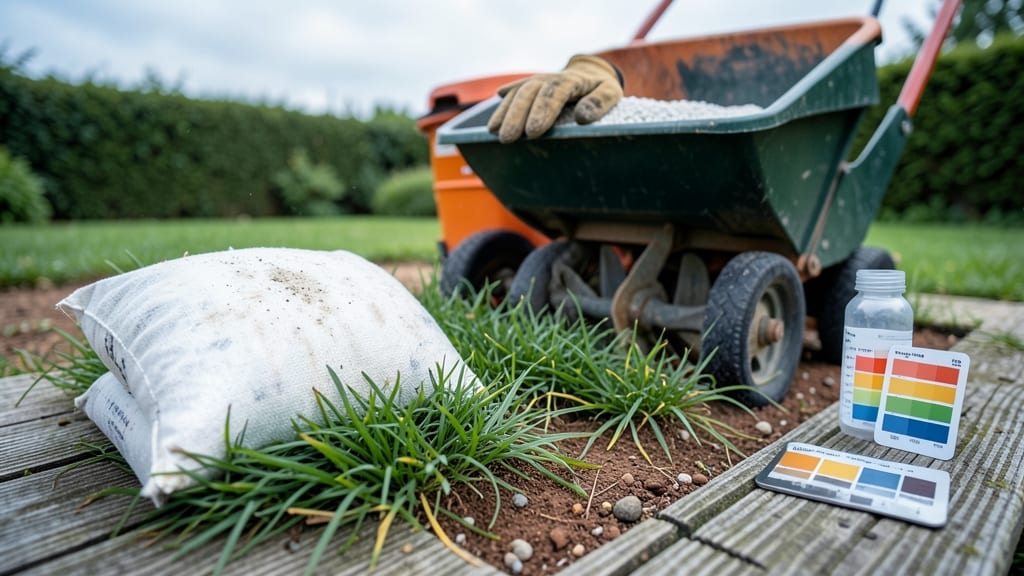
To apply lime to garden soil, aim for early fall or late winter when temperatures are cool and soil remains workable. This timing gives your soil 2-3 months to adjust pH before planting season begins. Always test your soil first to confirm acidity levels below 6.5.
Timing matters because lime needs time to dissolve and raise soil pH gradually. 🌱 When you apply it in fall or winter, the cool, moist conditions help the lime integrate evenly without washing away during spring rains.
I've found that testing soil in early spring (before planting) gives you a clear picture of how much lime your garden truly needs—some soils may require multiple applications over several years. The key is patience: rushing the process can lead to uneven pH correction or wasted lime.
One common mistake is applying lime too late in spring, which can disrupt early planting schedules. The ideal window is after your last harvest but before the first frost, giving the lime time to work before active root growth begins.
For container gardens, the same timing applies—just reduce the quantity based on pot size. Always follow up with a second soil test 3-4 months after application to verify your pH goals.
💡 In This Article
- How Soil pH Affects Lime Application Timing
- Step-by-Step Guide to Testing and Applying Garden Lime
How soil pH affects lime application timing
Soil pH measures hydrogen ion concentration on a scale from 0 (most acidic) to 14 (most alkaline), with 7 being neutral. Garden soils typically range from 5.5 to 7.5, but most plants thrive in slightly acidic to neutral conditions (6.0-7.0).
When soil pH drops below 6.5, aluminum and manganese become more soluble, which can poison plant roots. Lime—primarily calcium carbonate or dolomitic lime—neutralizes acidity by releasing calcium and magnesium ions that react with hydrogen ions in the soil.
The timing of lime application ties directly to microbial activity and nutrient availability. Microbes responsible for breaking down organic matter and making nutrients available to plants are most active in cool, moist conditions (ideal between 50-75°F).
Applying lime in early fall or late winter gives these microbes time to process the amendments before spring planting. For example, blueberries—which require pH 4.5-5.5—might get lime in late winter to prevent over-correction before their growing season begins.
Lime works through a chemical process called neutralization, where calcium carbonate (CaCO₃) reacts with hydrogen ions (H⁺) in acidic soil to form water and carbon dioxide. This reaction is slowest in dry conditions and fastest when soil moisture is between 40-60% of field capacity.
That's why fall application works best: autumn rains help dissolve lime particles evenly, while winter's cooler temperatures prevent rapid leaching. In contrast, applying lime in summer can cause it to wash away before it has a chance to integrate.
Consider your specific plants' needs—some, like azaleas and rhododendrons, actually prefer acidic soil (pH 4.5-6.0) and shouldn't receive lime at all. Others, like vegetables and lawn grasses, benefit from slightly alkaline conditions (6.5-7.0).
The key is testing first: a simple soil test kit (available for $10-$20) will reveal your exact pH and recommended lime application rate.
For example, a pH 5.0 soil might need 5-10 lbs of lime per 100 sq ft, while pH 6.0 soil may only require 2-5 lbs.
What most gardeners don't realize is that lime doesn't work instantly—it can take 2-3 months for the full pH adjustment to occur. This is why timing matters so critically. If you apply lime in early spring, you risk creating temporary pH fluctuations that could stress young seedlings.
The ideal scenario is to apply lime 2-3 months before planting, giving the soil time to stabilize before active root growth begins. 🌱
For container gardens, the same principles apply but on a smaller scale. A 5-gallon pot might need only ½ cup of lime if the pH is 5.5, while a 10-gallon pot could require 1 cup.
The key difference is monitoring moisture—container soils dry out faster, so you'll need to water more frequently after application to help the lime dissolve properly.