
Tools
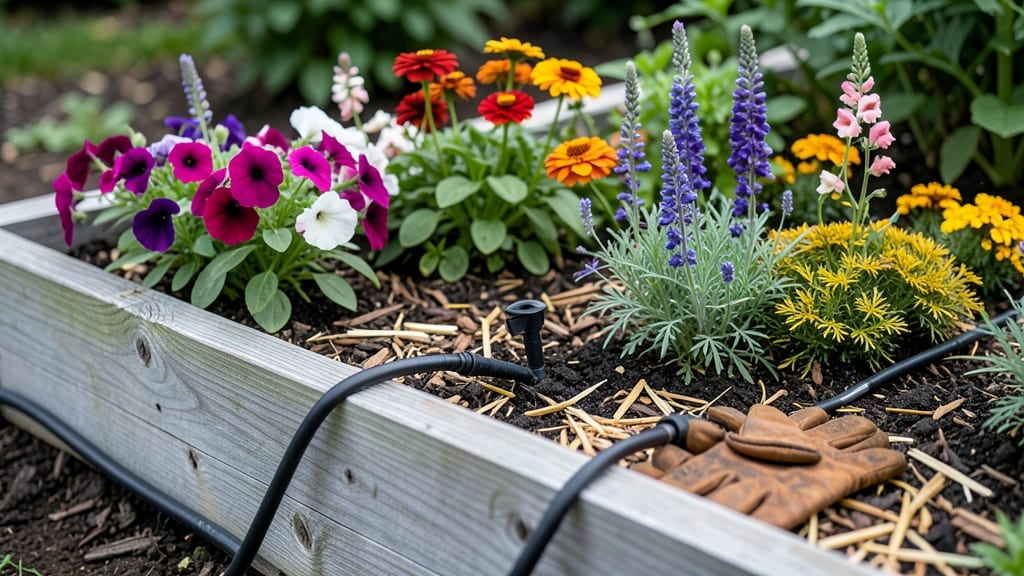
A raised bed flower garden layout organizes plants vertically by height and function to create a thriving ecosystem: place tall perennials at the back, mid-height annuals in the center, and low-spreading flowers at the front, with clear pathways for pollinators to move freely between clusters.
This vertical arrangement isn't just about looks—it's a smart way to maximize sunlight penetration and airflow while preventing overcrowding. 🌸 Tall perennials like delphiniums or hollyhocks act as natural backdrops, while mid-height annuals such as zinnias or marigolds fill the middle layer with vibrant color.
The front layer of low-growing flowers like alyssum or creeping thyme creates a soft, inviting border that pollinators can easily access. What's fascinating is how this layout mimics natural ecosystems, where different plant heights create microclimates that support diverse wildlife.
For best results, I recommend spacing plants about 12-18 inches apart to allow room for growth and pollinator movement. This spacing also makes maintenance easier—you can reach all areas without trampling plants.
The pathways between clusters should be at least 12 inches wide to accommodate small pollinators like bees and butterflies, which need clear routes to navigate your garden efficiently.
💡 In This Article
- Strategic Flower Garden Zoning by Height and Function
- Best Pollinator-Friendly Flower Combinations for Raised Beds
Strategic flower garden zoning by height and function
Vertical layering in raised beds isn't just about aesthetics—it's a botanical necessity. Tall perennials like delphiniums (3-6 feet) or black-eyed Susans (2-3 feet) placed at the back create a natural windbreak while capturing the most sunlight. Their deep root systems also help stabilize the soil and prevent erosion.
The middle layer, filled with mid-height annuals (1-2 feet) like zinnias or snapdragons, receives filtered light while still getting plenty of exposure. This tiered structure ensures no plant is permanently shaded by its taller neighbors, a critical factor since flowers need 6-8 hours of direct sunlight daily to thrive.
The front layer of low-growing flowers (6-12 inches) like alyssum or creeping thyme serves multiple purposes. First, it creates a soft, textured border that frames the garden visually. Second, these plants often have shallow root systems that don't compete with deeper-rooted species.
Third, their compact growth habit allows pollinators like bees to land easily on flowers without getting tangled in taller stems. The spacing between plants—typically 12-18 inches apart—creates what gardeners call "pollinator corridors," which mimic natural ecosystems where insects can move freely between food sources.
What's fascinating is how this zoning affects air circulation. Tall back-row plants create gentle airflow channels that reduce humidity around mid-height flowers, preventing fungal diseases like powdery mildew. The 12-inch pathways between clusters serve as additional airflow routes, ensuring even the center of your raised bed stays well-ventilated.
This airflow is particularly important in humid climates where stagnant air can create ideal conditions for plant pathogens. The visual impact is equally significant—this layered approach creates depth perception, making a small garden appear larger while providing a dynamic viewing experience from multiple angles.
Light availability changes dramatically with height. The top of a 5-foot delphinium might receive full sun exposure, while the base of the plant could be in partial shade from neighboring plants. This vertical light gradient explains why some flowers thrive at the back while others would struggle there.
For example, sun-loving coneflowers belong in the middle zone where they get consistent light, while shade-tolerant impatiens might thrive in the front layer where taller plants cast some afternoon shade. Understanding this light stratification helps you place each plant in its ideal growing conditions.
Seasonal considerations also play a role in zoning. Spring-blooming bulbs like daffodils (which reach 12-18 inches) should go in the front layer where they'll be visible early in the season.
Summer-blooming perennials like lavender (which can reach 2-3 feet) belong in the middle or back, depending on your bed's dimensions. This seasonal layering ensures your garden has visual interest throughout the growing season, with each height zone contributing at different times.
The pathways between clusters remain particularly valuable in late summer when many perennials are at their peak height and need clear access for pollinators.
One common mistake is overcrowding the back row with too many tall plants. When you pack multiple 6-foot plants too closely together, they create a dense canopy that blocks light from reaching lower layers. The solution is strategic placement—space tall plants 18-24 inches apart to maintain airflow and light penetration.
This spacing also makes maintenance easier; you can reach all areas without stepping on plants, which helps preserve soil structure and prevents compaction. The result is a garden that looks intentional and thrives biologically, supporting both your aesthetic goals and the ecosystem you're creating.