
Size
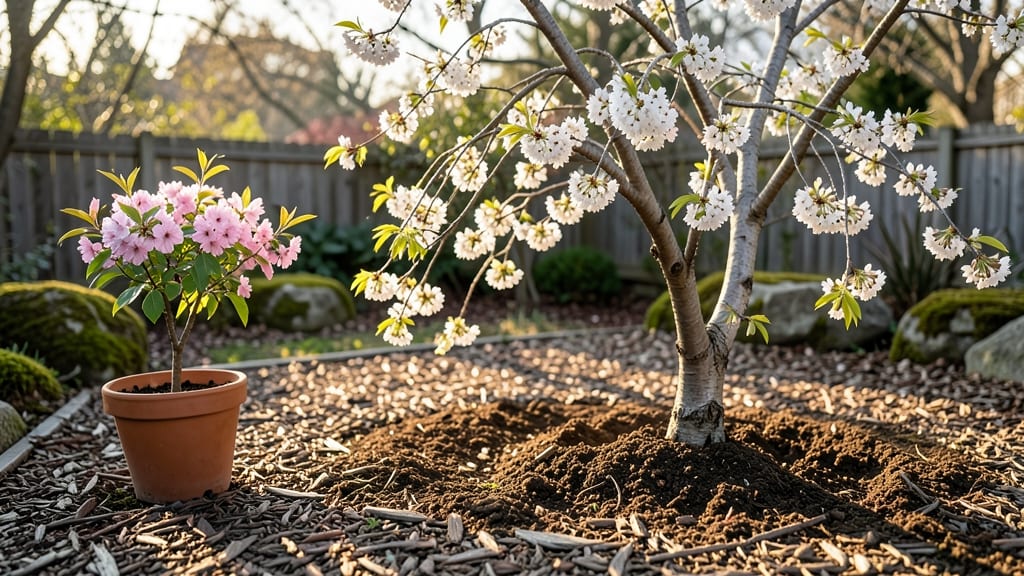
To grow a sakura tree in your garden, start with cold-resistant types like Weeping Cherry or Kwanzan, plant them in well-draining soil with full sunlight, and give them a thorough watering after planting. Light pruning helps maintain blooms, while vigilance against pests like aphids keeps your tree healthy.
Sakura trees thrive in gardens when you match the right variety to your climate and space.
Compact types like Shirofugen or Royal Burgundy are perfect for smaller yards, offering stunning blooms without overwhelming your landscape. 🌸 These trees prefer USDA zones 5-8 and need at least 6 hours of sunlight daily—planting them in a south-facing spot ensures vibrant flowers each spring.
The key to success lies in proper soil prep: amending clay or sandy soil with compost creates the ideal drainage while retaining moisture.
Once planted, focus on seasonal care to keep your sakura tree flourishing. After the initial watering, maintain consistent moisture during the first growing season, then taper off as roots establish.
In late winter or early spring, prune to remove dead branches and shape the tree, but avoid heavy cuts that could reduce next year's bloom potential. Watch for common issues like aphids or powdery mildew—early intervention with neem oil or fungicide keeps your tree in peak condition.
💡 In This Article
- Best Sakura Tree Varieties for Small Gardens
- Step-by-Step Sakura Tree Planting and Maintenance Guide
Best sakura tree varieties for small gardens
Sakura trees come in diverse forms, but for small gardens, you'll want varieties that stay compact while delivering stunning blooms. The Shirofugen stands out with its pure white flowers and dense growth habit, typically reaching 20-25 feet at maturity.
Its compact form makes it ideal for urban gardens where space is limited. Another excellent choice is Royal Burgundy, which features deep pink flowers and grows to about 15-20 feet—perfect for creating a focal point without overwhelming your landscape. 🌸
For those seeking a weeping form, the Weeping Cherry (Prunus subhirtella) offers graceful, cascading branches that create a dramatic visual effect in smaller spaces. This variety thrives in USDA zones 5-8 and blooms earlier than many other sakura types, often producing flowers in late winter or early spring.
The Kwanzan cherry, with its vibrant pink blossoms, is another popular compact option that grows to about 25-30 feet but can be pruned to maintain a smaller footprint.
When selecting a sakura tree, consider your garden's microclimate. Some varieties, like Shirofugen, prefer slightly acidic soil with a pH between 5.5-6.5 and benefit from regular mulching to retain moisture. Others, such as Royal Burgundy, are more adaptable but still require well-drained soil to prevent root rot.
The key is to match the tree's natural growth habits with your garden's layout—planting too close to structures can limit airflow and increase disease risk.
Bloom timing varies by variety, with some sakura trees flowering as early as late winter and others waiting until full spring. The Shirofugen, for example, typically blooms in late April to early May, while the Kwanzan may flower slightly later, around mid-May.
This variation allows you to create a staggered display of color throughout the spring season. Additionally, some varieties, like the Weeping Cherry, produce fragrant blossoms that attract pollinators, adding another layer of garden interest.
For gardeners in cooler climates, cold-hardy varieties like Autumnalis are excellent choices. This type blooms intermittently throughout the year, including in winter, and can withstand temperatures as low as -20°F. Its smaller size (15-20 feet) makes it ideal for patios or small yards.
When selecting a sakura tree, always check the mature size and growth rate to ensure it fits your space and long-term vision for your garden. 💫