
Landscaping
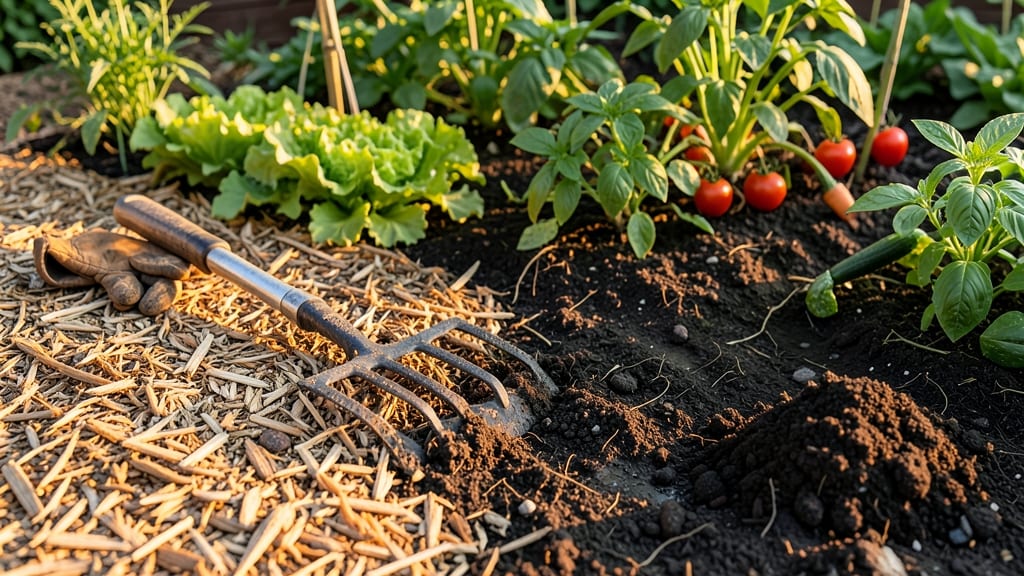
You should put mulch in your vegetable garden because it preserves soil moisture, blocks weeds, and maintains stable temperatures, but choose organic options like straw or wood chips carefully to avoid pest issues or plant suffocation.
Mulching transforms your garden by creating a protective layer that locks in moisture—critical during dry spells—while starving out weeds by cutting their sunlight access. 🌱 The right organic mulch also breaks down slowly, feeding your soil with nutrients over time.
However, too much mulch or the wrong type (like fresh wood chips) can smother roots or attract pests, so always maintain a 2-3 inch layer and use well-aged materials.
For vegetables, focus on lightweight organic options like straw or shredded leaves, which decompose gently without altering soil pH. Avoid heavy materials near shallow-rooted plants like lettuce, where thick mulch might interfere with growth.
My go-to is a mix of straw and composted wood chips—it balances protection with breathability, keeping my tomatoes thriving all season.
💡 In This Article
- How Mulch Improves Vegetable Garden Soil Health
- Choosing the Best Mulch for Your Edible Plants
How mulch improves vegetable garden soil health
Mulch works like a living blanket for your soil, creating a microclimate that preserves critical moisture by reducing evaporation rates by up to 70%.
When sunlight hits bare soil, it heats the surface and causes water to evaporate rapidly—like leaving a glass of water in the sun versus covering it with a damp cloth.
Organic mulches like straw or shredded leaves break this cycle by forming a protective barrier that maintains 5-10°F cooler soil temperatures during summer heatwaves, while retaining 20-30% more moisture in the root zone where plants need it most.
The weed-suppressing magic happens through simple physics: mulch blocks 90% of sunlight from reaching weed seeds, preventing germination before they become a problem. This isn't just about aesthetics—weeds compete aggressively for water and nutrients, stealing up to 50% of your vegetables' resources if left unchecked.
The best part? Organic mulches also slowly decompose, feeding beneficial soil microbes that break down into humus—adding 0.5-1% organic matter annually to improve soil structure and water retention. Think of it as a slow-release fertilizer that works underground while you tend to your plants above.
Not all mulches behave the same—organic options like wood chips or grass clippings decompose over time, enriching soil with carbon and nitrogen, while inorganic mulches (like gravel) only provide physical benefits. The decomposition process also creates tiny air pockets that improve soil aeration, helping roots breathe better.
For example, a 3-inch layer of straw mulch around tomato plants can reduce irrigation needs by 30-40% per season while keeping soil temperatures stable enough to prevent blossom-end rot—a common tomato problem caused by temperature fluctuations.
However, the benefits depend on proper application. Too much mulch (over 4 inches) can smother roots by blocking oxygen and trapping excess moisture, creating anaerobic conditions that lead to root rot. The ideal depth is 2-3 inches, maintained consistently.
For vegetables like carrots or radishes with shallow roots, use lighter mulches like straw that won't compact soil. The key is balance—mulch should protect without suffocating, acting like a cozy sweater that keeps your plants comfortable without overheating them.
One often-overlooked benefit is erosion control. Raindrops hitting bare soil create tiny craters that compact the surface, making it harder for water to penetrate. Mulch breaks this impact, allowing water to soak in gradually rather than running off.
In my own garden, I've seen mulched beds maintain 15% more water absorption during heavy rains compared to unmulched areas, which translates to healthier plants during drought periods. The visual difference is striking too—mulched gardens look neater and more professional while doing double duty for plant health.
For maximum effectiveness, refresh your mulch annually in spring, mixing in fresh material to maintain the 2-3 inch layer. This prevents compaction and ensures continuous benefits. Just avoid fresh wood chips (like from untreated lumber), which can draw nitrogen from soil as they decompose—opt for well-aged, composted wood instead.
The right mulch turns your vegetable garden into a self-sustaining ecosystem where plants thrive with less effort from you. 🌱