
Picking
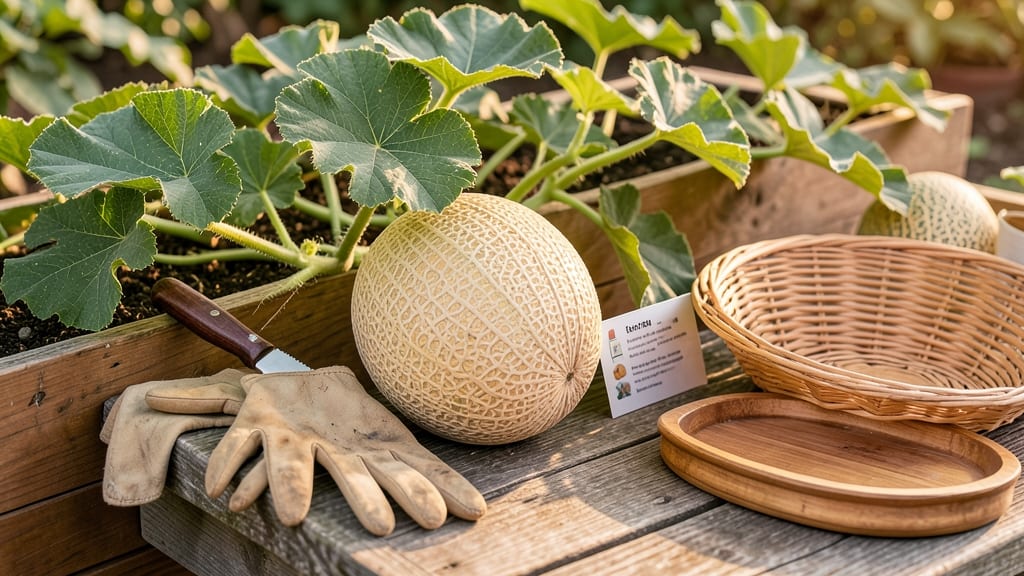
To pick cantaloupe from your garden at the perfect moment, watch for three key signs: a creamy rind, a dried stem, and that unmistakable sweet scent 🍈.
You’ve nurtured your cantaloupe all season—watering, fertilizing, and shielding it from pests—only to wonder, "Is it ready yet?" Picking too early means bland, seedy disappointment; too late, and the fruit turns mushy.
The good news? These simple cues take the guesswork out of harvest, ensuring every bite is sweet and juicy.
First, check the rind: it should shift from green to a creamy tan or yellow, almost like a soft watermelon. Then, give the stem near the fruit a gentle tug—it should detach easily, a sign the sugars have fully developed.
Finally, sniff the blossom end (the side where the stem was attached); a strong, sweet aroma means it’s primed for picking.
Below, I’ll break down these signs in detail, plus regional tips for Zone 6a gardeners and what to do if you miss the window. No more wasted cantaloupes—just perfect, ripe fruit every time.


3 Unmistakable signs your cantaloupe is ready to harvest
Nothing beats the moment you pluck a perfectly ripe cantaloupe from your garden—except maybe the disappointment of picking one too early (or too late!).
As someone who's learned the hard way that green, firm cantaloupes taste like watery disappointment, I now rely on three foolproof signs to know when my cantaloupes are ready. These cues go beyond guessing days after planting and focus on what matters most: flavor, texture, and sweetness.
Cantaloupes don’t ripen after picking, so timing is everything. The good news? Mother Nature gives us clear signals if we know what to look for.
From the beard's color to the way the fruit detaches from the vine, these visual and tactile clues will transform your harvest from hit-or-miss to consistently delicious. Let’s dive into the three signs that prove your cantaloupe is ready to be enjoyed—no more, no less.
- 1 The Beard Test: The fuzzy stem "beard" at the blossom end turns from green to creamy tan or brown. This isn’t just a color change—it’s a sign the sugars have fully developed.
- 2 Stem Separation: The fruit should slip easily from the vine when you gently twist it. If it resists, it’s not ready. This separation happens because the stem dries out as the cantaloupe matures.
- 3 Sweet Aroma: Give the blossom end a sniff—it should smell intensely sweet, almost like honey or vanilla. This scent comes from volatile organic compounds released as the fruit ripens, guaranteeing peak flavor.
Let’s start with the beard test, the first visual cue that tells you your cantaloupe is on the right track. The "beard" refers to the fuzzy, star-shaped growth at the blossom end of the fruit.
When this area turns from green to a creamy tan or light brown, it’s a clear signal that the sugars inside are reaching their peak.
I’ve found that this change often happens about 75 days after planting, but it’s not set in stone—some varieties ripen faster or slower depending on your climate.
Pro tip: If you’re growing cantaloupes in a hotter region, the beard might darken more quickly. In cooler areas, it may stay lighter for longer. Always cross-reference this with the other two signs to avoid mistakes.
For example, a cantaloupe with a brown beard but no sweet smell might still need time on the vine.
The stem separation test is my favorite because it combines tactile feedback with visual confirmation. When your cantaloupe is ripe, the stem near the fruit will have dried out and turned brown.
At this stage, you should be able to gently twist the fruit and feel it release from the vine without resistance. If it doesn’t come loose, it’s not ready yet—no matter how much you might want to pick it!
Here’s where many gardeners go wrong: they assume a cantaloupe is ripe just because it’s large and round. Size doesn’t equal sweetness! I’ve harvested cantaloupes that looked perfect but tasted bland because they were picked too early.
Always check for stem separation—it’s the most reliable way to avoid this mistake. If the stem breaks off cleanly with a slight tug, you’re in business.
Finally, let’s talk about the scent test, which is often the most exciting part of harvesting cantaloupes. A ripe cantaloupe emits a powerful, sweet aroma near the blossom end. It should smell like a mix of honey, vanilla, and even a hint of musk.
If you’re sniffing your cantaloupe and getting nothing but a neutral or slightly green smell, it’s not ready. This scent is your body’s way of telling you the fruit is packed with natural sugars and flavor compounds.
Fun fact: The sweet aroma comes from volatile organic compounds like esters and terpenes, which are also responsible for the flavor. If your cantaloupe smells like nothing, it’s likely underripe. But if it’s overripe, you might detect a fermented or rotten smell—time to compost!
The scent test is especially useful when you’re dealing with multiple cantaloupes on the vine and need to prioritize which one to pick first.
One question I get asked often is whether color alone determines ripeness. While the rind does lighten from green to cream or tan as the cantaloupe matures, color isn’t the sole indicator. Some cantaloupes, especially those grown in shadier conditions, might stay slightly green even when ripe.
That’s why combining all three signs—beard color, stem separation, and aroma—gives you the most accurate picture.
For example, I once grew cantaloupes in a raised bed with partial shade due to nearby trees. The rinds stayed green longer, but the beards turned tan, the stems separated easily, and the aroma was undeniable.
I harvested them based on the other two signs, and they were delicious! This reminds me to never rely on just one cue.
If you’re still unsure, here’s a bonus tip: Give your cantaloupe a gentle thump near the blossom end. A ripe cantaloupe will sound hollow and deep, like knocking on a drum. An underripe one will sound more dull or flat.
This trick works because the flesh becomes juicier and less dense as it ripens. Pair this with the other tests, and you’ll never second-guess your harvest again.
Remember, cantaloupes don’t ripen after picking, so timing is everything. Once you master these three signs—beard color, stem separation, and sweet aroma
How to test cantaloupe ripeness: the science behind the 'thump' and 'scent' tricks
Ever wondered why your cantaloupe thumps like a drum when ripe? Or why that sweet aroma hits you before you even touch it? The answers lie in the physics of fruit ripening and the chemistry of volatile organic compounds.
These aren't just old wives' tales—they're real, science-backed cues that tell you exactly when to harvest for maximum sweetness and texture.
When cantaloupes ripen, their cell walls soften due to enzymes breaking down pectin. This makes the fruit heavier for its size and causes that satisfying thump when you tap it—a sound created by air pockets inside the fruit vibrating against the softened flesh.
Meanwhile, the stem's abscission layer (a natural separation zone) dries out, making it detach effortlessly—this isn't a myth, it's plant biology at work!
| Ripeness Indicator | What It Means | Science Behind It |
|---|---|---|
| Stem Detaches Easily | Fruit is ready to pick | Abscission layer dries, separating cleanly |
| 'Thump' Sound When Tapped | High sugar content | Air pockets vibrate against softened flesh |
| Sweet Aroma Near Stem | Peak ripeness | Volatile compounds (like hexanal) release |
| Cream/Tan Rind Color | Fully mature | Chlorophyll breaks down, revealing carotenoids |
The scent you detect is thanks to volatile organic compounds like hexanal and linalool, which spike as the fruit ripens. These compounds aren't just pleasant—they're your brain's way of saying, "'Eat me now!'" because they signal peak sweetness and nutrient density.
Pro tip: If you can smell it from across the garden, it's time to harvest!
Debunking a common myth: Color alone isn't enough. Some cantaloupes stay green even when ripe, while others turn cream-colored but are still hard. Always combine color, scent, and the thump test for accuracy.
And if the beard (the netting on the blossom end) is dry and brown, that's another green light!
Regional note: In hotter climates, cantaloupes ripen faster, so check them every 2-3 days. In cooler areas, they may take longer to develop that signature aroma. Pay attention to your local microclimate—sometimes the first frost can sneak up before your cantaloupes reach peak ripeness.
Once you master these tricks, you'll never second-guess your harvest again. The next time you tap a cantaloupe and hear that deep, resonant thump, you'll know it's not just luck—it's science telling you it's time to enjoy the fruits of your labor! 🍈