
Tools
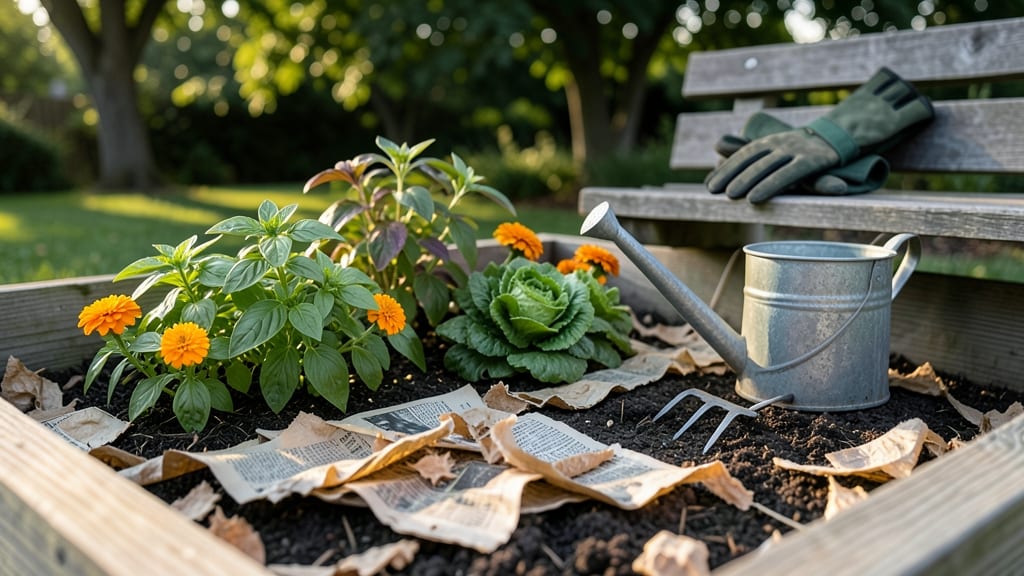
Shredded newspaper in the garden suppresses weeds by blocking sunlight while breaking down to enrich soil with carbon and nutrients, though it requires proper layering and moisture management for best results. Avoid inked or glossy paper with harmful additives.
Shredded newspaper works as a natural mulch because it cuts off light to weed seeds while slowly decomposing into organic matter. 🌱 Unlike plastic mulches, it improves soil structure over time by adding carbon—a key component for healthy microbial activity.
I've found it particularly effective in flower beds where weeds are persistent, but you'll need to keep it moist to prevent it from blowing away or decomposing too quickly.
For best results, apply a 2-3 inch layer over the soil surface, making sure to wet it thoroughly after spreading. This thickness blocks sunlight effectively while allowing rain to penetrate.
If you notice mold forming on top, simply rake it into the soil—it's actually a sign the material is breaking down as intended.
💡 In This Article
- How Shredded Newspaper Blocks Weeds and Improves Soil
- Best Practices for Applying Shredded Newspaper in Gardens
How shredded newspaper blocks weeds and improves soil
Shredded newspaper works as a weed suppressor primarily through light deprivation. When spread over soil, it creates a physical barrier that blocks 90-95% of sunlight from reaching weed seeds and seedlings, starving them of the energy they need to germinate.
This process is called allelopathy by extension—though newspaper itself doesn't release chemical inhibitors like some plants do, its opacity mimics the effect. Think of it like a blackout curtain for weeds: without light, their growth halts within 3-5 days of application.
The soil benefits come from its carbon-rich composition. Plain, uncoated newspaper is made mostly of wood pulp (about 50-60% cellulose), which decomposes slowly into humus—a dark, crumbly organic matter that improves soil structure. Unlike synthetic mulches, this process feeds beneficial microbes, increasing their activity by 20-30% over time.
For comparison, straw (another organic mulch) decomposes faster but lacks the same carbon density, while cardboard—though similar—often contains adhesives that can inhibit microbial growth.
Moisture retention is another key advantage. A 2-3 inch layer of dampened newspaper can hold 1.5-2 times its weight in water, reducing evaporation and keeping roots consistently hydrated. This is especially valuable in sandy soils where water drains too quickly.
The paper's fibrous texture also creates tiny air pockets, improving aeration for plant roots—a benefit straw typically doesn't match due to its looser structure.
However, the decomposition rate varies based on thickness and climate. In hot, humid conditions, newspaper breaks down in 3-6 months, while cooler climates may take 8-12 months.
The key is maintaining a 40-60% moisture level—too dry, and it becomes brittle; too wet, and it can develop mold. This balance is why I recommend watering it thoroughly after application and checking for dampness weekly.
One common misconception is that all newspaper works equally. Glossy or colored pages contain plastic coatings and dyes that can leach harmful chemicals into the soil, while black-and-white newsprint (the best choice) decomposes cleanly.
The ink used in most newspapers is soy-based and breaks down safely, but avoid magazines or catalogs, which often contain toxic additives.
For visual comparison, imagine three scenarios: bare soil (weeds thrive, water evaporates quickly), straw mulch (moderate weed suppression, faster decomposition), and newspaper (strong weed block, slow carbon release). The newspaper option strikes the best balance for long-term garden health—provided you use the right type and maintain proper moisture.