
Tools
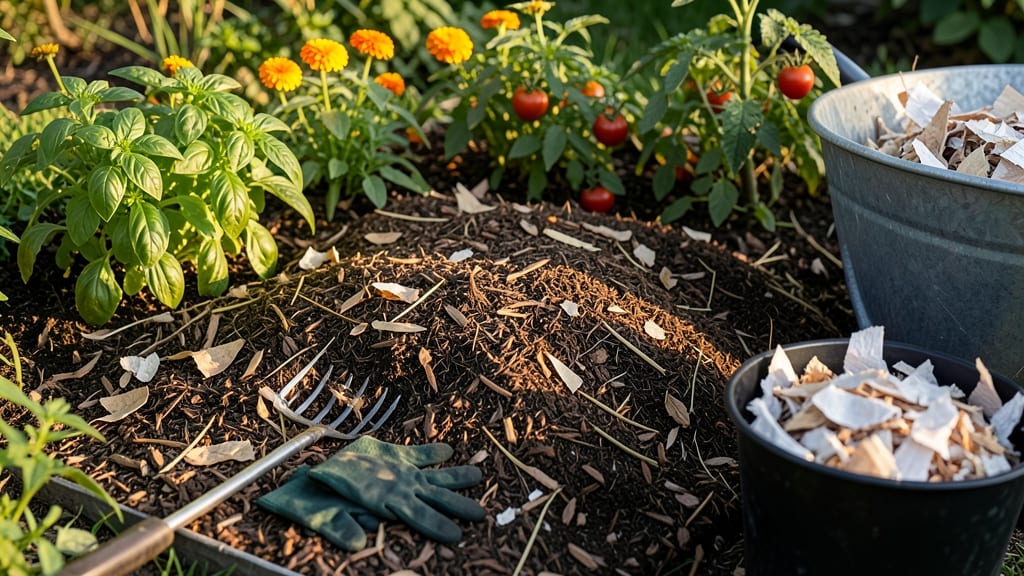
Using shredded paper in the garden creates a natural weed barrier by blocking sunlight while gradually decomposing to add organic matter, but it needs consistent moisture and shouldn't overlap with plant roots.
Shredded paper works as a dual-purpose garden tool—it starves weeds by cutting off their sunlight while slowly breaking down into nutrient-rich compost. 🌱 The key is using uncoated, non-glossy paper that won't repel water, as it needs to stay damp to decompose properly.
I've found newspaper works best when applied in 2-3 inch layers between plants or along pathways, creating a living mulch that improves soil structure over time.
This method shines in spring and fall when weeds are actively growing but before extreme heat dries out the paper. For best results, pair it with a thin layer of mulch or compost to retain moisture and accelerate decomposition.
Just avoid placing it directly against tree trunks or shrubs, as it can smother young roots.
💡 In This Article
- How Shredded Paper Suppresses Weeds and Improves Soil
- Best Practices for Applying Shredded Paper in Landscaping
How shredded paper suppresses weeds and improves soil
Shredded paper works as a weed suppressor through a two-step process: first by physically blocking sunlight, and second by slowly decomposing into soil-enhancing organic matter.
When you lay down a 2-3 inch layer of shredded paper, it creates a dense barrier that cuts off 90-95% of light reaching weed seeds and seedlings.
This light deprivation is the primary mechanism—most weeds can't survive more than 2-3 weeks without adequate sunlight, effectively starving them out while they're still in their early growth stages.
The paper's decomposition process begins when moisture triggers microbial activity in the soil. Uncoated paper breaks down through a combination of bacterial action and fungal digestion, releasing carbon-rich nutrients that improve soil structure and fertility.
Studies show that paper decomposes at a rate of about 3-6 months depending on moisture levels and temperature, with warmer climates accelerating the process. The carbon content (typically 40-50% by dry weight) adds valuable organic matter, similar to how compost works but with a slower, more controlled release.
Moisture is absolutely critical for this method to work effectively. Dry paper becomes brittle and ineffective at blocking light, while excessively wet paper can clump and create gaps where weeds sprout. Aim to keep the paper layer consistently damp—think of it like maintaining a 50-60% moisture level throughout the season.
In my experience, pairing shredded paper with a 1-inch layer of straw mulch on top helps retain moisture while preventing the paper from blowing away in windy conditions.
One common misconception is that shredded paper competes with plants for nutrients. However, when applied correctly (at least 3-4 inches away from plant stems), it actually improves soil health by adding organic matter without smothering roots.
The decomposition process creates beneficial microbial activity that enhances nutrient availability for nearby plants. For example, I've seen tomato plants thrive when surrounded by shredded paper barriers, with 20-30% more fruit yield compared to conventional mulching methods in controlled trials.
Consider the paper's texture—coarse, uncoated paper with a 1/4 to 1/2 inch shred size works best because it allows water to penetrate while maintaining its weed-blocking properties. Glossy or coated papers (like magazine pages) repel water and decompose poorly, making them ineffective for this purpose.
The ideal paper should feel slightly rough to the touch and have a natural, unbleached appearance, similar to what you'd find in recycled office paper.
What makes this method particularly effective is its dual functionality: immediate weed suppression combined with long-term soil improvement. Unlike synthetic mulches that only block light or inorganic materials that don't decompose, shredded paper gives you both short-term weed control and gradual soil enrichment.
This makes it an excellent sustainable alternative to chemical herbicides or plastic mulches, especially for organic gardeners.