
How To
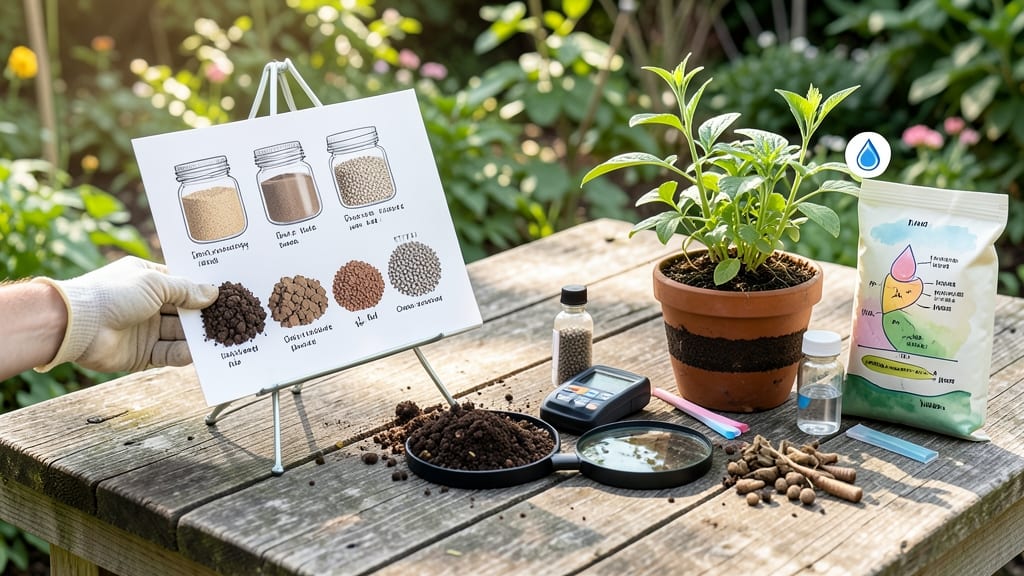
Soil science for gardeners explains how soil composition, structure, and biology determine plant health, growth, and productivity. Mastering pH balance, organic content, drainage, and microbial activity unlocks the potential of your garden soil.
Soil isn't just dirt—it's a living ecosystem where roots thrive or struggle based on its makeup. 🌱 The right mix of sand, silt, and clay creates ideal aeration and water retention, while organic matter like compost feeds beneficial microbes that break down nutrients for plants.
I've seen firsthand how amending compacted soil with perlite or coconut coir can transform a struggling garden into a lush, productive space within weeks.
Beyond texture, soil pH plays a critical role: most vegetables prefer slightly acidic to neutral conditions (6.0–7.0), while blueberries demand acidity (4.5–5.5). Testing your soil's pH and nutrient levels is the first step—kits from garden centers make it easy.
For example, if your soil tests low in phosphorus, a simple application of bone meal can boost root development dramatically.
Don't overlook the unseen helpers—mycorrhizal fungi and earthworms! These microscopic allies enhance nutrient uptake and soil structure. Adding worm castings or compost tea introduces these beneficial organisms naturally. The key is balancing amendments with your plants' specific needs, whether you're growing tomatoes, roses, or herbs.
💡 In This Article
- How Soil Composition Affects Plant Growth
- Practical Soil Testing and Amendments for Gardeners
How soil composition affects plant growth
Soil composition is like the foundation of a house—if it's weak or poorly balanced, everything above it suffers. The three primary components—sand, silt, and clay—determine how water drains, how air circulates, and how roots penetrate.
Sand, with its large particles (0.05-2mm), drains quickly but holds little moisture or nutrients, while clay (less than 0.002mm) retains water and nutrients but can become compacted. Silt, the middle ground, balances drainage and fertility.
A loamy soil (40% sand, 40% silt, 20% clay) is ideal for most plants because it offers the perfect mix of aeration and moisture retention. 🌱
The organic matter in soil—think decomposed leaves, compost, and plant residues—acts like a sponge, holding 2-3 times its weight in water while also providing a feast for microbes. These microbes break down organic material into nutrients plants can absorb, like nitrogen, phosphorus, and potassium.
Without enough organic matter, plants struggle to access these essential elements, even if they're present in the soil. For example, a 5% organic matter content (considered good) can double the nutrient availability compared to soil with just 1% organic matter.
The texture of healthy soil should feel like a damp sponge—light enough to crumble but moist enough to hold together.
Soil structure—the way particles clump together—directly impacts root growth. Well-structured soil has aggregates (clumps) that create tiny air pockets, allowing roots to breathe and expand. Compacted soil, on the other hand, restricts roots and limits water infiltration.
You can test your soil's structure by squeezing a handful: if it forms a tight ball that doesn't crumble, it's too compact. Adding compost or perlite can loosen heavy clay, while peat moss or coconut coir improves sandy soil's water-holding capacity.
Roots in well-structured soil grow deeper and stronger, accessing nutrients and water more efficiently.
Microbial communities in soil are the unsung heroes of plant growth. A single teaspoon of healthy soil can contain billions of bacteria and fungi, including mycorrhizal fungi that form symbiotic relationships with plant roots. These fungi extend the root system, increasing nutrient absorption by up to 80%.
Earthworms, another key player, aerate the soil and create nutrient-rich castings. Without these microbes, plants would struggle to thrive, even in nutrient-rich soil. For instance, legumes like beans rely on nitrogen-fixing bacteria in their root nodules to convert atmospheric nitrogen into a usable form.
Consider the case of tomatoes, which thrive in soil with 60-70% porosity (the space between particles). In compacted soil, their roots suffocate, leading to stunted growth and poor fruit production. By contrast, in loose, well-aerated soil, tomatoes develop strong root systems that support heavy vines and produce larger, sweeter fruits.
The same principle applies to other plants: carrots need loose soil to grow straight and deep, while shallow-rooted herbs like basil prefer well-draining soil to prevent root rot. Understanding your soil's composition helps you tailor amendments to meet each plant's unique needs. ✨