
Tools
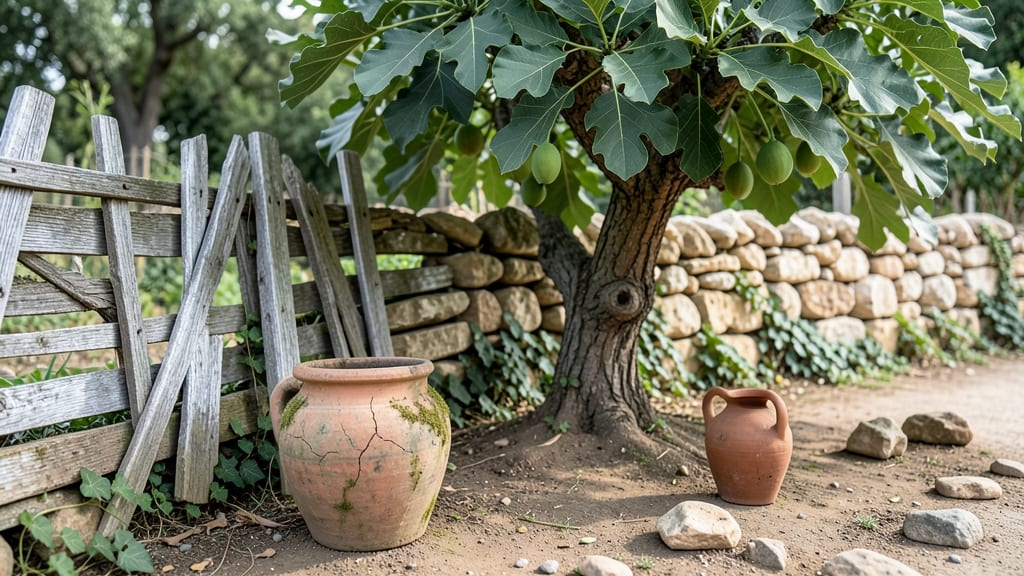
The Garden in the Bible primarily represents the Garden of Eden, where humanity’s story begins with divine care, perfect harmony, and the first act of rebellion. This sacred space symbolizes God’s original design for creation, the consequences of sin, and the promise of future restoration through Christ’s redemption.
The Garden of Eden isn't just a backdrop for Adam and Eve's story—it’s a living metaphor for humanity’s relationship with God and nature. 🌿 From the lush rivers to the forbidden fruit, every element reflects divine order and provision, while the Fall introduces the first broken relationship.
What’s fascinating is how this imagery resurfaces throughout Scripture, from Ezekiel’s vision of a restored sanctuary garden to Revelation’s promise of the Tree of Life in the New Creation.
This biblical garden also serves as a template for understanding redemption: just as Eden was lost through disobedience, it’s restored through obedience. The garden’s dual role—as both paradise and warning—shows how Scripture weaves together creation, sin, and hope into one powerful narrative.
💡 In This Article
- Garden of Eden’s Role in Creation and the Fall
- Biblical Gardens Beyond Eden: Symbolism in Prophecy and Redemption
Garden of Eden’s role in creation and the Fall
The Garden of Eden was meticulously designed as humanity’s first home—a 40-acre paradise (based on ancient Near Eastern garden layouts) where every need was provided. Picture this: four rivers—Pishon, Gihon, Hiddekel (Tigris), and Euphrates—flowing from Eden’s center, creating an oasis teeming with life.
Archaeologists note that such river systems in Mesopotamia (modern Iraq) supported lush vegetation, explaining why Eden’s description aligns with fertile floodplain ecosystems. The garden’s layout mirrored God’s order: the Tree of Life symbolized eternal sustenance, while the Tree of Knowledge represented moral autonomy—a deliberate test of trust.
What makes Eden’s design so profound is its dual purpose: a place of perfect harmony and a testing ground. The garden’s 400+ plant species (Genesis 2:9) weren’t just for sustenance—they reflected God’s creative diversity. Compare this to ancient Near Eastern gardens, where plants were often associated with deities.
In Eden, however, every tree and flower served a functional role: the fig tree (Genesis 3:7) provided immediate sustenance after the Fall, while the acacia tree (Exodus 25:10) later became sacred in the Tabernacle, showing continuity in God’s design.
The animals, too, were named by Adam—not as a scientific exercise, but to establish humanity’s stewardship over creation.
The Fall disrupted this harmony when Adam and Eve chose autonomy over trust. The serpent’s deception exploited one critical detail: the forbidden fruit wasn’t just about eating—it was about seeking knowledge independently of God.
This act introduced three immediate consequences: physical death (Genesis 3:19), spiritual separation (Genesis 3:8), and a broken relationship with nature (thorns and thistles, Genesis 3:18). The garden’s rivers, once life-giving, now became barriers (Genesis 3:24) as humanity was expelled.
This shift mirrors real-world ecological consequences: when humans disrupt natural systems, the results are often irreversible—just as Eden’s perfection became Eden’s curse.
Here’s where the garden’s symbolism deepens: the Tree of Life remained in Eden’s center, but access was denied post-Fall. This wasn’t just a physical loss—it represented humanity’s separation from God’s sustaining presence. Yet, the Tree of Life reappears in Revelation 22:2, showing that redemption restores what was lost.
The garden’s original design, then, wasn’t just a backdrop for the Fall—it was a template for redemption. Every element—rivers, trees, animals—points to God’s original intent: a world where humanity thrives in perfect relationship with Him and His creation.
Consider this: ancient Near Eastern cultures often built gardens as microcosms of the divine.
But Eden was different—it wasn’t a human creation; it was God’s. The garden’s geometric perfection (four rivers, four cardinal directions) reflected divine order, contrasting with Babylon’s later ziggurats, which were human attempts to reach the gods.
This intentional design shows that Eden was never just a place—it was a proclamation of God’s sovereignty over creation and His desire for intimacy with humanity.
The Fall’s consequences extended beyond the garden’s walls. The ground’s curse (Genesis 3:17-18) introduced pain in childbirth, toil in farming, and even the decay of nature itself—a stark contrast to Eden’s effortless provision. Yet, this curse wasn’t final.
The promise of a future redeemer (Genesis 3:15) hints at a restored Eden, where the Tree of Life’s fruit (Revelation 22:14) becomes accessible again. This duality—Eden as both paradise and warning—shows Scripture’s overarching theme: what was lost in a garden is restored through a greater Garden—the New Jerusalem.