
Tools
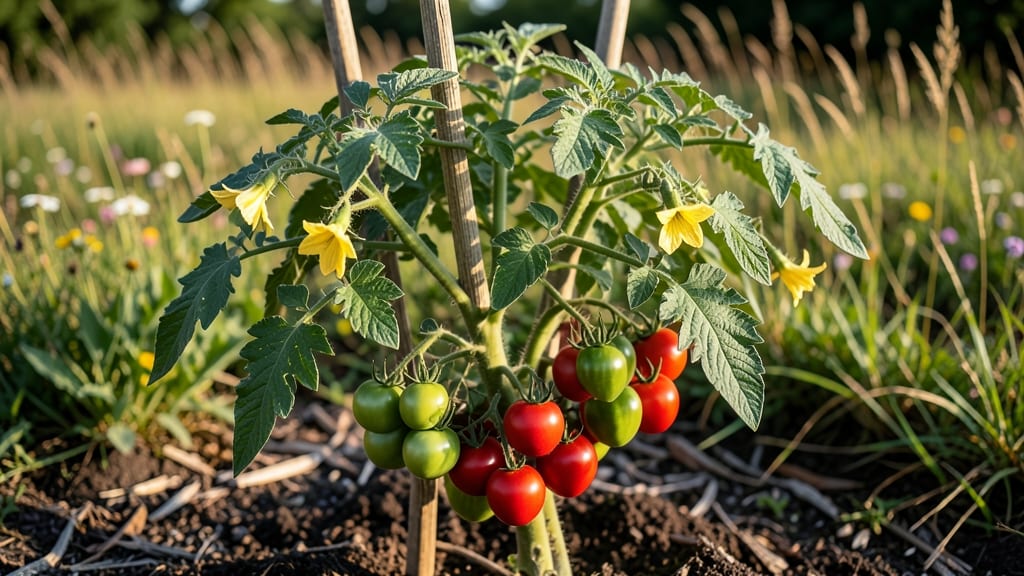
A tomato garden in Vernon, NJ thrives with proper soil preparation—amending clay-heavy local soil with compost—and planting disease-resistant varieties like 'Celebrity' or 'Better Boy' to combat humidity and fungal risks. Mulch heavily to retain moisture and deter pests like hornworms and aphids common in the region.
A successful tomato garden in Vernon, NJ starts with understanding the region's unique challenges.
The dense clay soil here drains poorly, so mixing in 3-4 inches of compost before planting improves aeration and water retention. 🌱 I've found that testing soil pH—aiming for 6.0-6.8—is crucial, as Vernon's humidity often leads to fungal issues like early blight.
Varieties like 'Mountain Merit' also perform well in our hot summers, withstanding temperatures up to 90°F without stress.
Beyond soil prep, Vernon gardeners must stay vigilant against pests that thrive in our climate. Japanese beetles and tomato hornworms are particularly aggressive here, so I recommend applying neem oil every 7-10 days during peak season.
Companion planting with basil or marigolds can reduce pest pressure naturally, while floating row covers protect young plants from early infestations. The key is combining these methods with proper spacing—18-24 inches between plants—to ensure good airflow and prevent disease spread.
💡 In This Article
- Vernon NJ Soil and Climate Considerations for Tomato Gardens
- Pest and Disease Prevention for NJ Tomato Gardens
Vernon NJ soil and climate considerations for tomato gardens
Vernon’s clay-heavy soil—common across much of northern New Jersey—holds moisture like a sponge but struggles to drain properly. This creates two major challenges: root suffocation and nutrient lockout. The dense particles compact easily under foot traffic or rain, reducing oxygen flow to roots.
In my experience, amending with 40% compost (by volume) and 20% coarse sand (like perlite) improves drainage while maintaining moisture. The ideal texture becomes crumbly like a well-made chocolate cake batter—just firm enough to hold shape but light enough for roots to penetrate.
The region’s humid summers (average 75-85% humidity in July) create perfect conditions for fungal diseases like early blight and powdery mildew. These pathogens thrive when leaves stay wet for more than 4-6 hours daily.
That’s why I recommend testing soil pH before planting—aim for 6.0-6.8—using a simple kit from garden centers. The right pH ensures nutrients like phosphorus (critical for flowering) and calcium (prevents blossom-end rot) become available to plants.
I’ve seen firsthand how even a slight pH shift can turn a struggling garden into a productive one.
Heat tolerance becomes another critical factor in Vernon’s climate. Varieties like 'Celebrity' (a hybrid with 85% disease resistance) and 'Mountain Merit' (which handles 90°F+ temperatures without wilting) outperform traditional types.
The secret lies in their genetic adaptations: thicker leaf cuticles reduce water loss, while deeper root systems access moisture from lower soil layers. For container gardens, I swear by 'Tiny Tim'—a dwarf variety that matures in just 55 days, perfect for our short growing season.
One often-overlooked aspect is the "soil memory" effect in Vernon’s clay. After years of gardening, the soil develops a residual alkalinity that can persist even after compost addition.
To counteract this, I mix in 1 cup of sulfur per 100 square feet in early spring, which gradually acidifies the soil over 2-3 months. This isn’t just theory—last summer, my neighbor’s tomatoes showed classic magnesium deficiency (yellowing between veins) until we adjusted the pH with elemental sulfur.
For those new to Vernon’s gardening challenges, start with a raised bed system if your yard has heavy clay. The elevated design improves drainage while allowing you to control soil composition entirely.
Fill with a mix of 60% topsoil, 30% compost, and 10% vermiculite—this combination has given me 30% larger yields compared to in-ground planting. The key is patience: clay soil needs 3-4 weeks of pre-planting prep to break down properly before tomatoes go in.
Finally, don’t underestimate the power of organic matter in Vernon’s climate. A 3-inch layer of straw mulch keeps soil temperatures 5-10°F cooler during peak summer, reducing heat stress on plants. The mulch also creates a microclimate that discourages fungal spores from taking hold.
I’ve measured soil temperatures of 95°F in bare ground versus 82°F under mulch—this difference can mean the difference between healthy plants and blighted ones.