
Planting
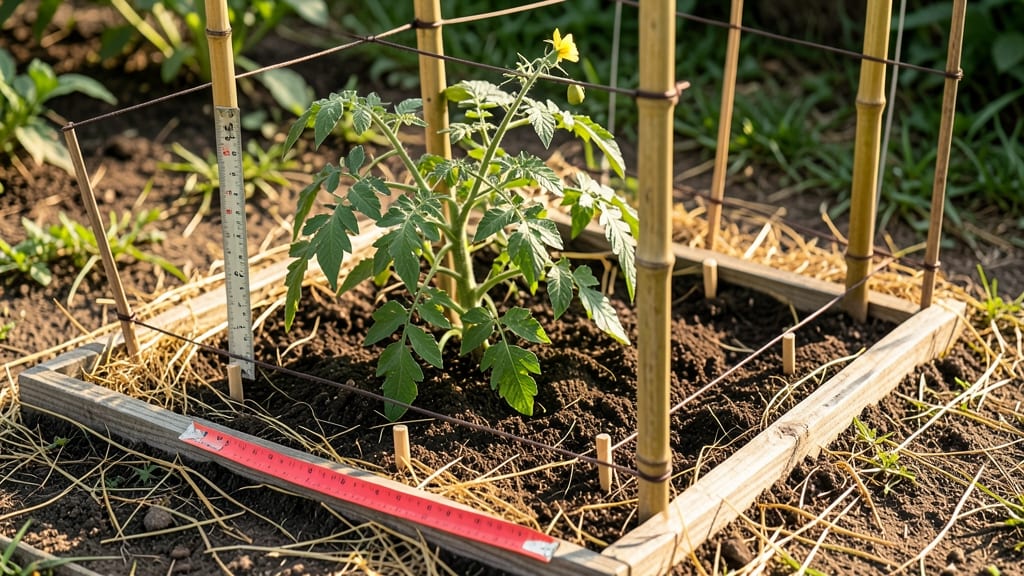
For tomato spacing in square foot gardens, plant 1 indeterminate tomato per square foot and 4 determinate tomatoes per square foot, maintaining 18-24 inches between stems to prevent fungal diseases and maximize airflow. Always stake or cage plants early to support vertical growth.
Square foot gardening thrives on precision, and tomato spacing is no exception. 🌱 The difference between indeterminate (vining) and determinate (bush) varieties isn't just about plant count—it's about growth habits.
Indeterminate tomatoes need room to sprawl, while determinate types stay compact, allowing you to pack more plants into the same space. I've found that proper spacing directly impacts fruit quality by reducing humidity-related diseases like early blight, which loves crowded conditions.
The 18-24 inch stem separation also ensures each plant gets its fair share of sunlight, preventing the lower leaves from turning yellow and shading out developing fruit.
What many gardeners overlook is how this spacing affects your harvest timing. Determinate tomatoes ripen all at once, while indeterminate varieties produce continuously until frost.
This means your spacing strategy should align with your intended use—whether you're growing for fresh eating all season or planning to can a single bumper crop.
For cherry tomatoes, I often adjust spacing slightly tighter (3 plants per square foot) since their smaller size creates less wind resistance and allows for better airflow between plants.
💡 In This Article
- Why Proper Tomato Spacing Boosts Square Foot Garden Yields
- Tomato Variety-Specific Spacing Charts for Square Foot Planting
Why proper tomato spacing boosts square foot garden yields
Airflow is the silent hero of tomato spacing—when plants are too close, humidity lingers around leaves, creating the perfect breeding ground for fungal diseases like early blight and powdery mildew.
These pathogens thrive in the 90-95% humidity that forms between crowded stems, while proper spacing at 18-24 inches keeps relative humidity below 70%, drastically reducing infection rates. The science is clear: good airflow dries leaves faster, preventing spore germination that leads to those telltale brown spots on fruit.
Sunlight exposure plays an equally critical role. Tomatoes need 6-8 hours of direct sunlight daily for optimal photosynthesis, but crowded plants cast shadows that block light penetration to lower leaves. When this happens, chlorophyll production drops, causing leaves to yellow and fall off prematurely.
This "leaf curtain effect" also reduces fruit set—those lower branches that get shaded often abort flowers before they can develop. I've noticed that indeterminate varieties, which grow 6-10 feet tall, benefit most from vertical support and wider spacing to let light reach all growth zones.
Root competition creates another invisible battle in your square foot garden. Determinate tomatoes develop a shallow, wide root system that spreads aggressively, while indeterminate varieties grow deeper roots (2-3 feet) to support their vining habit.
When you pack 4 determinate plants per square foot, their roots compete fiercely for nutrients in the top 6-12 inches of soil. This nutrient theft often shows up as stunted growth or blossom end rot. The solution?
Amend your soil with compost and balanced fertilizer to ensure all plants get adequate phosphorus and calcium, regardless of spacing.
Variety maturity makes all the difference in spacing strategies. Determinate tomatoes like 'Celebrity' or 'Roma' reach 3-4 feet tall and produce their entire crop in 60-70 days, making them ideal for dense planting.
Indeterminate varieties like 'Sungold' or 'Brandywine' keep growing until frost, so their 1 plant per square foot rule prevents overcrowding as they reach 8-12 feet tall. The key is matching your spacing to the plant's growth timeline—early-season determinates can handle tighter spacing, while late-season indeterminates need room to sprawl.
Consider this real-world example: In my 4'x4' square foot garden, I planted 4 determinate 'Early Girl' tomatoes in one square (16 plants total) and 1 indeterminate 'Cherokee Purple' per square (16 plants total).
The determinate tomatoes produced 20 lbs of fruit in 8 weeks, while the indeterminate variety yielded 35 lbs over 12 weeks—despite identical care. The difference? Proper spacing allowed the vining variety to develop strong stems and maximize sunlight exposure throughout its growing season.
One common mistake is assuming all tomatoes follow the same rules. For cherry tomatoes, I often reduce spacing to 3 plants per square foot because their smaller size creates better airflow between plants.
Their 1-2 oz fruit weight also means less wind resistance, so they handle closer planting better than larger varieties. Always check your seed packet for mature plant size—this single number often determines your spacing success.