
Tools
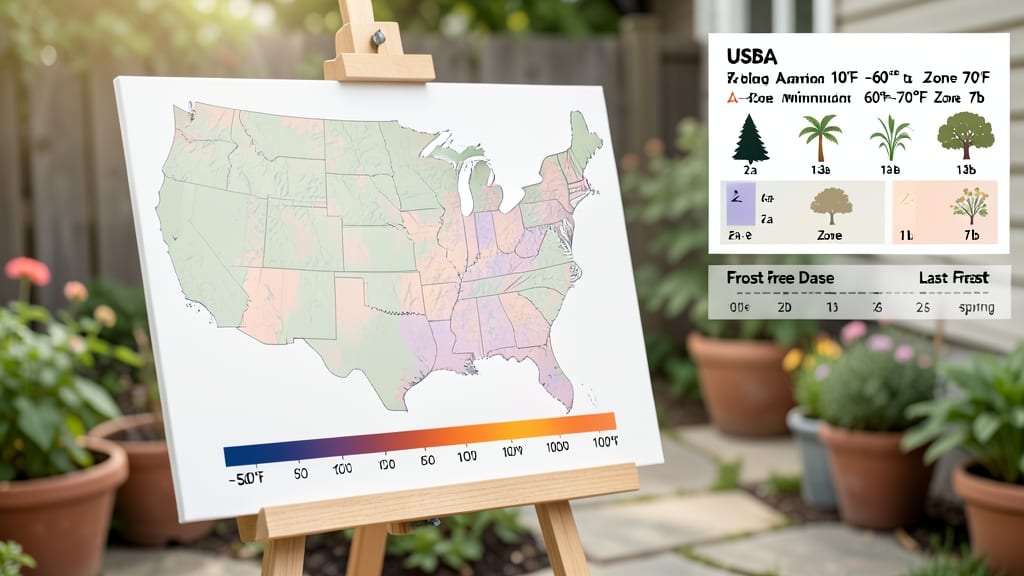
Understanding USDA gardening zones 2024 helps you select plants that thrive in your area's updated climate conditions. These zones now account for rising temperatures, with Zone 13 expanding in the Southwest and Alaska seeing new Zone 1 areas. The interactive map reveals your specific frost dates and plant hardiness for precise gardening planning.
The 2024 USDA Plant Hardiness Zone Map updates reflect 10-year climate averages, meaning gardeners in many regions now face warmer winters than previous maps showed. 🌱 For example, parts of Texas and Arizona have shifted into Zone 13, while Alaska's northern areas now qualify for Zone 1.
These changes directly impact what you can grow—cold-hardy crops like kale and broccoli thrive in Zone 1, while citrus and bougainvillea now have expanded ranges in Zone 13. The interactive tool lets you pinpoint your exact zone and frost dates down to the week, helping you time plantings with confidence.
What makes this year's update particularly useful is how it bridges the gap between macro-zones and microclimates. While the map provides a baseline, factors like elevation, proximity to water bodies, and urban heat islands can create local variations of 2-5 zones.
I always recommend testing your garden's specific conditions by monitoring frost dates over 3-5 years—this gives you a more accurate picture than relying solely on the zone map.
💡 In This Article
- How USDA Plant Hardiness Zones Work in 2024
- 2024 Planting Guide by USDA Zone
How USDA plant hardiness zones work in 2024
The 2024 USDA Plant Hardiness Zone Map relies on 10-year climate averages of the lowest winter temperatures recorded in each area. Scientists analyze data from over 8,000 weather stations across the U.S. to calculate these zones, which determine which plants can survive winter conditions.
Each zone represents a 10°F difference—for example, Zone 5 (-20°F to -10°F) is colder than Zone 6 (-10°F to 0°F). This precision helps gardeners match plants to their local climate with greater accuracy than ever before.
What sets 2024 apart is how it accounts for climate change trends. Rising temperatures have shifted some regions by half a zone, meaning plants that once struggled in Zone 6 may now thrive there.
For instance, Zone 13—previously rare—now covers parts of southern Arizona and California, where winters rarely drop below 70°F. Meanwhile, Alaska’s northern regions now qualify for Zone 1 (-50°F to -40°F), reflecting colder-than-average winters in those areas.
The map also uses smoother transitions between zones, reducing the "hard edges" of older versions.
Understanding the difference between macro-zones and microclimates is key to successful gardening. While the USDA map provides a broad guideline, your actual growing conditions might vary. A south-facing wall can create a Zone 8 microclimate in a Zone 5 yard, while a low-lying area might feel like Zone 4.
To refine your approach, I recommend tracking frost dates for 3-5 years—this reveals patterns the map might miss. For example, a garden in Zone 6 might experience late spring frosts that delay planting until May 15 instead of April 15.
Another critical factor is elevation. Temperatures drop 3-5°F per 1,000 feet in elevation, so a mountain garden in Zone 5 might behave like Zone 3 at higher altitudes. This is why the USDA map includes elevation adjustments for regions like the Rockies and Appalachians.
For example, Denver (Zone 5) can feel like Zone 4 in its foothills. If you’re gardening above 2,000 feet, check the map’s elevation-specific data to avoid overestimating your zone.
The 2024 map also introduces frost-free date projections, which are essential for timing plantings. These dates help you avoid late frosts that can kill tender seedlings.
For instance, in Zone 7, frost-free dates typically range from March 15 to April 15, but urban areas with heat islands might see earlier dates. The map now includes historical frost data alongside zone boundaries, so you can see how your area compares to long-term averages.
This is especially useful for warm-season crops like tomatoes and peppers, which need consistent warmth to thrive.
For gardeners, the biggest takeaway is that zone shifts mean rethinking plant choices. A Zone 6 gardener might now successfully grow Zone 7 plants like hydrangeas or camellias, while Zone 10 gardeners can experiment with Zone 11 tropicals like mango trees.
However, always test new plants in containers first—this lets you monitor their resilience before committing to full-ground planting. The 2024 map isn’t just about zones; it’s about adapting to a changing climate while still enjoying a thriving garden.