
Tools
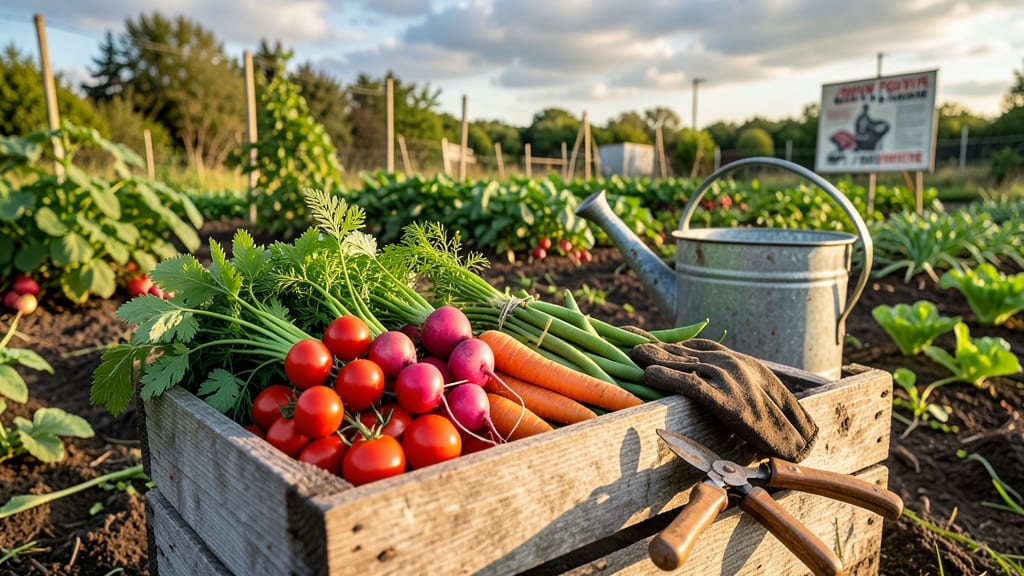
Victory gardens facts reveal that these wartime plots transformed food production during World War I and II, with over 20 million American gardens supplying 40% of the nation's fresh produce by 1943. Their revival during crises demonstrated how homegrown food could strengthen community resilience and food security.
Victory gardens weren't just a wartime trend—they were a strategic response to food rationing and supply shortages. 💫 The U.S. government even distributed free seeds and gardening guides, turning backyards into production hubs overnight.
What's fascinating is how these gardens proved that urban spaces could feed communities when commercial systems failed, a lesson still relevant today.
Modern victory gardens take this concept further by blending sustainability with community-building. Many cities now host shared garden plots where neighbors collaborate on growing food, reducing waste, and fostering connections.
The key difference? Today's gardeners focus on year-round production using raised beds and hydroponics, making urban farming accessible even in small spaces.
Whether you're reviving the tradition or starting fresh, victory gardens show that food security begins at home—literally. The original movement proved that collective effort could solve crises, and today's adaptations prove it's just as powerful for climate change and economic stability.
💡 In This Article
- How Victory Gardens Reshaped Wartime Food Security
- Modern Victory Gardens: Revival and Contemporary Uses
How victory gardens reshaped wartime food security
The concept of victory gardens emerged as a direct response to food shortages during World War I, but it was World War II that truly transformed them into a nationwide movement.
By 1942, the U.S. government launched the "Food for Freedom" campaign, encouraging citizens to grow their own vegetables to free up commercial crops for troops overseas.
The Office of Civilian Defense distributed 10 million seed packets in just six months—equivalent to planting enough vegetables to cover 30% of U.S. farmland at the time.
What made these gardens so effective was their strategic focus on high-yield, nutrient-dense crops. Tomatoes, potatoes, and leafy greens were prioritized because they grew quickly and required minimal space. The government even published Victory Garden Manuals with planting charts, showing when to sow seeds for continuous harvests.
In 1943, these gardens produced 8 million tons of food, equivalent to feeding 40% of the nation's population—a staggering achievement considering the average garden was just 150 square feet.
The psychological impact was just as significant. Before the war, many Americans viewed gardening as a hobby rather than a necessity. But victory gardens shifted perceptions by demonstrating that ordinary citizens could contribute meaningfully to national security. Schools, churches, and even office buildings participated, creating a sense of shared purpose.
This collective effort wasn't just about food—it was about proving that communities could organize rapidly in times of crisis, a lesson that still resonates today.
One lesser-known detail is how victory gardens addressed labor shortages. With millions of men serving overseas, women—often called "Rosie the Riveters" in factories—took on gardening roles too. The government even aired radio programs like "Victory Gardeners of America" to teach techniques.
These efforts turned backyards into micro-farms, showing how decentralized production could stabilize food systems when supply chains failed.
The success of victory gardens also had a long-term effect on American agriculture. After the war, many families continued gardening, and the concept of homegrown food became more mainstream. This laid the groundwork for today's urban farming movements and community gardens.
The wartime experience proved that food security isn't just about large-scale farming—it's about resilience at the neighborhood level.
Even the design of victory gardens was purposeful. Many used raised beds or intensive planting methods to maximize space, techniques now common in modern urban gardens. The focus on simple, hardy crops also reduced reliance on pesticides, foreshadowing today's emphasis on organic and sustainable growing practices.
What's most striking is how victory gardens bridged the gap between individual action and national impact. A single backyard plot could produce enough food to feed a family for months, but when millions participated, the effect was transformative.
This duality—personal effort with collective results—is what makes the story of victory gardens so compelling and relevant even now. 💫