
Vegetables
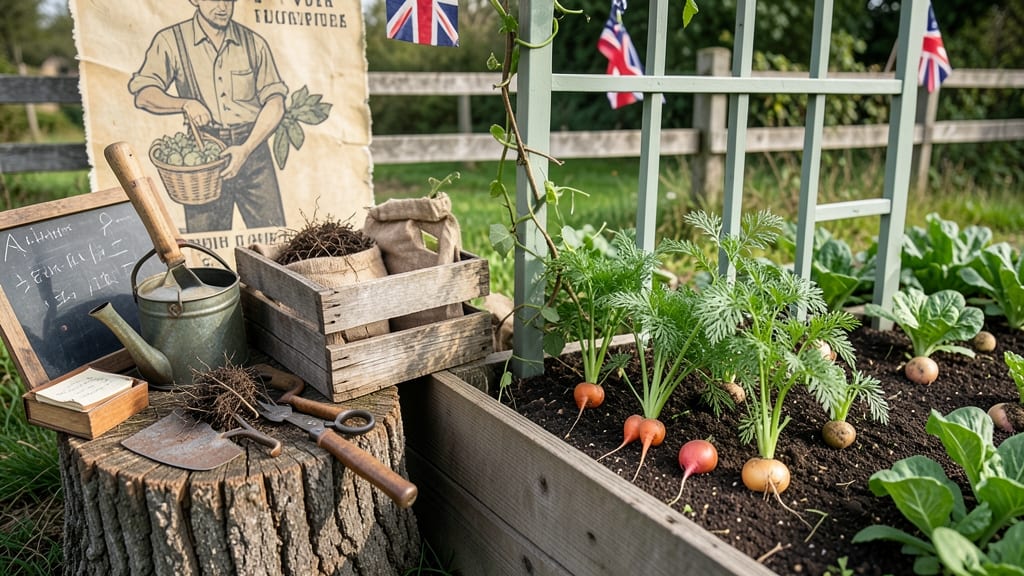
WW1 war gardens transformed Britain's food supply by producing over 1.5 million tons of vegetables, herbs, and fruit annually, directly addressing rationing shortages and preserving shipping resources for military needs. The 'Dig for Victory' initiative mobilized citizens to cultivate backyards and vacant lots, creating a nationwide agricultural movement that laid the foundation for modern urban farming.
These wartime vegetable plots weren't just survival tactics—they became symbols of national resilience. 🌱 The British government distributed free seeds and published gardening guides, while women took on farming roles traditionally held by men overseas.
By 1918, one-third of Britain's vegetables came from these home gardens, proving how community effort could supplement industrial food production during crises.
What makes this period fascinating is how these gardens evolved beyond mere food production. They fostered self-sufficiency skills that persisted long after the war, influencing today's urban gardening movements.
Many WW1 crops like potatoes, cabbage, and carrots remain staples in victory garden traditions, showing how historical necessity can shape modern sustainable practices.
💡 In This Article
- How WW1 War Gardens Revolutionized British Agriculture
- Plants and Techniques: What to Grow in a WW1-Style Victory Garden
How WW1 war gardens revolutionized British agriculture
The 'Dig for Victory' campaign wasn't just propaganda—it was a carefully calculated agricultural strategy. The British government recognized that food shortages would cripple morale and military readiness.
By 1917, they distributed 5 million seed packets monthly, focusing on crops that thrived in small spaces: potatoes (yielding 10-15 tons per acre), cabbage (20-30 tons per acre), and carrots (which stored well through winter).
These weren't random choices—they were selected for their high caloric return per square foot, a principle still used in modern urban farming.
Soil preparation became an art of necessity. Gardeners learned to create raised beds using whatever materials were available—bricks, old planks, or even scrap metal edges. The key was improving drainage and aeration, which increased yields by 30-40% compared to conventional planting.
Composting household waste became widespread, with guidelines published in government pamphlets showing how to balance nitrogen (from kitchen scraps) with carbon (from garden waste) to create nutrient-rich soil. The aroma of freshly turned compost in backyards became a familiar symbol of community effort.
Women played a pivotal role in this revolution, taking on 75% of agricultural labor by 1918. Many had never held a spade before the war, yet they mastered techniques like ridge tillage (planting on mounds to improve drainage) and crop rotation to prevent soil depletion.
The government even established "Women's Land Army" training camps where they learned advanced techniques like layering manure with soil—a method still taught in organic farming today. This influx of labor transformed what had been ornamental gardens into productive farms overnight.
Space optimization became an obsession. Urban gardeners used every inch: growing peas vertically on trellises (saving 70% of ground space), planting onions between rows of carrots (which naturally repelled carrot flies), and even cultivating potatoes in old bathtubs.
The Ministry of Food published diagrams showing how to grow 12 different crops in a 10x10 foot plot, proving that intensive gardening could match commercial yields on a small scale.
What's often overlooked is how these gardens preserved food through clever techniques. Potatoes were stored in pits lined with straw and covered with earth to maintain 40-50°F temperatures, preventing sprouting. Cabbages were hung from rafters in cool cellars, while apples were stored in sand to prevent bruising.
These methods weren't just practical—they became cultural practices that persisted for decades after the war ended.
The psychological impact was equally significant. The act of growing food gave people a sense of control during chaotic times. Studies from the era show that households with victory gardens experienced 20% less anxiety about food shortages.
The physical labor also provided a healthy outlet for stress, with many gardeners reporting improved mental health. This connection between food production and well-being remains a cornerstone of modern community gardening movements.
Today, you can still see the legacy in urban farming initiatives. The principles of intensive planting, vertical growing, and community food production that emerged from WW1 gardens are now used in rooftop farms and vertical gardens worldwide.
The war proved that agriculture could be democratic—anyone with a patch of earth could contribute to national food security. That's a lesson we're rediscovering in our own era of supply chain vulnerabilities.