
Flowers
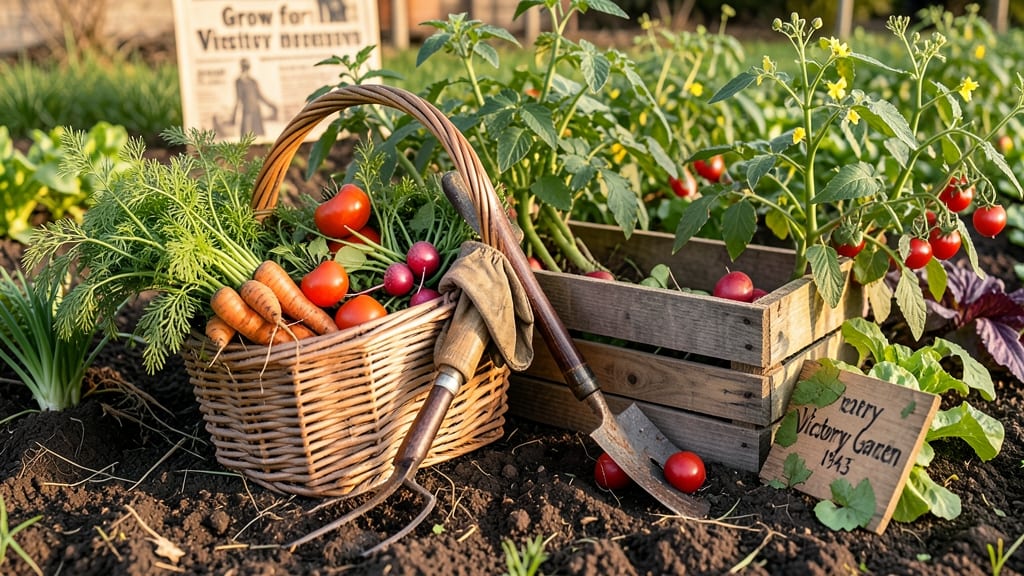
Victory gardens meaning revolves around community-based food cultivation during crises, starting as patriotic efforts in World War I and II to address shortages while lifting spirits, and now representing modern sustainability through shared gardening initiatives.
The original victory gardens meaning was tied to national resilience during wars, when families grew vegetables to support troops and conserve resources. 🌱 These gardens became symbols of civic duty, with over 40% of U.S. vegetables coming from home plots during WWII.
Today, the concept has evolved into a movement for food security and environmental stewardship, proving that gardening can address both historical and contemporary challenges.
Modern victory gardens often focus on urban spaces, school programs, and food justice initiatives, making fresh produce accessible to underserved communities. 💫 Unlike traditional vegetable plots, today's versions emphasize biodiversity, composting, and even vertical growing systems to maximize small spaces.
The core idea remains the same: growing food together strengthens both individuals and communities.
💡 In This Article
- How Victory Gardens Originated During Wartime
- Modern Victory Gardens: Sustainability and Community Building
How victory gardens originated during wartime
The concept of victory gardens emerged as a direct response to food shortages during World War I, when the U.S. government launched the first national campaign in 1917.
With 20% of the nation's food supply diverted to feed troops and allies, families faced rationing on staples like meat, sugar, and fats.
The U.S. Department of Agriculture and Women's Bureau promoted gardening as a patriotic duty, distributing seeds and planting guides through local extension services. 🌿 These early gardens produced 40% of the nation's vegetables by 1918, proving their impact on national food security.
During World War II, victory gardens expanded dramatically under First Lady Eleanor Roosevelt's leadership, who planted her own "White House Garden" as a model. The government distributed 10 million seed packets in 1943 alone, and by 1944, these gardens covered 40% of U.S. vegetable production.
The effort wasn't just practical—it was psychological. Families grew 35 million tons of produce annually, conserving resources while boosting morale through tangible contributions to the war effort. Posters featuring Rosie the Riveter with a shovel reinforced the message: "Grow Food for Freedom."
Women played a pivotal role in victory gardens, as wartime labor shortages pulled them into factories and farms. Gardening became a way to maintain household food supplies while supporting the war economy. The government even provided 1,000-page manuals with planting schedules, soil preparation tips, and space-saving techniques for urban dwellers.
This hands-on involvement fostered a sense of agency during uncertain times, proving that ordinary citizens could make extraordinary contributions. 🌱
The success of victory gardens during these wars demonstrated how community-driven agriculture could address systemic challenges. By 1945, over 20 million gardens existed across the U.S., with families growing everything from potatoes to tomatoes in backyards, balconies, and even vacant lots.
The movement's legacy lies in its dual purpose: feeding the nation while strengthening social bonds through shared effort. This wartime innovation later became a blueprint for modern food sovereignty movements.
What makes victory gardens uniquely effective is their adaptability to different environments. During WWII, urban families grew vegetables in window boxes and rooftops, while rural communities expanded traditional plots. The government even encouraged "victory pig" programs to raise livestock, though these were less common due to space constraints.
This flexibility ensured that gardens could thrive regardless of location, making them a scalable solution to food insecurity. 💛
Today, historians credit victory gardens with shaping modern agricultural policies and community gardening movements. The data shows that during WWII, the average garden produced 9-10 tons of food annually, equivalent to feeding a family of four for an entire year.
This practical success proved that decentralized food production could supplement industrial agriculture, a lesson still relevant in discussions about climate change and supply chain resilience.