
Tools
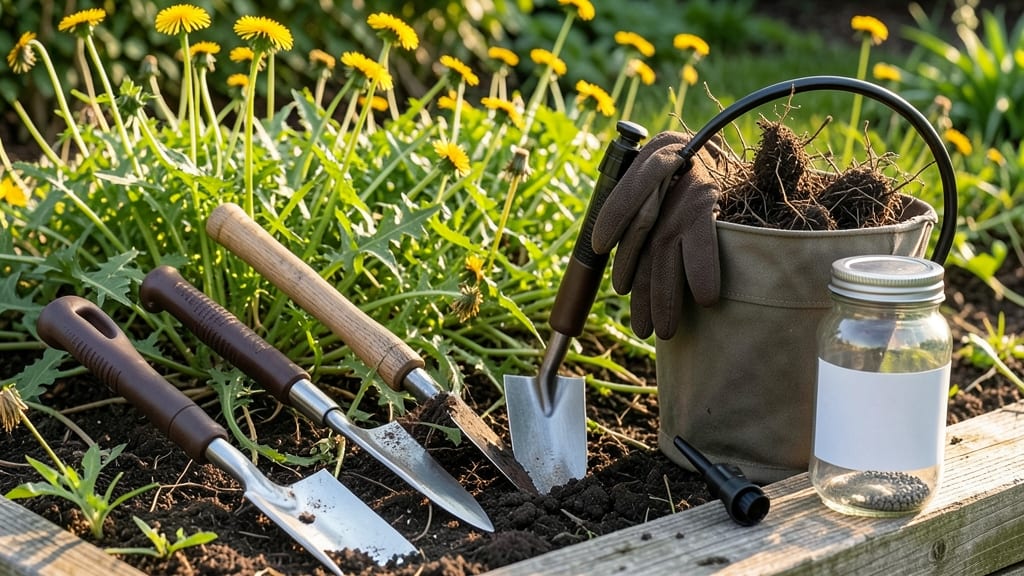
Choosing the right weed clearing garden tool depends on your garden's size and the type of weeds you're dealing with, as manual options like hoes and trowels work best for small, precise areas, while solar-powered and flame weeders handle larger spaces more efficiently.
Selecting the best weed removal tool starts with understanding your garden's needs. 🔥 For small, delicate plants, hand tools like a stainless steel hoe or ergonomic trowel give you control without disturbing surrounding soil.
Larger areas benefit from mechanical weed pullers or solar-powered weed burners, which eliminate weeds without chemicals. The key difference? Manual tools require elbow grease but are eco-friendly, while powered options save time but may have environmental trade-offs.
I always recommend having both types on hand—one for touch-ups and another for major overhauls.
Consider your garden's terrain too. Rocky soil calls for a heavy-duty cultivator with sharp blades, while soft, loamy ground pairs better with a broadfork for deep weeding. For stubborn weeds like dandelions, a weed torch works wonders, but it's best used in dry conditions.
Always match the tool to the job—like using a flame weeder for driveways or a hand weeder for flower beds—to make the process faster and more effective.
💡 In This Article
- How Different Weed Clearing Tools Work
- Best Weed Clearing Tools for Specific Garden Types
How different weed clearing tools work
Manual tools like hoes and trowels work by physically severing weed roots or stems at the soil surface. A stainless steel hoe with a sharp blade cuts weeds at their base, preventing regrowth from the stem (a process called "decapitation").
The blade's angle—typically 45-60 degrees—allows it to slice through surface weeds while leaving the soil undisturbed. This method is most effective for annual weeds with shallow roots, like crabgrass or chickweed, where the root system isn't deeply embedded.
The physical action also aerates the soil slightly, improving water and nutrient absorption for your plants.
Heat-based tools, such as flame weeders, operate on a different principle: they use propane-powered flames to instantly vaporize weed cells. When the flame reaches 1,500-2,000°F, it denatures the proteins in weed tissues, killing them within seconds.
This method is ideal for broadleaf weeds like dandelions or clover, which have thick stems that resist manual pulling. Solar-powered weed burners, on the other hand, use concentrated sunlight (via Fresnel lenses) to generate heat up to 400°F, making them chemical-free and eco-friendly.
However, they require direct sunlight and work best on dry, non-woody weeds.
Mechanical weed pullers, like the staple-type or wheel-hoe designs, combine cutting and uprooting. The rotating blades or tines dig into the soil at 1-2 inch depths, severing roots while leaving the soil structure intact.
These tools are perfect for larger areas, like vegetable gardens or lawns, where manual weeding would be time-consuming. The efficiency comes from their ability to cover 50-100 square feet per minute, but they require more physical effort than flame or solar tools.
For deep-rooted perennials like bindweed, a dandelion digger with a long handle and forked prongs is essential—it pries roots out completely, reducing regrowth by up to 90%.
Solar-powered tools convert sunlight into energy through photovoltaic cells, which power a small electric motor or heating element. For example, a solar weed burner might have a 5-10 watt panel that charges a battery, which then powers a flame or electric pulse to kill weeds. The advantage?
No fuel costs or emissions, but the output is limited by sunlight availability. On cloudy days, these tools may only operate at 30-50% efficiency, making them less reliable than propane-powered alternatives. However, they’re ideal for organic gardens where chemical-free solutions are a priority.
Each tool’s effectiveness depends on the weed’s biology. For instance, broadleaf weeds (like plantain) have wide leaves that absorb heat quickly, making flame tools highly effective. In contrast, grassy weeds (like nutgrass) have deep, fibrous roots that require manual extraction or deep-soil tools.
The choice also hinges on labor: manual tools demand 10-30 minutes per 100 sq ft, while flame or solar tools reduce this to 2-5 minutes for the same area—though they may not handle thick weeds as well. 🔥
Consider the soil too. Loose, sandy soil makes manual tools easier to use, while clay or rocky soil can dull blades or jam mechanical parts. Always match the tool to the terrain: a broadfork works best in soft soil, while a heavy-duty cultivator handles rocky patches.
The right tool not only saves time but also prevents damage to your plants’ roots.