
Tools
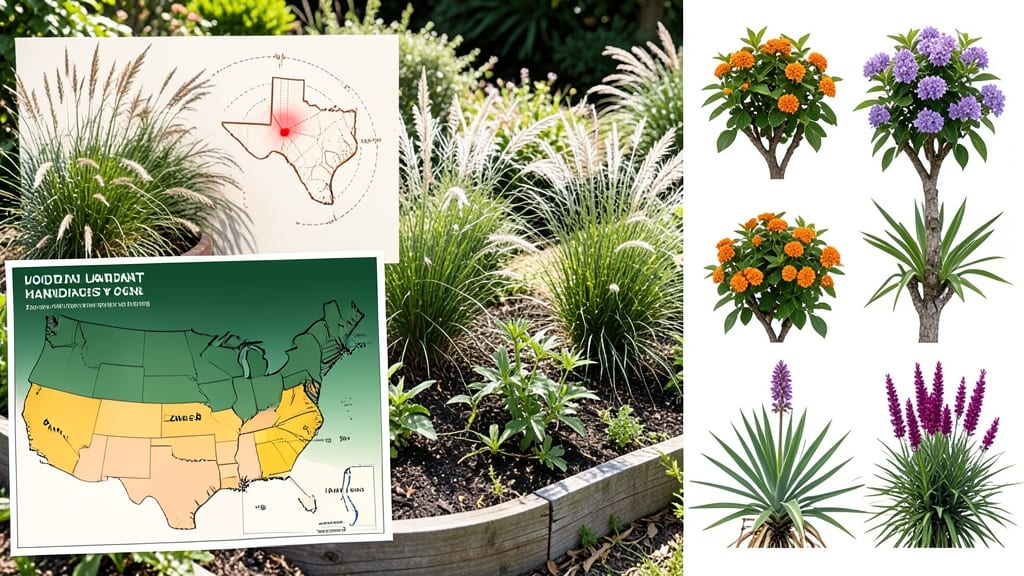
Houston is located in USDA Hardiness Zones 9a and 9b, where temperatures rarely drop below 20°F (-6°C) and typically stay between 20°F to 35°F (-6°C to 2°C). This classification enables gardeners to grow a wide variety of tropical plants and citrus trees year-round with minimal frost concerns.
Understanding Houston's zone classification helps you choose the right plants for your garden. 🌿 The city's proximity to the Gulf Coast creates a unique microclimate where humidity and heat play major roles in plant survival.
While Zone 9a experiences slightly colder winters with occasional dips near 20°F, Zone 9b remains warmer year-round, allowing for more frost-sensitive species like bougainvillea or hibiscus to thrive without protection.
This warm classification also means you can extend your growing season well beyond traditional spring and summer months. Many gardeners in Houston take advantage of the mild winters to plant cool-season crops like lettuce or kale, while tropical varieties like mango trees or citrus thrive with minimal care.
The key is understanding how your specific location within the city might experience slightly different microclimates due to urban heat islands or proximity to water bodies.
💡 In This Article
- Houston’s Climate Factors Affecting USDA Zone Classification
- Best Plants and Gardening Strategies for Houston’s Zones 9a/9b
Houston’s climate factors affecting USDA Zone classification
Houston’s placement in USDA Zones 9a and 9b isn’t just about average temperatures—it’s shaped by a complex interplay of geography, urban development, and Gulf Coast influences. The city’s proximity to the Gulf of Mexico creates a humidity buffer, where moist air moderates temperature swings.
During winter, Gulf moisture prevents rapid cooling, keeping nights above 35°F (2°C) most years. This moisture also fuels occasional freeze events when Arctic air masses push south, but these are rare and short-lived compared to northern climates.
The urban heat island effect plays a surprising role too. Concrete, asphalt, and dense buildings absorb and retain heat, creating microclimates where temperatures can be 5-10°F warmer than surrounding rural areas.
In Zone 9b (warmer areas like the city center), this effect extends the growing season by 2-3 weeks compared to Zone 9a (cooler outskirts near forests).
For example, while downtown might support year-round citrus production, outer neighborhoods may require frost cloth for sensitive tropicals like palm trees during rare cold snaps.
Seasonal variations reveal why these zones matter. Spring in Houston arrives early—by mid-February—with daytime highs reaching 75°F (24°C), while fall lingers into December. Summer’s 90°F+ (32°C+) heat and high humidity (often 80%+) create challenges for plants unaccustomed to such conditions.
The key difference between 9a and 9b? Zone 9a’s 10-15% higher frost risk—occasional dips to 20°F (-6°C) can damage tender plants like bougainvillea or hibiscus without protection.
Water availability is another critical factor. Houston’s clay-heavy soils retain moisture but drain poorly, leading to root rot for plants like orchids or gardenia if overwatered. The city’s 110+ inches of annual rainfall means drainage solutions (like raised beds) are essential for tropical species that prefer well-draining conditions.
Meanwhile, the Gulf’s influence creates salty air near coastal areas, which can stress plants like azaleas or camellias that prefer slightly acidic soils.
For gardeners, these factors translate to practical adjustments. In Zone 9a, mulching with 3-4 inches of organic matter (like pine straw) can protect roots during rare freezes, while Zone 9b gardeners might focus on shade cloth for summer heat protection.
The city’s hurricane season (June-November) also demands planning—tropical plants with shallow roots (like ginger) may need staking to prevent wind damage. 🌊
What’s often overlooked is how microclimates within Houston can shift zones by a letter. A north Houston yard near forest edges might experience Zone 8b conditions during cold snaps, while a south Houston rooftop garden could feel like Zone 10a in summer.
Tools like local weather station data or plant hardiness maps from Texas A&M help pinpoint your exact conditions.
Understanding these nuances means you can push the limits of what grows in Houston.
For instance, coffee plants (Arabica) thrive in Zone 9b’s warmth but may need winter protection in Zone 9a. Similarly, avocado trees (which prefer 60-80°F (15-27°C) day/night temps) do well in both zones but require well-draining soil to avoid root rot—a common issue in Houston’s clay.