
Tools
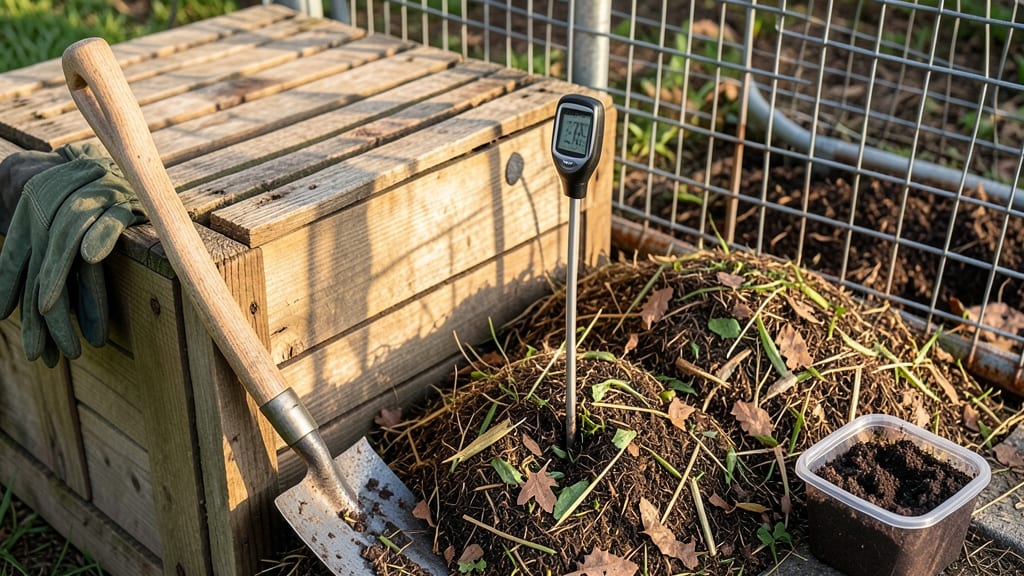
Garden compost is decomposed organic matter like yard waste, food scraps, and plant trimmings that enriches soil by improving structure, retaining moisture, and providing essential nutrients for plant growth. It’s a natural fertilizer that enhances soil health without synthetic chemicals.
Garden compost transforms kitchen scraps and yard waste into nutrient-rich soil through natural decomposition. 🌱 Microbes and worms break down materials like fruit peels, leaves, and grass clippings, creating a dark, crumbly substance packed with beneficial microbes.
This process improves soil aeration, water retention, and nutrient availability—key factors for healthy plant growth. Unlike chemical fertilizers, compost enhances soil structure over time, making it ideal for both gardens and houseplants.
What makes compost so effective is its balanced ecosystem. The right mix of "greens" (nitrogen-rich materials like vegetable scraps) and "browns" (carbon-rich materials like dried leaves) creates the perfect environment for decomposition.
Proper aeration and moisture levels ensure the process stays efficient and odor-free. Once fully decomposed, compost resembles rich, dark soil that's ready to revitalize your garden beds.
💡 In This Article
- How Garden Compost Forms Through Decomposition
- Best Organic Materials for Homemade Garden Compost
How garden compost forms through decomposition
At its core, composting is a natural breakdown process driven by microorganisms—bacteria, fungi, and actinomycetes—that transform organic waste into nutrient-rich soil. These microbes thrive in a warm, moist environment where they consume carbon (from brown materials like leaves) and nitrogen (from green materials like grass clippings) to fuel their growth.
The ideal temperature range for active decomposition is 135-160°F, which kills weed seeds and pathogens while accelerating the process. Without proper oxygen, however, these microbes shift to anaerobic respiration, producing foul-smelling gases like methane instead of creating rich compost. 🔥
The magic happens when you balance the carbon-to-nitrogen (C:N) ratio—typically a 25:1 to 30:1 ratio works best. Too much nitrogen creates a slimy, smelly pile, while too much carbon slows decomposition to a crawl.
For example, a mix of 50% dried leaves (carbon source) with 50% kitchen scraps (nitrogen source) provides the perfect balance. Aeration is equally critical: turning the pile every 1-2 weeks introduces oxygen, preventing odors and speeding up decomposition by up to 50% compared to static piles.
Water plays a supporting role too—compost should feel like a damp sponge, with 40-60% moisture content. Overwatering suffocates microbes, while dry conditions slow their activity. Think of it like a sponge: squeeze it gently to check moisture.
The decomposition process also generates heat, which helps break down tough materials like corn husks or coffee grounds. This thermal activity is why compost piles can reach temperatures hot enough to pasteurize soil, eliminating harmful bacteria and weed seeds. 🌱
Worms and other decomposers join the party later, contributing to the final structure of the compost. Earthworms, in particular, aerate the pile as they tunnel through, creating channels that improve water drainage and root penetration.
Their castings—worm poop—are packed with nutrients like nitrogen, phosphorus, and potassium, making them a powerhouse for plant growth. The end result is a dark, crumbly material that resembles rich, fertile soil, ready to nourish your garden without the need for synthetic chemicals.
One common misconception is that composting requires constant attention, but with the right balance of ingredients and conditions, a well-maintained pile can decompose in as little as 2-3 months. The key is consistency: maintain proper aeration, moisture, and the C:N ratio, and the microbes will do the rest.
This natural process not only reduces landfill waste but also creates a sustainable cycle that benefits both your garden and the environment. ✨
For those new to composting, start small with a 3x3x3-foot pile and monitor its progress. Use a compost thermometer to track temperature changes—peaks above 140°F indicate active decomposition. Over time, you'll learn to recognize the stages: initial cooling, heating up, and finally the transition to a cool, crumbly finish.
Each stage brings your pile closer to becoming the black gold of gardening. 💫