
Tools
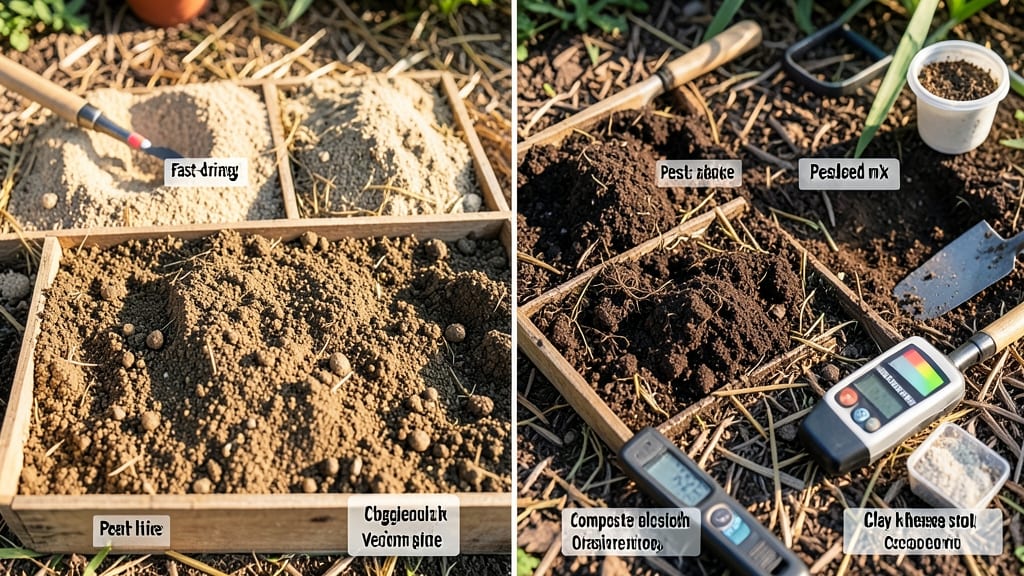
To create ideal garden beds, use loamy soil—a balanced blend of 40% sand, 40% silt, and 20% organic matter like compost—to balance moisture retention and drainage. Adjust the mix for your local soil type (clay or sandy) and plant needs, such as nutrient-heavy blends for vegetables or lighter mixes for perennials.
Loamy soil works wonders because its balanced texture holds nutrients while allowing roots to breathe. 🌱 The sand component prevents compaction, silt retains moisture, and organic matter feeds beneficial microbes.
I've found that adding worm castings boosts microbial activity, which helps break down nutrients for plant uptake—especially for heavy feeders like tomatoes or peppers. For clay-heavy soils, mix in coarse sand or perlite to improve drainage, while sandy soils benefit from extra compost to boost nutrient retention.
Your local soil type plays a huge role in success. If you're unsure about your soil composition, a simple jar test can reveal the proportions of sand, silt, and clay. Just fill a jar with soil, add water, and observe how quickly the layers settle.
This DIY approach helps you tweak your mix before planting, saving time and frustration later. For container gardens, consider pre-mixed potting soil with added perlite for extra aeration.
💡 In This Article
- Understanding Loam Soil Composition and Its Role in Plant Health
- Customizing Soil Mixes for Different Plants and Garden Conditions
Understanding loam soil composition and its role in plant health
The magic of loam soil lies in its perfect trifecta of sand, silt, and clay particles working together. Sand (0.05-2mm) creates air pockets for root respiration, silt (0.002-0.05mm) holds moisture and nutrients, while clay (<0.002mm) acts as a nutrient reservoir.
This combination gives loam a 40-60% porosity, allowing water and oxygen to reach roots while preventing waterlogging. The ideal ratio—40% sand, 40% silt, and 20% clay—strikes a balance that most plants crave, though vegetables often thrive with slightly more clay (25%) for nutrient retention. 🌱
Organic matter (like compost or leaf mold) is the secret ingredient that transforms basic loam into plant superfood. It improves water retention by 20-30% while adding vital microbes that break down nutrients into plant-available forms.
Think of it as a living ecosystem: earthworms aerate the soil, fungi decompose organic material, and bacteria fix nitrogen from the air. This microbial activity creates a spongy structure that holds 1.5-2 times its weight in water without becoming soggy—a critical feature for drought-prone areas.
Here's what happens when you get the balance wrong: Sandy soils drain too quickly, flushing away nutrients and requiring constant watering, while clay soils become waterlogged, suffocating roots.
The texture difference is dramatic—sandy soil feels gritty and dry, clay feels sticky when wet, and loam crumbles easily between fingers like a perfect cake batter. For heavy clay soils, adding 30-40% coarse sand or perlite can transform them into workable loam within a season. 💫
Plant roots need this balance to grow efficiently. For example, tomato plants develop stronger root systems in loam because the moderate moisture retention prevents stress during flowering. Meanwhile, shallow-rooted herbs like basil benefit from the aeration that sand provides.
The key is matching the soil's physical properties to the plant's natural growing habits—deep roots need good drainage, while shallow roots prefer moisture retention.
Consider this comparison: A 1-gallon container of pure sand might hold only 1 cup of water, while the same container of loam can hold 2-3 cups—enough to sustain plants between waterings.
This water-holding capacity is why gardeners often amend native soils with compost, gradually improving their structure over time. The process is gradual but transformative, turning marginal soil into a thriving ecosystem. ✨
For those starting with poor soil, begin with a 50/50 mix of native soil and compost. Work the compost into the top 6-12 inches of soil, where most roots grow. Over time, the compost breaks down, improving the soil's natural structure.
This method works for both in-ground gardens and raised beds, giving you control over the growing environment regardless of your location's native soil quality. 🌿