
Tools
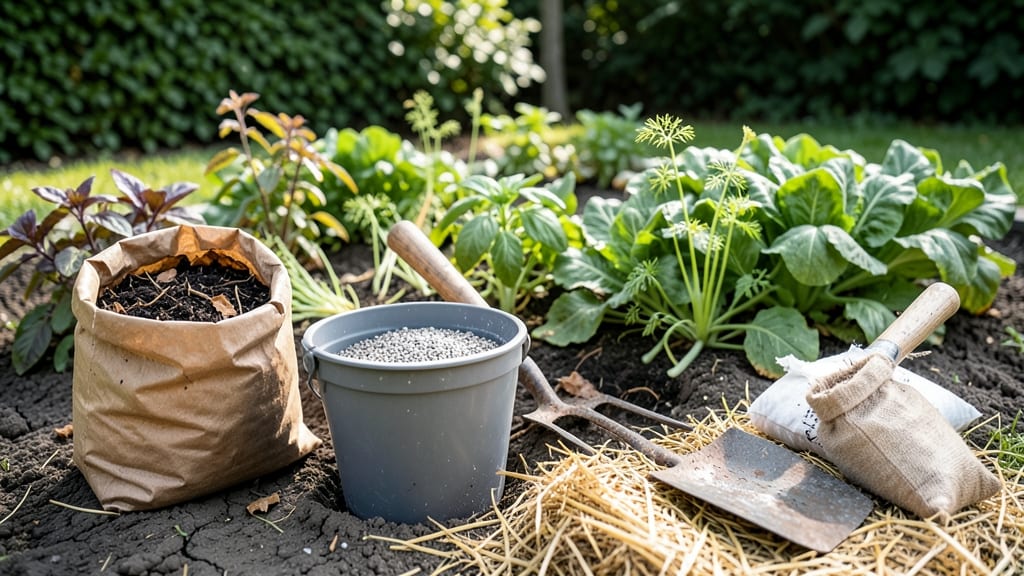
When improving clay garden soil, add organic matter like compost, well-rotted manure, or leaf mold to break up compaction, boost drainage, and enhance nutrient retention. Avoid heavy amendments that worsen drainage issues.
Clay soil can feel like working with concrete, but the right organic amendments transform it into fertile ground. 🌱 The key is breaking up those dense particles without smothering plant roots—compost and leaf mold act like tiny sponges, absorbing excess moisture while adding air pockets for better root growth.
I’ve seen heavy clay turn into workable soil within just a few months after adding a 2-3 inch layer of compost mixed into the top 6-8 inches.
For best results, focus on materials that decompose slowly but steadily, like aged manure or shredded hardwood bark. These create long-term structural improvements rather than temporary fixes. The goal is to mimic nature’s own soil-building process, where organic debris gradually enriches the earth without overwhelming it.
💡 In This Article
- How Organic Matter Transforms Heavy Clay Soil
- Best Organic Amendments for Clay Soil: A Gardener’s Guide
How organic matter transforms heavy clay soil
Clay soil's microscopic plate-like particles pack tightly together, creating a dense matrix that repels water and air. When you add organic matter like compost, the humic acids and microbial activity in the organic material act as natural emulsifiers, breaking down these tight bonds.
This process creates tiny air pockets between particles, which improves water infiltration by up to 70% while preventing compaction. Think of it like adding olive oil to a rusty hinge—it lubricates the system at a molecular level.
The magic happens through a process called aggregation, where organic particles bind clay particles into larger clumps. These aggregates create a sponge-like structure that holds 3-5 times more water than unamended clay, yet allows excess to drain freely.
For example, a 2-inch layer of compost mixed into the top 6-8 inches of soil can increase porosity enough to support deep-rooted plants like tomatoes or roses, which struggle in pure clay.
Organic matter also serves as a nutrient reservoir. As microbes decompose the compost, they release essential minerals like nitrogen, phosphorus, and potassium in forms plants can easily absorb. Unlike synthetic fertilizers that provide quick but short-lived boosts, organic amendments create a slow-release system that mirrors natural ecosystems.
The result? Plants develop stronger root systems that can penetrate the improved soil structure, accessing both water and nutrients more efficiently.
One common misconception is that adding sand will fix clay soil. While sand increases drainage, it creates a sandy-clay mix that actually worsens the problem by making the soil more compact and less fertile. The solution?
Stick to organic amendments that improve both structure and fertility simultaneously. For instance, well-rotted manure contains beneficial microbes that further enhance soil biology, while leaf mold provides a fine, fibrous texture that mimics natural forest soil.
Consider the texture transformation: pure clay feels like wet cement when worked, while amended clay becomes crumbly and friable—almost like loamy soil. This change happens gradually over 3-6 months, depending on your climate and the quality of amendments used.
In my own garden, I've seen clay soil that was once impenetrable become so workable that I can dig with a fork instead of needing a shovel.
For best results, aim to maintain 5-10% organic matter in your clay soil. This percentage provides the ideal balance between structure and fertility. You can test your progress by squeezing a handful of soil—if it forms a ball that crumbles easily when tapped, you're on the right track.
If it stays hard like a brick, you'll need to add more organic material.